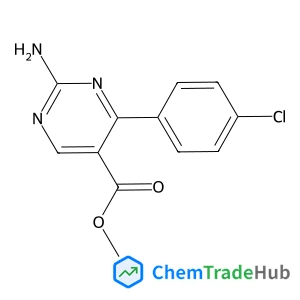
Methyl 2-amino-4-(4-chlorophenyl)-5-pyrimidinecarboxylate
CAS Number:
1133115-56-6
Molecular Formula:
C12H10ClN3O2
Kyujin Kim, Inhyuk Kim, Yunjung Oh, Daehee Lee, Kyoohee Woo, Sunho Jeong, Jooho Moon
Copper zinc tin sulfide (CZTS) has attracted significant attention in the past few years as a next-generation absorber material, and is a promising candidate for the mass production of thin-film solar cells with high efficiencies. Here, we demonstrate a non-toxic solvent-based hybrid-ink approach for the fabrication of a high-quality CZTS absorber layer with a thickness of 1.3 μm and micrometer-scale grains (∼1 μm), resulting in an efficiency of 8.17%. In particular, we investigate the effects of the solid-state Zn metal or ZnS precursor on both the phase transformation and the device performance, which clearly suggests that the low-melting-point Zn phase effectively facilitates the phase-pure, high-performance CZTS absorber layer without the formation of secondary phases that have been observed in most cases of CZTS solar cells derived from wet chemical processes. We believe that our environmentally friendly approach will pave the way toward achieving low-cost, scalable solar cells with high efficiencies.
Yasutaka Kitahama, Yuhei Tanaka, Tamitake Itoh, Yukihiro Ozaki
DOI: 10.1039/C0CP02802A
Feng Hao, Hong Lin, Yizhu Liu
DOI: 10.1039/C0CP02704A
Yirong Mo, Peng Bao, Jiali Gao
DOI: 10.1039/C0CP02206C
Sudip Chattopadhyay, Rajat K. Chaudhuri, Karl F. Freed
DOI: 10.1039/C0CP02106G
Cristopher Camacho, Renzo Cimiraglia, Henryk A. Witek
DOI: 10.1039/C1CP20177H
P. Hindelang, W. Schmickler
DOI: 10.1039/C0CP02748K
Xiaoli Shi, Lei Qin, Xuejie Zhang, Chunyang Xiong, Jing Fang, Xiaohong Fang, Youyi Zhang
DOI: 10.1039/C1CP20154A
Zhanzhao Fang, Junhong Luo, Xiangdong Kang, Haijie Xia, Sisheng Wang, Wen Wen, Xingtai Zhou, Ping Wang
DOI: 10.1039/C1CP00018G
Xulin Pan, Ninghua Tan
DOI: 10.1039/C0CP02749A
P. Yang, Z. G. Wang, X. T. Zu, H. Y. Xiao, X. Sun, M. A. Khaleel, F. Gao
DOI: 10.1039/C0CP02001J
2-Methylbenzene-1,4-diamine dihydrochloride (CAS: 615-45-2) should be stored in ...
(1S,4S)-2,5-Diazabicyclo[2.2.1]heptane dihydrobromide is generally considered sa...
(6-Chloropyridazin-3-YL)methanamine finds applications in the pharmaceutical ind...
2-Fluoro-3-methylphenol is primarily used in the synthesis of pharmaceuticals, p...
When handling 3-Methoxy-4-nitrobenzonitrile, it is important to wear appropriate...
When handling 1,3-Oxazolo[4,5-b]pyridine-2(3H)-thione (CAS: 211949-57-4), it is ...
4-Ethynylbenzamide (CAS: 90347-86-7) falls under various regulatory guidelines i...
3-(2-Ethylphenyl)-2-thioxo-4-imidazolidinone is primarily used as an intermediat...
(2-Fluoro-6-methoxyphenyl)acetic acid, also known as 4-fluoro-3-methoxybenzoic a...
Market trends for 2-[4-(Hydroxymethyl)phenoxy]ethanol (CAS: 102196-18-9) indicat...

Green Chemistry provides a unique forum for the publication of innovative research on the development of alternative green and sustainable technologies. The scope of Green Chemistry is based on, but not limited to, the definition proposed by Anastas and Warner (Green Chemistry: Theory and Practice, P T Anastas and J C Warner, Oxford University Press, Oxford, 1998). Green chemistry is the utilisation of a set of principles that reduces or eliminates the use or generation of hazardous substances in the design, manufacture and application of chemical products. Green Chemistry is at the frontiers of this continuously-evolving interdisciplinary science and publishes research that attempts to reduce the environmental impact of the chemical enterprise by developing a technology base that is inherently non-toxic to living things and the environment. Submissions on all aspects of research relating to the endeavour are welcome. The journal publishes original and significant cutting-edge research that is likely to be of wide general appeal. To be published, work must present a significant advance in green chemistry. Papers must contain a comparison with existing methods and demonstrate advantages over those methods before publication can be considered. For more information please see this Editorial. Coverage includes the following, but is not limited to: Design (e.g. biomimicry, design for degradation/recycling/reduced toxicity…) Reagents & Feedstocks (e.g. renewables, CO2, solvents, auxiliary agents, waste utilization…) Synthesis (e.g. organic, inorganic, synthetic biology…) Catalysis (e.g. homogeneous, heterogeneous, enzyme, whole cell…) Process (e.g. process design, intensification, separations, recycling, efficiency…) Energy (e.g. renewable energy, fuels, photovoltaics, fuel cells, energy storage, energy carriers…) Applications (e.g. electronics, dyes, consumer products, coatings, pharmaceuticals, preservatives, building materials, chemicals for industry/agriculture/mining…) Impact (e.g. safety, metrics, LCA, sustainability, (eco)toxicology…) Green chemistry is, by definition, a continuously-evolving frontier. Therefore, the inclusion of a particular material or technology does not, of itself, guarantee that a paper is suitable for the journal. To be suitable, the novel advance should have the potential for reduced environmental impact relative to the state of the art. Green Chemistry does not normally deal with research associated with 'end-of-pipe' or remediation issues.
![(3R,4aR,7aS,9aR,10S,11R,13aR,13bS,15aS,15bR)-3,11-Dihydroxy-10-(hydroxymethyl)-4,4,7a,10,13a,15b-hexamethyl-1,2,3,4,4a,7,7a,8,9,9a,10,11,12,13,13a,13b,14,15,15a,15b-icosahydro-5H-naphtho[2',1':4,5]cyc
lohepta[1,2-a]naphthalen-5-one structure](https://static.chemtradehub.com/structs/538/53800-21-8-9f18.webp "(3R,4aR,7aS,9aR,10S,11R,13aR,13bS,15aS,15bR)-3,11-Dihydroxy-10-(hydroxymethyl)-4,4,7a,10,13a,15b-hexamethyl-1,2,3,4,4a,7,7a,8,9,9a,10,11,12,13,13a,13b,14,15,15a,15b-icosahydro-5H-naphtho[2',1':4,5]cyc
lohepta[1,2-a]naphthalen-5-one structure")