












Bio-based superhydrophilic foam membranes for sustainable oil–water separation
Literature Information
Publication Date
2014-07-15
DOI
10.1039/C4GC01070A
Impact Factor
10.182
Authors
Azaz Gogda
View Original
Abstract
The development of a low-cost, high-performance, biobased membrane technology has been attempted to treat environmentally sensitive wastewater streams. Novel foam membranes (FMs) were derived from agarose (Agr) and gelatin (Gel) in combination with a non-toxic fruit extract and natural crosslinker, genipin (G). FMs were successfully tested for their oil–water separation efficiencies. FMs attained unique capillary microstructures (10–45 μm) as a result of the controlled lyophilization process, which allows selective permeation of water. Stable microporous membranes with nominal pore sizes in between the microfiltration and ultrafiltration range generated as high as >500 L m−2 h−1 continuous flux with ∼98% pure product water. One of the advantages of these FMs is that after oil–water separation, they can undergo an easy membrane cleaning process, thereby retaining surface activity for long term performance.
Recommended Journals
Related Literature
High-resolution FTIR spectroscopy of the ν8 and Coriolis perturbation allowed ν12 bands of ketenimine‡
Michael K. Bane, Christopher D. Thompson, Evan G. Robertson, Dominique R. T. Appadoo, Don McNaughton
2010-11-29
Paper
DOI: 10.1039/C0CP01816C
Large-scale screening of metal hydrides for hydrogen storage from first-principles calculations based on equilibrium reaction thermodynamics
Ki Chul Kim, Anant D. Kulkarni, J. Karl Johnson, David S. Sholl
2011-03-14
Paper
DOI: 10.1039/C0CP02950E
Pathway analysis of super-exchange electronic couplings in electron transfer reactions using a multi-configuration self-consistent field method
Hirotaka Nishioka, Koji Ando
2011-03-10
Paper
DOI: 10.1039/C0CP01051K
On the dissociation of molecular hydrogen by Au supported on transition metal carbides: choice of the most active support
José A. Rodriguez, Francesc Illas
2011-03-15
Paper
DOI: 10.1039/C0CP02882G
Ionization-loss stimulated Raman spectroscopy for conformational probing of flexible molecules
Nitzan Mayorkas, Itamar Malka, Ilana Bar
2011-02-14
Paper
DOI: 10.1039/C0CP02334E
Structures and electronic properties of silicene clusters: a promising material for FET and hydrogen storage
Deepthi Jose, Ayan Datta
2011-02-28
Paper
DOI: 10.1039/C0CP02580A
Capping polymer-enhanced electrocatalytic activity on Pt nanoparticles: a combined electrochemical and in situIR spectroelectrochemical study
Ceren Susut, Shi-Gang Sun, YuYe J. Tong
2011-03-22
Paper
DOI: 10.1039/C1CP20164F
Self-assembly of mixed Pt and Aunanoparticles on PDDA-functionalized graphene as effective electrocatalysts for formic acid oxidation of fuelcells
Shuangyin Wang, Xin Wang, San Ping Jiang
2011-03-16
Paper
DOI: 10.1039/C0CP02495C
Extending the molecular size in accurate quantum-chemical calculations: the equilibrium structure and spectroscopic properties of uracil
Cristina Puzzarini, Vincenzo Barone
2011-03-16
Paper
DOI: 10.1039/C0CP02636K
You might also like
Compound Q&A
How should 2-Methylbenzene-1,4-diamine dihydrochloride (CAS: 615-45-2) be stored?
2-Methylbenzene-1,4-diamine dihydrochloride (CAS: 615-45-2) should be stored in ...
615-45-22-Methylbenzene-1,4-...
Compound Q&A
Is (1S,4S)-2,5-Diazabicyclo[2.2.1]heptane dihydrobromide (CAS: 132747-20-7) safe?
(1S,4S)-2,5-Diazabicyclo[2.2.1]heptane dihydrobromide is generally considered sa...
132747-20-7(1S,4S)-2,5-Diazabic...
Compound Q&A
What industries use (6-Chloropyridazin-3-YL)methanamine (CAS: 871826-15-2)?
(6-Chloropyridazin-3-YL)methanamine finds applications in the pharmaceutical ind...
871826-15-2(6-Chloropyridazin-3...
Compound Q&A
What are the main uses of 2-Fluoro-3-methylphenol (CAS: 77772-72-6)?
2-Fluoro-3-methylphenol is primarily used in the synthesis of pharmaceuticals, p...
77772-72-62-Fluoro-3-methylphe...
Compound Q&A
What precautions should be taken when handling 3-Methoxy-4-nitrobenzonitrile (CAS: 177476-75-4)?
When handling 3-Methoxy-4-nitrobenzonitrile, it is important to wear appropriate...
177476-75-43-Methoxy-4-nitroben...
Compound Q&A
What precautions should be taken when handling 1,3-Oxazolo[4,5-b]pyridine-2(3H)-thione (CAS: 211949-57-4)?
When handling 1,3-Oxazolo[4,5-b]pyridine-2(3H)-thione (CAS: 211949-57-4), it is ...
211949-57-4[1,3]Oxazolo[4,5-b]p...
Compound Q&A
What regulatory guidelines apply to 4-Ethynylbenzamide (CAS: 90347-86-7)?
4-Ethynylbenzamide (CAS: 90347-86-7) falls under various regulatory guidelines i...
90347-86-74-Ethynylbenzamide
Compound Q&A
What are the main uses of 3-(2-Ethylphenyl)-2-thioxo-4-imidazolidinone (CAS: 186822-57-1)?
3-(2-Ethylphenyl)-2-thioxo-4-imidazolidinone is primarily used as an intermediat...
186822-57-13-(2-Ethylphenyl)-2-...
Compound Q&A
What is (2-Fluoro-6-methoxyphenyl)acetic acid (CAS: 500912-19-6)?
(2-Fluoro-6-methoxyphenyl)acetic acid, also known as 4-fluoro-3-methoxybenzoic a...
500912-19-6(2-Fluoro-6-methoxyp...
Compound Q&A
What is the market or research trend for 2-[4-(Hydroxymethyl)phenoxy]ethanol (CAS: 102196-18-9)?
Market trends for 2-[4-(Hydroxymethyl)phenoxy]ethanol (CAS: 102196-18-9) indicat...
102196-18-92-[4-(Hydroxymethyl)...
Source Journal
Green Chemistry

CiteScore:
16.1
Self-citation Rate:
7.5%
Articles per Year:
944
Green Chemistry provides a unique forum for the publication of innovative research on the development of alternative green and sustainable technologies. The scope of Green Chemistry is based on, but not limited to, the definition proposed by Anastas and Warner (Green Chemistry: Theory and Practice, P T Anastas and J C Warner, Oxford University Press, Oxford, 1998). Green chemistry is the utilisation of a set of principles that reduces or eliminates the use or generation of hazardous substances in the design, manufacture and application of chemical products. Green Chemistry is at the frontiers of this continuously-evolving interdisciplinary science and publishes research that attempts to reduce the environmental impact of the chemical enterprise by developing a technology base that is inherently non-toxic to living things and the environment. Submissions on all aspects of research relating to the endeavour are welcome. The journal publishes original and significant cutting-edge research that is likely to be of wide general appeal. To be published, work must present a significant advance in green chemistry. Papers must contain a comparison with existing methods and demonstrate advantages over those methods before publication can be considered. For more information please see this Editorial. Coverage includes the following, but is not limited to: Design (e.g. biomimicry, design for degradation/recycling/reduced toxicity…) Reagents & Feedstocks (e.g. renewables, CO2, solvents, auxiliary agents, waste utilization…) Synthesis (e.g. organic, inorganic, synthetic biology…) Catalysis (e.g. homogeneous, heterogeneous, enzyme, whole cell…) Process (e.g. process design, intensification, separations, recycling, efficiency…) Energy (e.g. renewable energy, fuels, photovoltaics, fuel cells, energy storage, energy carriers…) Applications (e.g. electronics, dyes, consumer products, coatings, pharmaceuticals, preservatives, building materials, chemicals for industry/agriculture/mining…) Impact (e.g. safety, metrics, LCA, sustainability, (eco)toxicology…) Green chemistry is, by definition, a continuously-evolving frontier. Therefore, the inclusion of a particular material or technology does not, of itself, guarantee that a paper is suitable for the journal. To be suitable, the novel advance should have the potential for reduced environmental impact relative to the state of the art. Green Chemistry does not normally deal with research associated with 'end-of-pipe' or remediation issues.
Recommended Compounds
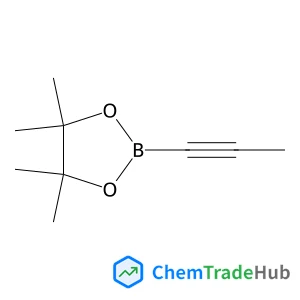
4,4,5,5-Tetramethyl-2-(1-propyn-1-YL)-1,3,2-dioxaborolane
CAS Number:
347389-75-7
Molecular Formula:
C9H15BO2
![5-Bromo-3-isopropyl-1H-pyrrolo[2,3-b]pyridine structure](https://static.chemtradehub.com/structs/125/1256819-54-1-8620.webp "5-Bromo-3-isopropyl-1H-pyrrolo[2,3-b]pyridine structure")
Recommended Suppliers







Disclaimer
This page provides academic journal information for reference and research purposes only. We are not affiliated with any journal publishers and do not handle publication submissions. For publication-related inquiries, please contact the respective journal publishers directly.
If you notice any inaccuracies in the information displayed, please contact us at support@chemtradehub.com. We will promptly review and address your concerns.