












Carbon chain shape selectivity by the mouse olfactory receptor OR-I7
Literature Information
Publication Date
2018-03-23
DOI
10.1039/C8OB00205C
Impact Factor
3.876
Authors
Jianghai Ho, Jason Karl Liu, Radhanath Purakait, Uriel N. Morzan, Lucky Ahmed, Victor S. Batista, Hiroaki Matsunami
View Original
Abstract
The rodent OR-I7 is an olfactory receptor exemplar activated by aliphatic aldehydes such as octanal. Normal alkanals shorter than heptanal bind OR-I7 without activating it and hence function as antagonists in vitro. We report a series of aldehydes designed to probe the structural requirements for aliphatic ligand chains too short to meet the minimum approximate 6.9 Å length requirement for receptor activation. Experiments using recombinant mouse OR-I7 expressed in heterologous cells show that in the context of short aldehyde antagonists, OR-I7 prefers binding aliphatic chains without branches, though a single methyl on carbon-3 is permitted. The receptor can accommodate a surprisingly large number of carbons (e.g. ten in adamantyl) as long as the carbons are part of a conformationally constrained ring system. A rhodopsin-based homology model of mouse OR-I7 docked with the new antagonists suggests that small alkyl branches on the alkyl chain sterically interfere with the hydrophobic residues lining the binding site, but branch carbons can be accommodated when tied back into a compact ring system like the adamantyl and bicyclo[2.2.2]octyl systems.
Related Literature
Electronic characterization of Geobacter sulfurreducens pilins in self-assembled monolayers unmasks tunnelling and hopping conduction pathways
Krista M. Cosert, Rebecca J. Steidl, Angelines Castro-Forero, Robert M. Worden, Gemma Reguera
2017-03-30
Paper
DOI: 10.1039/C7CP00885F
Modulation of the electronic and mechanical properties of phagraphene via hydrogenation and fluorination
Houyang Chen
2017-02-28
Paper
DOI: 10.1039/C6CP08621G
The rotational dynamics of H2 adsorbed in covalent organic frameworks
Tony Pham, Katherine A. Forrest, Matthew Mostrom, Joseph R. Hunt, Hiroyasu Furukawa, Brian Space
2017-04-28
Paper
DOI: 10.1039/C7CP00924K
A theoretical study of complexes formed between cations and curved aromatic systems: electrostatics does not always control cation–π interaction
Jorge A. Carrazana-García, Enrique M. Cabaleiro-Lago, Jesús Rodríguez-Otero
2017-03-24
Paper
DOI: 10.1039/C7CP01491K
Partnering dispersion corrections with modern parameter-free double-hybrid density functionals
J. C. Sancho-García, É. Brémond, M. Savarese, A. J. Pérez-Jiménez
2017-02-23
Paper
DOI: 10.1039/C7CP00709D
Understanding doping strategies in the design of organic electrode materials for Li and Na ion batteries: an electronic structure perspective
Johann Lüder, Mun Ho Cheow, Sergei Manzhos
2017-05-10
Paper
DOI: 10.1039/C7CP01554B
Rovibrational spectroscopic constants of the interaction between ammonia and metallo-phthalocyanines: a theoretical protocol for ammonia sensor design
Daniel F. S. Machado, Valter H. Carvalho-Silva, Leonardo G. Paterno, Heibbe Cristhian B. de Oliveira
2017-02-15
Paper
DOI: 10.1039/C6CP07900H
From oxidative degradation to direct oxidation: size regimes in the consecutive reaction of cationic tantalum clusters with dioxygen
J. F. Eckhard, D. Neuwirth, M. Tschurl, U. Heiz
2017-04-04
Paper
DOI: 10.1039/C7CP01293D
Delineating the role of ripples on the thermal expansion of 2D honeycomb materials: graphene, 2D h-BN and monolayer (ML)-MoS2
P. Anees, M. C. Valsakumar, B. K. Panigrahi
2017-03-24
Paper
DOI: 10.1039/C6CP08635G
Can boron antisites of BNNTs be an efficient metal-free catalyst for nitrogen fixation? – A DFT investigation
2017-05-23
Paper
DOI: 10.1039/C7CP02220D
You might also like
Compound Q&A
How should waste containing N-Methoxy-N-methyl-1,3-thiazole-5-carboxamide (CAS: 898825-89-3) be handled?
Waste containing N-Methoxy-N-methyl-1,3-thiazole-5-carboxamide (CAS: 898825-89-3...
898825-89-3N-Methoxy-N-methyl-1...
Compound Q&A
How should N-(4-Biphenylyl)dibenzo[b,d]furan-4-amine (CAS: 1318338-47-4) be stored?
N-(4-Biphenylyl)dibenzo[b,d]furan-4-amine should be stored in a tightly sealed c...
1318338-47-4N-(4-Biphenylyl)dibe...
Compound Q&A
What is the market or research trend for 3-Acetamido-5-amino-2,4,6-triiodobenzoic acid (CAS: 1713-07-1)?
The market for 3-Acetamido-5-amino-2,4,6-triiodobenzoic acid (CAS: 1713-07-1) is...
1713-07-13-Acetamido-5-amino-...
Compound Q&A
How should Benzyl 2-O-acetyl-3,4,6-tri-O-benzyl-beta-D-galactopyranoside (CAS: 61820-03-9) be stored?
Benzyl 2-O-acetyl-3,4,6-tri-O-benzyl-beta-D-galactopyranoside (CAS: 61820-03-9) ...
61820-03-9Benzyl 2-O-acetyl-3,...
Compound Q&A
What regulatory guidelines apply to 2-Ethylpiperazine dihydrochloride (CAS: 438050-52-3)?
2-Ethylpiperazine dihydrochloride (CAS: 438050-52-3) is regulated under the Glob...
438050-52-32-Ethylpiperazine di...
Compound Q&A
What regulatory guidelines apply to 1,1'-[1,3-Phenylenebis(methylene)]bis(3-methyl-1H-pyrrole-2,5-dione) (CAS: 119462-56-5)?
1,1'-[1,3-Phenylenebis(methylene)]bis(3-methyl-1H-pyrrole-2,5-dione) (CAS: 11946...
119462-56-51,1'-[1,3-Phenyleneb...
Compound Q&A
Are there alternatives to 5-Fluoro-2-(1-pyrrolidinyl)pyridine (CAS: 1287217-79-1) in synthesis?
Several alternatives can be used in the synthesis of 5-Fluoro-2-(1-pyrrolidinyl)...
1287217-79-15-Fluoro-2-(1-pyrrol...
Compound Q&A
What precautions should be taken when handling 1-((2R,3R,4R,5R)-5-((bis(4-methoxyphenyl)(phenyl)methoxy)methyl)-4-hydroxy-3-methoxytetrahydrofuran-2-yl)-5-methylpyrimidine-2,4(1H,3H)-dione (CAS: 153631-19-7)?
Proper personal protective equipment (PPE) must be worn when handling this compo...
153631-19-71-((2R,3R,4R,5R)-5-(...
Compound Q&A
What precautions should be taken when handling 6-Bromoimidazo[1,2-a]pyridin-8-amine (CAS: 676371-00-9)?
When handling 6-Bromoimidazo[1,2-a]pyridin-8-amine, it is important to wear appr...
676371-00-96-Bromoimidazo[1,2-a...
Compound Q&A
Are there alternatives to (2S,4R)-4-(4-Nitrobenzyl)pyrrolidine-2-carboxylic acid hydrochloride (CAS: 1049740-22-8) in synthesis?
Alternatives to (2S,4R)-4-(4-Nitrobenzyl)pyrrolidine-2-carboxylic acid hydrochlo...
1049740-22-8(2S,4R)-4-(4-Nitrobe...
Source Journal
Organic & Biomolecular Chemistry

CiteScore:
3.4
Self-citation Rate:
10.3%
Articles per Year:
1041
Organic & Biomolecular Chemistry (OBC) publishes original and high impact research and reviews in organic chemistry. We welcome research that shows new or significantly improved protocols or methodologies in total synthesis, synthetic methodology or physical and theoretical organic chemistry as well as research that shows a significant advance in the organic chemistry or molecular design aspects of chemical biology, catalysis, supramolecular and macromolecular chemistry, theoretical chemistry, mechanism-oriented physical organic chemistry, medicinal chemistry or natural products. Articles published in the journal should report new work which makes a highly-significant impact in the field. Routine and incremental work is generally not suitable for publication in the journal. More details about key areas of our scope are below. In all cases authors should include in their article clear rationale for why their research has been carried out.
Recommended Compounds

![1-Naphthalenesulfonic acid, 2-[(2-hydroxy-1-naphthalenyl)azo]-, bariumsalt (2:1) structure](https://static.chemtradehub.com/structs/110/1103-38-4-0b33.webp "1-Naphthalenesulfonic acid, 2-[(2-hydroxy-1-naphthalenyl)azo]-, bariumsalt (2:1) structure")
1-Naphthalenesulfonic acid, 2-[(2-hydroxy-1-naphthalenyl)azo]-, bariumsalt (2:1)
CAS Number:
1103-38-4
Molecular Formula:
C20H14BaN2O4S
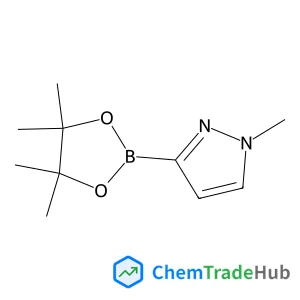
1-Methyl-3-(4,4,5,5-tetramethyl-1,3,2-dioxaborolan-2-yl)-1H-pyrazole
CAS Number:
1020174-04-2
Molecular Formula:
C10H17BN2O2
Recommended Suppliers




Disclaimer
This page provides academic journal information for reference and research purposes only. We are not affiliated with any journal publishers and do not handle publication submissions. For publication-related inquiries, please contact the respective journal publishers directly.
If you notice any inaccuracies in the information displayed, please contact us at support@chemtradehub.com. We will promptly review and address your concerns.