












Combined static and dynamic intramicellar fluorescence quenching: effects on stationary and time-resolved Stern–Volmer experiments
Literature Information
Publication Date
2019-04-29
DOI
10.1039/C8CP07486K
Impact Factor
3.676
Authors
Tim Kohlmann, Martin Goez
View Original
Abstract
We have conducted a theoretical and experimental study of Stern–Volmer experiments in micellar systems for the important case that fluorophore and quencher remain confined to their micelle during the luminescence decay (the “immobile probe/immobile quencher” scenario) and exhibit static quenching followed by dynamic quenching. By a comparative mathematical analysis, we have exposed inherent physical and mathematical contradictions of earlier theories. We present a general framework that allows a very simple derivation of consistent solutions. Even with the correct model, strong parameter correlations severely compromise fit uniqueness when the stationary luminescence is the only observable, but these correlations can be removed by parallel absorption measurements and do not occur in time-resolved luminescence experiments. The application of our protocol to pyrene quenching by substituted viologens in SDS micelles revealed a linear dependence of the apparent aggregation number of the surfactant on the equilibrium constant of formation of ground-state complexes, which can be quantitatively explained by a preference of the quencher for micelles containing the fluorophore. The complex formation is entropy controlled, as evidenced by a driving force that decreases linearly with the number of free rotors in the viologen sidechains.
Related Literature
Graphene oxide–polybenzimidazolium nanocomposite anion exchange membranes for electrodialysis
Joseph Baugh, Adetunji Alabi, Ahmed AlHajaj, Linda Zou, Robert A. W. Dryfe
2018-11-08
Paper
DOI: 10.1039/C8TA09160A
Facile growth of silver crystals with greatly varied morphologies by PEO-PPO-PEO tri-block copolymers
Jing-Cyuan Yang, Chun-Hua Chen, Ren-Jye Wu
2012-02-13
Paper
DOI: 10.1039/C2CE06385A
Ambient mass spectrometry of covalently bound organic monolayers
Radostina K. Manova, Frank W. Claassen, Teris A. van Beek
2012-12-11
Communication
DOI: 10.1039/C2CC37605A
Syntheses of Au–Cu-rich AuAg(AgCl)Cu alloy and Ag–Cu-rich AuAgCu@Cu core–shell and AuAgCu alloy nanoparticles using a polyol method
Mika Matsunaga, Toshitaka Ishizaki, Takamasa Nonaka
2012-03-15
Paper
DOI: 10.1039/C2CE06119H
Strong correlation of the growth mode and electrical properties of BiCuSeO single crystals with growth temperature
Yang-Yang Lv, Bin-Bin Zhang, Fan Zhang, Shuhua Yao, Y. B. Chen, Jian Zhou, Shan-Tao Zhang, Zheng-Bin Gu, Yan-Feng Chen
2015-07-07
Paper
DOI: 10.1039/C5CE01215E
Retroreflection-based sandwich type affinity sensing of isothermal gene amplification products for foodborne pathogen detection
Danbi Lee, Eunsuk Kim, Kyung Won Lee, Ka Ram Kim, Hyeong Jin Chun, Hyunjin Yoon, Hyun C. Yoon
2021-12-10
Paper
DOI: 10.1039/D1AN01543E
Symmetry of octa-coordination environment has a substantial influence on dinuclear TbIII triple-decker single-molecule magnets
Keiichi Katoh, Brian K. Breedlove, Masahiro Yamashita
2016-03-29
Edge Article
DOI: 10.1039/C5SC04669F
A new synthetic approach to functionalize oxomolybdenum complexes
Zhengguo Lin, Bo Wang, Xiao Feng, Linyuan Fan, Song Yang, Xianqiang Huang, Changwen Hu
2013-07-11
Communication
DOI: 10.1039/C3CE40994E
Atomically ultrathin RhCo alloy nanosheet aggregates for efficient water electrolysis in broad pH range
Yue Zhao, Juan Bai, Xin-Ru Wu, Pei Chen, Pu-Jun Jin, Hong-Chang Yao, Yu Chen
2019-06-10
Paper
DOI: 10.1039/C9TA05334D
Cavity-containing, backbone-rigidified foldamers and macrocycles
Kazuhiro Yamato, Mark Kline, Bing Gong
2012-10-05
Feature Article
DOI: 10.1039/C2CC36391G
You might also like
Compound Q&A
How is Ethyl 4-chlorothieno[2,3-b]pyridine-5-carboxylate (CAS: 59713-58-5) typically synthesized?
Ethyl 4-chlorothieno[2,3-b]pyridine-5-carboxylate (CAS: 59713-58-5) can be synth...
59713-58-5Ethyl 4-chlorothieno...
Compound Q&A
What regulatory guidelines apply to 5-Methyl-1H-indole-3-carbaldehyde (CAS: 52562-50-2)?
5-Methyl-1H-indole-3-carbaldehyde (CAS: 52562-50-2) is subject to various regula...
52562-50-25-Methyl-1H-indole-3...
Compound Q&A
What are the physical and chemical properties of (1,3-Dimethyl-2,4-dioxo-1,2,3,4-tetrahydro-5-pyrimidinyl)boronic acid (CAS: 223418-73-3)?
(1,3-Dimethyl-2,4-dioxo-1,2,3,4-tetrahydro-5-pyrimidinyl)boronic acid is a white...
223418-73-3(1,3-Dimethyl-2,4-di...
Compound Q&A
How should waste containing Sulfocostunolide A (CAS: 1016983-51-9) be handled?
Waste containing Sulfocostunolide A (CAS: 1016983-51-9) should be handled with c...
1016983-51-9Sulfocostunolide A
Compound Q&A
What precautions should be taken when handling Murraxocin (CAS: 88478-44-8)?
When handling Murraxocin (CAS: 88478-44-8), ensure proper personal protective eq...
88478-44-8Murraxocin
Compound Q&A
What are the physical and chemical properties of Formvar (CAS: 63148-64-1)?
Formvar (CAS: 63148-64-1) is an alkyd resin characterized by a high molecular we...
63148-64-1Formvar(R)
Compound Q&A
Is (S)-4-benzyl-2-((benzyloxy)methyl)morpholine (CAS: 205242-66-6) safe?
(S)-4-benzyl-2-((benzyloxy)methyl)morpholine is generally safe when handled with...
205242-66-6(S)-4-benzyl-2-((ben...
Compound Q&A
What industries use Methyl 1-(5-bromo-2-pyrimidinyl)cyclopropanecarboxylate (CAS: 1447607-69-3)?
Methyl 1-(5-bromo-2-pyrimidinyl)cyclopropanecarboxylate (CAS: 1447607-69-3) is p...
1447607-69-3Methyl 1-(5-bromo-2-...
Compound Q&A
Is 2-Methyl-1-phenyl-1-propanamine hydrochloride (CAS: 24290-47-9) safe?
2-Methyl-1-phenyl-1-propanamine hydrochloride (CAS: 24290-47-9) is generally con...
24290-47-92-Methyl-1-phenyl-1-...
Compound Q&A
How is 3-(4-Bromophenyl)-2-methylpropanoic acid (CAS: 66735-01-1) typically synthesized?
3-(4-Bromophenyl)-2-methylpropanoic acid is synthesized through a multi-step pro...
66735-01-13-(4-Bromophenyl)-2-...
Source Journal
Physical Chemistry Chemical Physics

CiteScore:
5.5
Self-citation Rate:
10.3%
Articles per Year:
3036
Physical Chemistry Chemical Physics (PCCP) is an international journal co-owned by 19 physical chemistry and physics societies from around the world. This journal publishes original, cutting-edge research in physical chemistry, chemical physics and biophysical chemistry. To be suitable for publication in PCCP, articles must include significant innovation and/or insight into physical chemistry; this is the most important criterion that reviewers and Editors will judge against when evaluating submissions. The journal has a broad scope and welcomes contributions spanning experiment, theory, computation and data science. Topical coverage includes spectroscopy, dynamics, kinetics, statistical mechanics, thermodynamics, electrochemistry, catalysis, surface science, quantum mechanics, quantum computing and machine learning. Interdisciplinary research areas such as polymers and soft matter, materials, nanoscience, energy, surfaces/interfaces, and biophysical chemistry are welcomed if they demonstrate significant innovation and/or insight into physical chemistry. Joined experimental/theoretical studies are particularly appreciated when complementary and based on up-to-date approaches.
Recommended Compounds


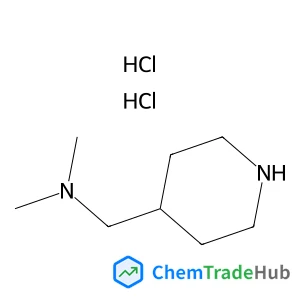
N,N-dimethyl(piperidin-4-yl)methanamine hydrochloride
CAS Number:
172281-72-0
Molecular Formula:
C8H20Cl2N2
Recommended Suppliers



Disclaimer
This page provides academic journal information for reference and research purposes only. We are not affiliated with any journal publishers and do not handle publication submissions. For publication-related inquiries, please contact the respective journal publishers directly.
If you notice any inaccuracies in the information displayed, please contact us at support@chemtradehub.com. We will promptly review and address your concerns.