












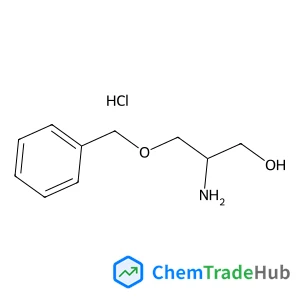
(R)-2-amino-3-(benzyloxy)propan-1-ol hydrochloride
CAS Number:
58577-95-0
Molecular Formula:
C10H16ClNO2
Jing-Cyuan Yang, Chun-Hua Chen, Ren-Jye Wu
Silver crystals with various novel nano-scale morphologies were synthesized from the reduction of silver nitrate (AgNO3) by ascorbic acid (AsA) in aqueous PEO-PPO-PEO tri-block copolymer (F127) solutions. The presence of only high-concentration AsA at the very initial stage of reduction acts as a key factor in forming distinct branched quasi-spherical Ag nanocrystals where coral-like and houseleek-like morphologies can be kinetically controlled via subsequent addition of F127. When AsA and F127 were mixed before the reduction, three-dimensional dendritic Ag nanocrystals with highly ordered dendrites were largely obtained. In contrast to these branched crystals prepared under low F127 concentration, the face-centered cubic (FCC) packed micelles at high F127 concentration, which provided orderly reaction spaces for AgNO3 and AsA reagents, dominated the growth of triangular and hexagonal prisms. The great variety in morphology is directly correlated with not only the concentration ratio between these reactants but the F127 induced kinetic mechanisms. Moreover, the greatly branched Ag nanocrystals exhibit significant surface-enhanced Raman scattering (SERS) for facilely, rapidly and effectively determining malachite green oxalate (MG) in aqueous solution. The present results provide valuable data not only for fundamental understanding of the directing effect of both F127 and AsA on the synthesis of Ag nanocrystals, but for advanced design and practical manufacturing of metals enhanced SERS sensors.
Kumar Vikrant, Vanish Kumar, Ki-Hyun Kim
DOI: 10.1039/C8TA90287A
Kunal Choudhuri, Udaka K. de Silva, Vincent Huynh, Ryan G. Wylie, Yakov Lapitsky
DOI: 10.1039/C8TB02104J
Francesco Foschi, Torsten Roth, Markus Enders, Hubert Wadepohl, Eric Clot, Lutz H. Gade
DOI: 10.1039/C8CC00478A
Junseok Lee, Cherlhyun Jeong, Won Jong Kim
DOI: 10.1039/C4TB01631A
Emily R. Groper, Jack A. Barnes, Rory McEwen, Younès Messaddeq, Richard D. Oleschuk
DOI: 10.1039/D1AN00264C
Chao Hou, Qing Liu, Taka-aki Okamura, Peng Wang, Wei-Yin Sun
DOI: 10.1039/C2CE26533H
Minghui Bi, Guanghua Li, Jia Hua, Xiaomin Liu, Yawei Hu, Zhan Shi, Shouhua Feng
DOI: 10.1039/B709852A
Yang-Yang Lv, Bin-Bin Zhang, Fan Zhang, Shuhua Yao, Y. B. Chen, Jian Zhou, Shan-Tao Zhang, Zheng-Bin Gu, Yan-Feng Chen
DOI: 10.1039/C5CE01215E
Lilianna Chęcińska, Wolfgang Morgenroth, Carsten Paulmann, Dylan Jayatilaka, Birger Dittrich
DOI: 10.1039/C2CE26964C
Rachid Amine, Xuanxuan Bi, Yan Qin, Matthew Li, Said Al-Hallaj, Fengwei Huo, Jun Lu, Khalil Amine
DOI: 10.1039/C9TA03763B
Ethyl 4-chlorothieno[2,3-b]pyridine-5-carboxylate (CAS: 59713-58-5) can be synth...
5-Methyl-1H-indole-3-carbaldehyde (CAS: 52562-50-2) is subject to various regula...
(1,3-Dimethyl-2,4-dioxo-1,2,3,4-tetrahydro-5-pyrimidinyl)boronic acid is a white...
Waste containing Sulfocostunolide A (CAS: 1016983-51-9) should be handled with c...
When handling Murraxocin (CAS: 88478-44-8), ensure proper personal protective eq...
Formvar (CAS: 63148-64-1) is an alkyd resin characterized by a high molecular we...
(S)-4-benzyl-2-((benzyloxy)methyl)morpholine is generally safe when handled with...
Methyl 1-(5-bromo-2-pyrimidinyl)cyclopropanecarboxylate (CAS: 1447607-69-3) is p...
2-Methyl-1-phenyl-1-propanamine hydrochloride (CAS: 24290-47-9) is generally con...
3-(4-Bromophenyl)-2-methylpropanoic acid is synthesized through a multi-step pro...

CrystEngComm is the forum for the design and understanding of crystalline materials. We welcome studies on the investigation of molecular behaviour within crystals, control of nucleation and crystal growth, engineering of crystal structures, and construction of crystalline materials with tuneable properties and functions. We publish hypothesis-driven research into… how crystal design affects thermodynamics, phase transitional behaviours, polymorphism, morphology control, solid state reactivity (crystal-crystal solution-crystal, and gas-crystal reactions), optoelectronics, ferroelectric materials, non-linear optics, molecular and bulk magnetism, conductivity and quantum computing, catalysis, absorption and desorption, and mechanical properties. Using Techniques and methods including… Single crystal and powder X-ray, electron, and neutron diffraction, solid-state spectroscopy, spectrometry, and microscopy, modelling and data mining, and empirical, semi-empirical and ab-initio theoretical evaluations. On crystalline and solid-state materials. We particularly welcome work on MOFs, coordination polymers, nanocrystals, host-guest and multi-component molecular materials. We also accept work on peptides and liquid crystals. All papers should involve the use or development of a design or optimisation strategy. Routine structural reports or crystal morphology descriptions, even when combined with an analysis of properties or potential applications, are generally considered to be outside the scope of the journal and are unlikely to be accepted.
![4-{1-[4-(4,4,5,5-Tetramethyl-1,3,2-dioxaborolan-2-yl)phenyl]cyclopropyl}morpholine structure](https://static.chemtradehub.com/structs/120/1206594-08-2-7afb.webp "4-{1-[4-(4,4,5,5-Tetramethyl-1,3,2-dioxaborolan-2-yl)phenyl]cyclopropyl}morpholine structure")




