












High-temperature shape memory loss in nitinol: a first principles study
Literature Information
Publication Date
2019-03-21
DOI
10.1039/C8CP07288D
Impact Factor
3.676
Authors
Adebayo A. Adeleke, Yansun Yao
View Original
Abstract
We have performed first-principles calculations to investigate the possibility of shape memory loss in a member of the binary smart alloy family – NiTi. A detailed analysis of the transition kinetics and dynamical pathway reveals the possibility of the B19′ phase of NiTi losing its shape memory when subjected to high stress conditions and is heated above a critical temperature, Tc. The B19′ phase is predicted to transform to P-NiTi, which is also predicted to be dynamically stable and temperature-quench recoverable. It is found that the B2(B33) → B19′ transition is dominated by the β shearing mode with pronounced distortion in the (001) planes and significant volume reduction. Furthermore, the B19′ → P transition is dominated by the γ shearing mode with pronounced distortion in the (010) planes and slight volume expansion. The cumulative effect of both processes activates the lowering and eventual breaking of symmetry in the precursor phases and drives the permanent deformation and shape memory loss. We further show that the P-NiTi structure is stabilized (over B19′ structure) by kinetics. The findings of this study will stimulate further studies on how to retain and improve the shape memory feature in NiTi and other binary smart alloys to prevent property failure when used in the fabrication of devices operated in the high temperature and pressure regime.
Related Literature
Highly active iridium(i) complexes for catalytic hydrogen isotope exchange
Jack A. Brown, Stephanie Irvine, Alan R. Kennedy, William J. Kerr, Shalini Andersson, Göran N. Nilsson
2008-01-03
Communication
DOI: 10.1039/B715938B
Phosphorus–carbon bond formation catalysed by electrophilic N-heterocyclic phosphines
Sebastian Burck, Daniela Förster, Dietrich Gudat
2006-05-31
Communication
DOI: 10.1039/B605278A
Stereoselective polymerization of rac- and meso-lactide catalyzed by sterically encumbered N-heterocyclic carbenes
Andrew P. Dove, Hongbo Li, Russell C. Pratt, Bas G. G. Lohmeijer, Darcy A. Culkin, Robert M. Waymouth, James L. Hedrick
2006-06-06
Communication
DOI: 10.1039/B601393G
New palladium-catalyzed aerobic oxidative cleavage and cyclization of N-aryl peptide derivatives
Laurent El Kaïm, Rocio Gamez-Montaño, Laurence Grimaud, Tannya Ibarra-Rivera
2008-01-18
Communication
DOI: 10.1039/B716849G
The quest for secondary structure in chiral dendrimers
Susan E. Gibson, Jacob T. Rendell
2007-11-26
Feature Article
DOI: 10.1039/B712298E
2-D Self-assembly of the bis(phthalocyaninato)terbium(iii) single-molecule magnet studied by scanning tunnelling microscopy
Jordi Gómez-Segura, Ismael Díez-Pérez, Naoto Ishikawa, Motohiro Nakano, Jaume Veciana, Daniel Ruiz-Molina
2006-06-15
Communication
DOI: 10.1039/B606276H
1,2-Diphosphinobenzene as a synthon for the 1,2,3-triphospha- and 2-arsa-1,3-diphosphaindenyl anions and a stable organo derivative of the P8 unit of Hittorf’s phosphorus
Craig P. Butts, Michael Green, Thomas N. Hooper, Richard J. Kilby, John E. McGrady, Dimitrios A. Pantazis, Christopher A. Russell
2008-01-15
Communication
DOI: 10.1039/B717204D
Molecular folding screen: folding and unfolding of 1,8-anthrylene–ethynylene oligomers by photochemical cycloaddition and thermal cycloreversion1
Shinji Toyota, Makoto Kuga, Akiko Takatsu, Michio Goichi, Tetsuo Iwanaga
2008-01-15
Communication
DOI: 10.1039/B717496A
A molecular 1 : 2 demultiplexer
Ezequiel Perez-Inestrosa, Jose-María Montenegro, Daniel Collado, Rafael Suau
2008-01-09
Communication
DOI: 10.1039/B717690B
New egg-shaped fullerenes: non-isolated pentagon structures of Tm3N@Cs(51 365)-C84 and Gd3N@Cs(51 365)-C84‡
Tianming Zuo, Kenneth Walker, Marilyn M. Olmstead, Frederic Melin, Brian C. Holloway, Luis Echegoyen, Harry C. Dorn, Manuel N. Chaur, Christopher J. Chancellor, Christine M. Beavers, Alan L. Balch, Andreas J. Athans
2008-01-31
Communication
DOI: 10.1039/B716037B
You might also like
Compound Q&A
Are there alternatives to 1-(4-Chlorophenyl)-N-hydroxymethanimine (CAS: 3848-36-0) in synthesis?
When considering alternatives to 1-(4-Chlorophenyl)-N-hydroxymethanimine (CAS: 3...
3848-36-01-(4-Chlorophenyl)-N...
Compound Q&A
How should (1R,9S,10S,12S,14E,16S,19R,20R,21S,22R)-3,9,21-Trihydroxy-5,10,12,14,16,20,22-heptamethyl-23,24-dioxatetracyclo[17.3.1.1~6,9~.0~2,7~]tetracosa-2,5,7,14-tetraen-4-one (CAS: 183202-73-5) be stored?
This compound should be stored in a cool, dry place away from direct sunlight. I...
183202-73-5(1R,9S,10S,12S,14E,1...
Compound Q&A
How is 3-(4-Bromophenyl)-5-(2-fluorophenyl)-1,2,4-oxadiazole (CAS: 419553-16-5) typically synthesized?
3-(4-Bromophenyl)-5-(2-fluorophenyl)-1,2,4-oxadiazole is synthesized through a m...
419553-16-53-(4-Bromophenyl)-5-...
Compound Q&A
How is 5-Chloro-2-(4-chlorophenyl)-4-methyl-6-[3-(1-piperidinyl)propoxy]pyrimidine (CAS: 1639220-19-1) typically synthesized?
5-Chloro-2-(4-chlorophenyl)-4-methyl-6-[3-(1-piperidinyl)propoxy]pyrimidine (CAS...
1639220-19-15-Chloro-2-(4-chloro...
Compound Q&A
What industries use 2-Chloro-4-(difluoromethoxy)pyridine (CAS: 1206978-15-5)?
2-Chloro-4-(difluoromethoxy)pyridine is used in the pharmaceutical industry for ...
1206978-15-52-Chloro-4-(difluoro...
Compound Q&A
What regulatory guidelines apply to 3-Chloro-6-methylpyridazine (CAS: 1121-79-5)?
3-Chloro-6-methylpyridazine (CAS: 1121-79-5) is classified under the Globally Ha...
1121-79-53-Chloro-6-methylpyr...
Compound Q&A
Are there alternatives to Methyl 4,5-dimethyl-2-nitrobenzoate in synthesis?
Several alternatives can be used in the synthesis of Methyl 4,5-dimethyl-2-nitro...
90922-74-0Methyl 4,5-dimethyl-...
Compound Q&A
Are there alternatives to (2E,2'E)-3,3'-(1,4-Phenylene)bisacrylaldehyde in synthesis?
Alternatives to (2E,2'E)-3,3'-(1,4-Phenylene)bisacrylaldehyde include other acry...
63405-68-5(2E,2'E)-3,3'-(1,4-P...
Compound Q&A
What is 3-Amino-5-chloropyridin-2-ol hydrochloride (CAS: 1261906-29-9)?
3-Amino-5-chloropyridin-2-ol hydrochloride is an organic compound with the CAS n...
1261906-29-93-Amino-5-chloropyri...
Compound Q&A
What precautions should be taken when handling 6,7-Difluoro-2,3-dihydro-4H-chromen-4-one (CAS: 1092349-93-3)?
When handling 6,7-Difluoro-2,3-dihydro-4H-chromen-4-one, it is essential to wear...
1092349-93-36,7-Difluoro-2,3-dih...
Source Journal
Physical Chemistry Chemical Physics

CiteScore:
5.5
Self-citation Rate:
10.3%
Articles per Year:
3036
Physical Chemistry Chemical Physics (PCCP) is an international journal co-owned by 19 physical chemistry and physics societies from around the world. This journal publishes original, cutting-edge research in physical chemistry, chemical physics and biophysical chemistry. To be suitable for publication in PCCP, articles must include significant innovation and/or insight into physical chemistry; this is the most important criterion that reviewers and Editors will judge against when evaluating submissions. The journal has a broad scope and welcomes contributions spanning experiment, theory, computation and data science. Topical coverage includes spectroscopy, dynamics, kinetics, statistical mechanics, thermodynamics, electrochemistry, catalysis, surface science, quantum mechanics, quantum computing and machine learning. Interdisciplinary research areas such as polymers and soft matter, materials, nanoscience, energy, surfaces/interfaces, and biophysical chemistry are welcomed if they demonstrate significant innovation and/or insight into physical chemistry. Joined experimental/theoretical studies are particularly appreciated when complementary and based on up-to-date approaches.
Recommended Compounds
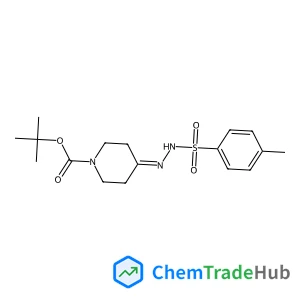
tert-Butyl 4-(2-(p-Tolylsulfonyl)hydrazono)piperidine-1-carboxylate
CAS Number:
1046478-89-0
Molecular Formula:
C17H25N3O4S
![4-[(3-Chloro-2-fluorophenyl)amino]-7-methoxy-6-quinazolinyl acetate structure](https://static.chemtradehub.com/structs/740/740081-22-5-f58f.webp "4-[(3-Chloro-2-fluorophenyl)amino]-7-methoxy-6-quinazolinyl acetate structure")
4-[(3-Chloro-2-fluorophenyl)amino]-7-methoxy-6-quinazolinyl acetate
CAS Number:
740081-22-5
Molecular Formula:
C17H13ClFN3O3
Recommended Suppliers






Disclaimer
This page provides academic journal information for reference and research purposes only. We are not affiliated with any journal publishers and do not handle publication submissions. For publication-related inquiries, please contact the respective journal publishers directly.
If you notice any inaccuracies in the information displayed, please contact us at support@chemtradehub.com. We will promptly review and address your concerns.