


How the methyl group position influences the ultrafast deactivation in aromatic radicals
Literature Information
Publication Date
2018-12-07
DOI
10.1039/C8CP06087H
Impact Factor
3.676
Authors
View Original
Abstract
Excited xylyl (methyl–benzyl) radical isomers have been studied by femtosecond time-resolved photoelectron spectroscopy and mass spectrometry. Depending on the substitution we find different deactivation channels after excitation into the D3(2A′′) state (310 nm, 4 eV). While the ortho and para isomer exhibit deactivation rates similar to the benzyl radical, meta-xylyl sticks out and depletes twice as fast into the vibrationally hot ground state. We found that a ring deformation mode rather than the methyl pseudorotation enables access to a conical intersection, which is responsible for the faster deactivation. Transitions in the photoelectron spectrum can be assigned to several Rydberg series with mostly d angular momentum components. Absorption of two 4 eV photons triggers hydrogen loss reactions on a femtosecond timescale.
Recommended Journals

Russian Journal of Applied Chemistry

Journal of Peptide Science

Crystallography Reports

Journal of Saudi Chemical Society

Journal of Natural Medicines

Current Opinion in Colloid & Interface Science

Chemical Communications

Saudi Pharmaceutical Journal

Organic Process Research & Development

Drug Discovery Today
Related Literature
Thin V2O5 films synthesized by plasma-enhanced atomic layer deposition for memristive applications
Vladimir A. Seleznev, Nadezhda A. Nebogatikova, Artem I. Ivanov, Bogdan V. Voloshin, Irina I. Kurkina
2023-11-13
Paper
DOI: 10.1039/D3CP03761D
Theory and modeling of light-matter interactions in chemistry: current and future
Xinyang Li, Yu Zhang
2023-09-27
Perspective
DOI: 10.1039/D3CP01415K
Double strengthening induced by grain boundary segregation of solute elements in gradient nano Ni–Co alloys
Wei Zhang, Xin Guo, Junqiang Ren, Junchen Li, Hongtao Xue, Fuling Tang, Peiqing La, Xuefeng Lu
2023-11-21
Paper
DOI: 10.1039/D3CP03613H
Interrogating the nature of aggregates formed in a model azine based ESIPT coupled AIE active probe: stark differences in photodynamics in the solid state and aggregates in water
Arghyadeep Bhattacharyya, Akash Das, Nikhil Guchhait
2023-11-03
Paper
DOI: 10.1039/D3CP03603K
Effect of copper doping on plasmonic nanofilms for high performance photovoltaic energy applications
Ghulam Hasnain Tariq, Ghulam Asghar, M. Shahzad Shifa, M. Anis-Ur-Rehman, Sana Ullah, Zulfiqar Ali Shah, Ahmed M. Tawfeek, Farooq Sher
2023-11-03
Paper
DOI: 10.1039/D3CP04332K
Correction: Understanding the charge transfer dynamics of the Cu2WS4–CNT–FeOOH ternary composite for photo-electrochemical studies
Preeti Dagar, Nandan Ghorai, Manisha Bungla, Hirendra N. Ghosh
2023-11-27
Correction
DOI: 10.1039/D3CP90230G
Surface termination and strain-induced modulation of the structure and electronic properties in 2D perovskites (Cs2BCl4 & CsB2Cl5, B = Pb, Sn): a first-principles study
Kiran Yadav, Nirat Ray
2023-11-11
Communication
DOI: 10.1039/D3CP04343F
You might also like
Compound Q&A
Are there alternatives to 1-(4-Chlorophenyl)-N-hydroxymethanimine (CAS: 3848-36-0) in synthesis?
When considering alternatives to 1-(4-Chlorophenyl)-N-hydroxymethanimine (CAS: 3...
3848-36-01-(4-Chlorophenyl)-N...
Compound Q&A
How should (1R,9S,10S,12S,14E,16S,19R,20R,21S,22R)-3,9,21-Trihydroxy-5,10,12,14,16,20,22-heptamethyl-23,24-dioxatetracyclo[17.3.1.1~6,9~.0~2,7~]tetracosa-2,5,7,14-tetraen-4-one (CAS: 183202-73-5) be stored?
This compound should be stored in a cool, dry place away from direct sunlight. I...
183202-73-5(1R,9S,10S,12S,14E,1...
Compound Q&A
How is 3-(4-Bromophenyl)-5-(2-fluorophenyl)-1,2,4-oxadiazole (CAS: 419553-16-5) typically synthesized?
3-(4-Bromophenyl)-5-(2-fluorophenyl)-1,2,4-oxadiazole is synthesized through a m...
419553-16-53-(4-Bromophenyl)-5-...
Compound Q&A
How is 5-Chloro-2-(4-chlorophenyl)-4-methyl-6-[3-(1-piperidinyl)propoxy]pyrimidine (CAS: 1639220-19-1) typically synthesized?
5-Chloro-2-(4-chlorophenyl)-4-methyl-6-[3-(1-piperidinyl)propoxy]pyrimidine (CAS...
1639220-19-15-Chloro-2-(4-chloro...
Compound Q&A
What industries use 2-Chloro-4-(difluoromethoxy)pyridine (CAS: 1206978-15-5)?
2-Chloro-4-(difluoromethoxy)pyridine is used in the pharmaceutical industry for ...
1206978-15-52-Chloro-4-(difluoro...
Compound Q&A
What regulatory guidelines apply to 3-Chloro-6-methylpyridazine (CAS: 1121-79-5)?
3-Chloro-6-methylpyridazine (CAS: 1121-79-5) is classified under the Globally Ha...
1121-79-53-Chloro-6-methylpyr...
Compound Q&A
Are there alternatives to Methyl 4,5-dimethyl-2-nitrobenzoate in synthesis?
Several alternatives can be used in the synthesis of Methyl 4,5-dimethyl-2-nitro...
90922-74-0Methyl 4,5-dimethyl-...
Compound Q&A
Are there alternatives to (2E,2'E)-3,3'-(1,4-Phenylene)bisacrylaldehyde in synthesis?
Alternatives to (2E,2'E)-3,3'-(1,4-Phenylene)bisacrylaldehyde include other acry...
63405-68-5(2E,2'E)-3,3'-(1,4-P...
Compound Q&A
What is 3-Amino-5-chloropyridin-2-ol hydrochloride (CAS: 1261906-29-9)?
3-Amino-5-chloropyridin-2-ol hydrochloride is an organic compound with the CAS n...
1261906-29-93-Amino-5-chloropyri...
Compound Q&A
What precautions should be taken when handling 6,7-Difluoro-2,3-dihydro-4H-chromen-4-one (CAS: 1092349-93-3)?
When handling 6,7-Difluoro-2,3-dihydro-4H-chromen-4-one, it is essential to wear...
1092349-93-36,7-Difluoro-2,3-dih...
Source Journal
Physical Chemistry Chemical Physics

CiteScore:
5.5
Self-citation Rate:
10.3%
Articles per Year:
3036
Physical Chemistry Chemical Physics (PCCP) is an international journal co-owned by 19 physical chemistry and physics societies from around the world. This journal publishes original, cutting-edge research in physical chemistry, chemical physics and biophysical chemistry. To be suitable for publication in PCCP, articles must include significant innovation and/or insight into physical chemistry; this is the most important criterion that reviewers and Editors will judge against when evaluating submissions. The journal has a broad scope and welcomes contributions spanning experiment, theory, computation and data science. Topical coverage includes spectroscopy, dynamics, kinetics, statistical mechanics, thermodynamics, electrochemistry, catalysis, surface science, quantum mechanics, quantum computing and machine learning. Interdisciplinary research areas such as polymers and soft matter, materials, nanoscience, energy, surfaces/interfaces, and biophysical chemistry are welcomed if they demonstrate significant innovation and/or insight into physical chemistry. Joined experimental/theoretical studies are particularly appreciated when complementary and based on up-to-date approaches.
Recommended Compounds
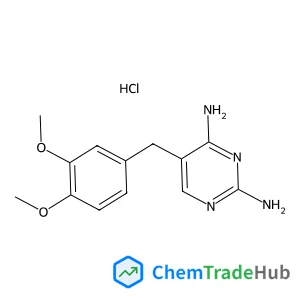
5-(3,4-Dimethoxybenzyl)-2,4-pyrimidinediamine hydrochloride (1:1)
CAS Number:
2507-23-5
Molecular Formula:
C13H17ClN4O2
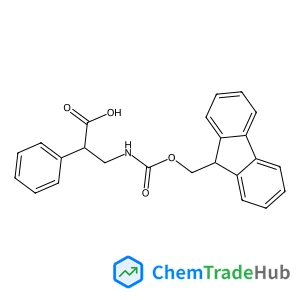
(S)-3-((((9H-Fluoren-9-yl)methoxy)carbonyl)amino)-2-phenylpropanoic acid
CAS Number:
1217663-60-9
Molecular Formula:
C24H21NO4
Recommended Suppliers





Disclaimer
This page provides academic journal information for reference and research purposes only. We are not affiliated with any journal publishers and do not handle publication submissions. For publication-related inquiries, please contact the respective journal publishers directly.
If you notice any inaccuracies in the information displayed, please contact us at support@chemtradehub.com. We will promptly review and address your concerns.