












Surface termination and strain-induced modulation of the structure and electronic properties in 2D perovskites (Cs2BCl4 & CsB2Cl5, B = Pb, Sn): a first-principles study
Literature Information
Publication Date
2023-11-11
DOI
10.1039/D3CP04343F
Impact Factor
3.676
Authors
Kiran Yadav, Nirat Ray
View Original
Abstract
Two-dimensional (2D) halide perovskites have demonstrated impressive long-term stability and superior device performance as compared to their three-dimensional (3D) counterparts. The potential of 2D halide perovskites for advanced photovoltaic applications can be enhanced by an understanding of how external factors like strain could be used to tune their optoelectronic properties. This study explores the effects of biaxial strain on the structure and electronic transport properties of 2D halide perovskites, focusing on the lowest energy (001) surfaces of (Cs2BCl4 and CsB2Cl5, B = Pb or Sn) with CsCl and BCl2 terminations. Using first-principles calculations, we find that the lower energy CsCl terminated surface, resulting in Cs2BCl4, couples strongly with biaxial strain. This termination shows bandgap modulations from approximately 1.5 eV to 1.8 eV for Cs2PbCl4 and 1.2 eV to 1.5 eV for Cs2SnCl4 with biaxial strain. Within the acoustic deformation potential theory, we compute hole mobilities, and find substantial enhancements of approximately 80% for Pb-based and 50% for Sn-based systems, thereby emphasizing the potential of strain engineering to further optimize charge transport properties in 2D halide perovskites.
Related Literature
Study of entropic characteristics of strongly correlated systems using VO2 as a model case
Asaya Fujita, Yoshiaki Kinemuchi, Wataru Yamaguchi
2016-10-18
Paper
DOI: 10.1039/C6CP06200H
Efficient charge transfer and utilization of near-infrared solar spectrum by ytterbium and thulium codoped gadolinium molybdate (Gd2(MoO4)3:Yb/Tm) nanophosphor in hybrid solar cells
Weifu Sun, Zihan Chen, Qin Zhang, Junli Zhou, Feng Li, Xiao Jin, Dongyu Li, Qinghua Li
2016-09-13
Paper
DOI: 10.1039/C6CP04963J
Rationalising pKa shifts in Bacillus circulans xylanase with computational studies
Kela Xiao
2016-07-27
Paper
DOI: 10.1039/C6CP02526A
Correction: Ion collision cross section analyses in quadrupole ion traps using the filter diagonalization method: a theoretical study
Ting Jiang, Muyi He, Dan Guo, Yanbing Zhai
2016-10-18
Correction
DOI: 10.1039/C6CP90248K
Effects of carbon surface topography on the electrode/electrolyte interface structure and relevance to Li–air batteries
S. V. Pavlov, S. A. Kislenko
2016-10-11
Paper
DOI: 10.1039/C6CP05552D
Crystal structures and superconductivity of technetium hydrides under pressure
Xiaofeng Li, Hanyu Liu, Feng Peng
2016-09-27
Paper
DOI: 10.1039/C6CP05702K
Correction: Simulations of the water exchange dynamics of lanthanide ions in 1-ethyl-3-methylimidazolium ethyl sulfate ([EMIm][EtSO4]) and water
Yi-Jung Tu, Matthew J. Allen, G. Andrés Cisneros
2016-09-14
Correction
DOI: 10.1039/C6CP90231F
Contrasting reactions of hydrated electron and formate radical with 2-thio analogues of cytosine and uracil
Kavanal P. Prasanthkumar, Juan R. Alvarez-Idaboy, Pavitra V. Kumar, Beena G. Singh, K. Indira Priyadarsini
2016-09-29
Paper
DOI: 10.1039/C6CP04483B
You might also like
Compound Q&A
Are there alternatives to 1-(4-Chlorophenyl)-N-hydroxymethanimine (CAS: 3848-36-0) in synthesis?
When considering alternatives to 1-(4-Chlorophenyl)-N-hydroxymethanimine (CAS: 3...
3848-36-01-(4-Chlorophenyl)-N...
Compound Q&A
How should (1R,9S,10S,12S,14E,16S,19R,20R,21S,22R)-3,9,21-Trihydroxy-5,10,12,14,16,20,22-heptamethyl-23,24-dioxatetracyclo[17.3.1.1~6,9~.0~2,7~]tetracosa-2,5,7,14-tetraen-4-one (CAS: 183202-73-5) be stored?
This compound should be stored in a cool, dry place away from direct sunlight. I...
183202-73-5(1R,9S,10S,12S,14E,1...
Compound Q&A
How is 3-(4-Bromophenyl)-5-(2-fluorophenyl)-1,2,4-oxadiazole (CAS: 419553-16-5) typically synthesized?
3-(4-Bromophenyl)-5-(2-fluorophenyl)-1,2,4-oxadiazole is synthesized through a m...
419553-16-53-(4-Bromophenyl)-5-...
Compound Q&A
How is 5-Chloro-2-(4-chlorophenyl)-4-methyl-6-[3-(1-piperidinyl)propoxy]pyrimidine (CAS: 1639220-19-1) typically synthesized?
5-Chloro-2-(4-chlorophenyl)-4-methyl-6-[3-(1-piperidinyl)propoxy]pyrimidine (CAS...
1639220-19-15-Chloro-2-(4-chloro...
Compound Q&A
What industries use 2-Chloro-4-(difluoromethoxy)pyridine (CAS: 1206978-15-5)?
2-Chloro-4-(difluoromethoxy)pyridine is used in the pharmaceutical industry for ...
1206978-15-52-Chloro-4-(difluoro...
Compound Q&A
What regulatory guidelines apply to 3-Chloro-6-methylpyridazine (CAS: 1121-79-5)?
3-Chloro-6-methylpyridazine (CAS: 1121-79-5) is classified under the Globally Ha...
1121-79-53-Chloro-6-methylpyr...
Compound Q&A
Are there alternatives to Methyl 4,5-dimethyl-2-nitrobenzoate in synthesis?
Several alternatives can be used in the synthesis of Methyl 4,5-dimethyl-2-nitro...
90922-74-0Methyl 4,5-dimethyl-...
Compound Q&A
Are there alternatives to (2E,2'E)-3,3'-(1,4-Phenylene)bisacrylaldehyde in synthesis?
Alternatives to (2E,2'E)-3,3'-(1,4-Phenylene)bisacrylaldehyde include other acry...
63405-68-5(2E,2'E)-3,3'-(1,4-P...
Compound Q&A
What is 3-Amino-5-chloropyridin-2-ol hydrochloride (CAS: 1261906-29-9)?
3-Amino-5-chloropyridin-2-ol hydrochloride is an organic compound with the CAS n...
1261906-29-93-Amino-5-chloropyri...
Compound Q&A
What precautions should be taken when handling 6,7-Difluoro-2,3-dihydro-4H-chromen-4-one (CAS: 1092349-93-3)?
When handling 6,7-Difluoro-2,3-dihydro-4H-chromen-4-one, it is essential to wear...
1092349-93-36,7-Difluoro-2,3-dih...
Source Journal
Physical Chemistry Chemical Physics

CiteScore:
5.5
Self-citation Rate:
10.3%
Articles per Year:
3036
Physical Chemistry Chemical Physics (PCCP) is an international journal co-owned by 19 physical chemistry and physics societies from around the world. This journal publishes original, cutting-edge research in physical chemistry, chemical physics and biophysical chemistry. To be suitable for publication in PCCP, articles must include significant innovation and/or insight into physical chemistry; this is the most important criterion that reviewers and Editors will judge against when evaluating submissions. The journal has a broad scope and welcomes contributions spanning experiment, theory, computation and data science. Topical coverage includes spectroscopy, dynamics, kinetics, statistical mechanics, thermodynamics, electrochemistry, catalysis, surface science, quantum mechanics, quantum computing and machine learning. Interdisciplinary research areas such as polymers and soft matter, materials, nanoscience, energy, surfaces/interfaces, and biophysical chemistry are welcomed if they demonstrate significant innovation and/or insight into physical chemistry. Joined experimental/theoretical studies are particularly appreciated when complementary and based on up-to-date approaches.
Recommended Compounds
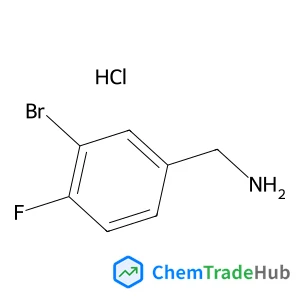
1-(3-Bromo-4-fluorophenyl)methanamine hydrochloride (1:1)
CAS Number:
202865-68-7
Molecular Formula:
C7H8BrClFN

Recommended Suppliers






Disclaimer
This page provides academic journal information for reference and research purposes only. We are not affiliated with any journal publishers and do not handle publication submissions. For publication-related inquiries, please contact the respective journal publishers directly.
If you notice any inaccuracies in the information displayed, please contact us at support@chemtradehub.com. We will promptly review and address your concerns.