


Theoretical investigation of the isomerization pathways of diazenes: torsion vs. inversion
Literature Information
Publication Date
2019-06-27
DOI
10.1039/C8CP05953E
Impact Factor
3.676
Authors
Aarti Sindhu, Renuka Pradhan, Upakarasamy Lourderaj, Manikandan Paranjothy
View Original
Abstract
Diazenes are an important family of organic compounds used widely in synthetic and materials chemistry. These molecules have a planar geometry and exhibit cis–trans isomerization. The simplest of all these molecules – diazene (N2H2) – has been subjected to several experimental and theoretical studies. Two mechanisms have been proposed for the cis–trans isomerization of diazene, which are an in-plane inversion and an out-of-plane torsion. The activation energies for these pathways are similar and the competition between these two mechanisms has been discussed in the literature based on electronic structure theory calculations. Three decades ago, a classical dynamics investigation of diazene isomerization was carried out using a model Hamiltonian and it was indicated that the in-plane inversion is forbidden classically because of a centrifugal barrier and the out-of-plane torsion is the only isomerization pathway. In the present work, we investigated the cis–trans isomerization dynamics of diazene using ab initio classical trajectory simulations at the CASSCF(2,2)/aug-cc-pVDZ level of electronic structure theory. The simulation results confirmed the presence of the aforementioned centrifugal barrier for the inversion and torsion was the only observed pathway. The calculations were repeated for a similar system (difluorodiazene, N2F2) and again the centrifugal barrier prevented the inversion pathway.
Recommended Journals

Journal of Catalysis

Pharmacological Reviews

Fibre Chemistry

Journal of Medicinal Chemistry

Kinetics and Catalysis

Molecular Pharmacology

Science

European Journal of Wood and Wood Products

Proceedings of the National Academy of Sciences of the United States of America

Organic Preparations and Procedures International
Related Literature
Synthetic ramoplanin analogues are accessible by effective incorporation of arylglycines in solid-phase peptide synthesis
James D. Swarbrick, Alasdair I. McKay
2023-09-29
Edge Article
DOI: 10.1039/D3SC01944F
Endogenous metal-ion dynamic nuclear polarization for NMR signal enhancement in metal organic frameworks
Ilia B. Moroz, Yishay Feldman, Raanan Carmieli, Xinyu Liu, Michal Leskes
2023-12-02
Edge Article
DOI: 10.1039/D3SC03456A
Selective chiral dimerization and folding driven by arene–perfluoroarene force
Qiuhong Cheng, Aiyou Hao, Pengyao Xing
2023-11-29
Edge Article
DOI: 10.1039/D3SC05212E
Thermally activated delayed fluorescence in a mechanically soft charge-transfer complex: role of the locally excited state
Kalyan Jyoti Kalita, Saikat Mondal, C. Malla Reddy, Ratheesh K. Vijayaraghavan
2023-11-10
Edge Article
DOI: 10.1039/D3SC03267A
Improving the potential of paraCEST through magnetic-coupling induced line sharpening
Xin Guo, Jiesheng Hu, Meng Yu, Gyula Tircsó, Jun Tao
2023-11-21
Edge Article
DOI: 10.1039/D3SC04770A
Direct conversion of carboxylic acids to free thiols via radical relay acridine photocatalysis enabled by N–O bond cleavage
Dmitry L. Lipilin, Mikhail O. Zubkov, Mikhail D. Kosobokov, Alexander D. Dilman
2023-12-05
Edge Article
DOI: 10.1039/D3SC05513B
Organic metal chalcogenide-assisted metabolic molecular diagnosis of central precocious puberty
Dan Ouyang, Chuanzhe Wang, Chao Zhong, Juan Lin, Gang Xu, Guane Wang, Zian Lin
2023-11-27
Edge Article
DOI: 10.1039/D3SC05633C
Boosting the interfacial dynamics and thermodynamics in polyanion cathode by carbon dots for ultrafast-charging sodium ion batteries
Yujin Li, Yu Mei, Roya Momen, Bai Song, Yujie Huang, Xue Zhong, Hanrui Ding, Wentao Deng, Guoqiang Zou, Hongshuai Hou, Xiaobo Ji
2023-11-30
Edge Article
DOI: 10.1039/D3SC05593K
Artificial cells with viscoadaptive behavior based on hydrogel-loaded giant unilamellar vesicles
2023-12-04
Edge Article
DOI: 10.1039/D3SC04687G
You might also like
Compound Q&A
How is 3-(2-Bromoimidazo[2,1-b]thiazol-6-yl)propanoic acid hydrochloride (CAS: 1187830-80-3) typically synthesized?
3-(2-Bromoimidazo[2,1-b]thiazol-6-yl)propanoic acid hydrochloride is typically s...
1187830-80-33-(2-Bromoimidazo[2,...
Compound Q&A
How is 2-Isopropyl-1,3-dioxane-5-carboxylic acid (CAS: 116193-72-7) typically synthesized?
2-Isopropyl-1,3-dioxane-5-carboxylic acid is typically synthesized by the carbox...
116193-72-72-Isopropyl-1,3-diox...
Compound Q&A
What is Alisporivir (CAS: 254435-95-5)?
Alisporivir (CAS: 254435-95-5) is an antiviral medication used in the treatment ...
254435-95-5Alisporivir
Compound Q&A
What are the physical and chemical properties of [1,2,4]triazolo[3,4-a]phthalazine (CAS: 234-80-0)?
[1,2,4]triazolo[3,4-a]phthalazine (CAS: 234-80-0) is a crystalline compound with...
234-80-0[1,2,4]triazolo[3,4-...
Compound Q&A
What regulatory guidelines apply to (2S)-5-Hydroxy-2-(4-hydroxyphenyl)-4-oxo-3,4-dihydro-2H-chromen-7-yl methyl beta-D-glucopyranosiduronate (CAS: 1985597-72-5)?
Regulatory guidelines for (2S)-5-Hydroxy-2-(4-hydroxyphenyl)-4-oxo-3,4-dihydro-2...
1985597-72-5(2S)-5-Hydroxy-2-(4-...
Compound Q&A
Is 2,2-Difluorocyclohexanamine hydrochloride (CAS: 921602-83-7) safe?
2,2-Difluorocyclohexanamine hydrochloride is generally safe when handled under p...
921602-83-72,2-Difluorocyclohex...
Compound Q&A
What are the main uses of 3-Nitro-2-phenylthiophene (CAS: 18150-94-2)?
3-Nitro-2-phenylthiophene is primarily used in the synthesis of other organic co...
18150-94-23-Nitro-2-phenylthio...
Compound Q&A
What is 1-(Trifluoroacetyl)-4-piperidinecarbonitrile (CAS: 77940-79-5)?
1-(Trifluoroacetyl)-4-piperidinecarbonitrile (CAS: 77940-79-5) is a colorless to...
77940-79-51-(Trifluoroacetyl)-...
Compound Q&A
What is the market or research trend for 1,3,6,8-Tetranitro-9H-carbazole (CAS: 4543-33-3)?
Research and market trends for 1,3,6,8-Tetranitro-9H-carbazole (CAS: 4543-33-3) ...
4543-33-31,3,6,8-Tetranitro-9...
Compound Q&A
How should waste containing Dibenzo[b,d]thiophen-1-ylboronic acid (CAS: 1245943-60-5) be handled?
Waste containing Dibenzo[b,d]thiophen-1-ylboronic acid (CAS: 1245943-60-5) shoul...
1245943-60-5Dibenzo[b,d]thiophen...
Source Journal
Physical Chemistry Chemical Physics

CiteScore:
5.5
Self-citation Rate:
10.3%
Articles per Year:
3036
Physical Chemistry Chemical Physics (PCCP) is an international journal co-owned by 19 physical chemistry and physics societies from around the world. This journal publishes original, cutting-edge research in physical chemistry, chemical physics and biophysical chemistry. To be suitable for publication in PCCP, articles must include significant innovation and/or insight into physical chemistry; this is the most important criterion that reviewers and Editors will judge against when evaluating submissions. The journal has a broad scope and welcomes contributions spanning experiment, theory, computation and data science. Topical coverage includes spectroscopy, dynamics, kinetics, statistical mechanics, thermodynamics, electrochemistry, catalysis, surface science, quantum mechanics, quantum computing and machine learning. Interdisciplinary research areas such as polymers and soft matter, materials, nanoscience, energy, surfaces/interfaces, and biophysical chemistry are welcomed if they demonstrate significant innovation and/or insight into physical chemistry. Joined experimental/theoretical studies are particularly appreciated when complementary and based on up-to-date approaches.
Recommended Compounds

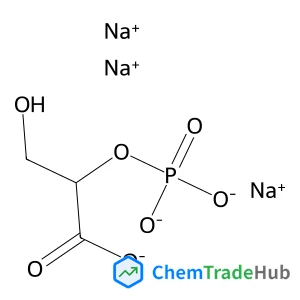
Sodium (1R)-1-carboxy-2-hydroxyethyl phosphate hydrate (2:1:1)
CAS Number:
70195-25-4
Molecular Formula:
C3H7Na2O8P
Recommended Suppliers



Disclaimer
This page provides academic journal information for reference and research purposes only. We are not affiliated with any journal publishers and do not handle publication submissions. For publication-related inquiries, please contact the respective journal publishers directly.
If you notice any inaccuracies in the information displayed, please contact us at support@chemtradehub.com. We will promptly review and address your concerns.