












Reply to ‘Comment on “Angstrom-scale probing of paramagnetic centers location in nanodiamonds by 3He NMR at low temperatures”’ by A. Shames, V. Osipov and A. Panich, Phys. Chem. Chem. Phys. 2018, 20, DOI: 10.1039/c8cp03331e
Literature Information
Publication Date
2018-10-16
DOI
10.1039/C8CP05801F
Impact Factor
3.676
Authors
Vyacheslav Kuzmin, Kajum Safiullin, Gleb Dolgorukov, Andrey Stanislavovas, Egor Alakshin, Sergei Orlinskii, Alexander Klochkov
View Original
Abstract
Shames et al. made a comment on our article (DOI: 10.1039/C7CP05898E) stating that their experience in EPR studies of detonation nanodiamonds suggests the existence of two main types of paramagnetic center in detonation nanodiamonds which questions our results. In this reply we provide insights into why there is only one main type of paramagnetic centers detected in nanodiamonds used in this work, which validates the correctness of the proposed original method to determine the distances between paramagnetic centers and nanoparticle surfaces by 3He NMR.
Related Literature
The use of the Rx spin label in orientation measurement on proteins, by EPR
M. A. Stevens, J. E. McKay, J. L. S. Robinson, H. EL Mkami, G. M. Smith, D. G. Norman
2015-09-25
Paper
DOI: 10.1039/C5CP04753F
Isolation of pristine MXene from Nb4AlC3 MAX phase: a first-principles study
Avanish Mishra, Pooja Srivastava, Hiroshi Mizuseki, Kwang-Ryeol Lee, Abhishek K. Singh
2016-03-22
Paper
DOI: 10.1039/C5CP07609A
Performance of a modified hybrid functional in the simultaneous description of stoichiometric and reduced TiO2 polymorphs
Oriol Lamiel-García, Jin Yong Lee, Francesc Illas
2016-04-01
Paper
DOI: 10.1039/C6CP00912C
Combined NMR and molecular dynamics modeling study of transport properties in sulfonamide based deep eutectic lithium electrolytes: LiTFSI based binary systems
Allen D. Pauric, Ion C. Halalay, Gillian R. Goward
2016-01-26
Paper
DOI: 10.1039/C5CP05811B
Current transient and in situ AFM studies of initial growth stages of electrochemically deposited nickel cobalt hydroxide nanosheet films
Tuyen Nguyen, M. Fátima Montemor
2016-03-29
Paper
DOI: 10.1039/C6CP00709K
Bayesian inference of protein ensembles from SAXS data
L. D. Antonov, W. Boomsma, T. Hamelryck
2015-10-28
Paper
DOI: 10.1039/C5CP04886A
Defect structure and optical phonon confinement in ultrananocrystalline BixSn1−xO2 (x = 0, 0.03, 0.05, and 0.08) synthesized by a sonochemical method
L. Aswaghosh, Divinah Manoharan, N. Victor Jaya
2016-01-18
Paper
DOI: 10.1039/C5CP06214D
Synthesis and spectral measurements of sulphonated graphene: some anomalous observations
Susmita Maiti, Somashree Kundu, Debasmita Ghosh, Somrita Mondal, Chandra Nath Roy, Abhijit Saha
2016-02-04
Paper
DOI: 10.1039/C5CP05799J
Structural determination of niobium-doped silicon clusters by far-infrared spectroscopy and theory
Xiaojun Li, Pieterjan Claes, Marko Haertelt, Peter Lievens, Ewald Janssens
2016-01-27
Paper
DOI: 10.1039/C5CP07298K
You might also like
Compound Q&A
What are the main uses of 1-(3-Aminophenyl)-3-[(3R)-1-(3,3-dimethyl-2-oxobutyl)-2-oxo-5-(2-pyridinyl)-2,3-dihydro-1H-1,4-benzodiazepin-3-yl]urea (CAS: 155412-88-7)?
This compound is mainly used as an intermediate in the synthesis of antipsychoti...
155412-88-71-(3-Aminophenyl)-3-...
Compound Q&A
How should waste containing 1-(D-Ribofuranosyl)-1,4-dihydro-3-pyridinecarboxamide (CAS: 19132-12-8) be handled?
Waste containing 1-(D-Ribofuranosyl)-1,4-dihydro-3-pyridinecarboxamide (CAS: 191...
19132-12-81-(D-Ribofuranosyl)-...
Compound Q&A
What regulatory guidelines apply to 2-Methyl-2-propanyl 3-bromo-3-(hydroxymethyl)-1-azetidinecarboxylate (CAS: 2007919-81-3)?
2-Methyl-2-propanyl 3-bromo-3-(hydroxymethyl)-1-azetidinecarboxylate (CAS: 20079...
2007919-81-32-Methyl-2-propanyl ...
Compound Q&A
What is N-(4-Chloro-2-pyridinyl)acetamide (CAS: 245056-66-0)?
N-(4-Chloro-2-pyridinyl)acetamide (CAS: 245056-66-0) is a chemical compound with...
245056-66-0N-(4-Chloro-2-pyridi...
Compound Q&A
What is 5-Chloro-2-hydroxybenzoic acid (CAS: 321-14-2)?
5-Chloro-2-hydroxybenzoic acid, also known as 5-chlorosalicylic acid, is an arom...
321-14-25-Chloro-2-hydroxybe...
Compound Q&A
What precautions should be taken when handling 1,1-Dichloro-1-fluoroethane (CAS: 1717-00-6)?
When handling 1,1-Dichloro-1-fluoroethane (CAS: 1717-00-6), it is important to u...
1717-00-61,1-Dichloro-1-fluor...
Compound Q&A
What are the physical and chemical properties of Fmoc-(2S,3R)-3-phenylpyrrolidine-2-carboxylic acid (CAS: 281655-32-1)?
Fmoc-(2S,3R)-3-phenylpyrrolidine-2-carboxylic acid is a white crystalline solid ...
281655-32-1Fmoc-(2S,3R)-3-pheny...
Compound Q&A
What are the main uses of 4-Amino-5-bromo-2-pyridinecarboxylic acid (CAS: 1363381-01-4)?
4-Amino-5-bromo-2-pyridinecarboxylic acid is primarily used as a precursor in th...
1363381-01-44-Amino-5-bromo-2-py...
Compound Q&A
What precautions should be taken when handling (S)-tert-butyl 2-((2-(4-bromophenyl)-2-oxoethyl)carbamoyl)pyrrolidine-1-carboxylate (CAS: 1007881-98-2)?
Handling this compound should be done with personal protective equipment (PPE) i...
1007881-98-2(S)-tert-butyl 2-((2...
Compound Q&A
What precautions should be taken when handling 8-bromo-2,2-dimethyl-3,4-dihydro-2H-1,4-benzoxazin-3-one (CAS: 688363-73-7)?
When handling 8-bromo-2,2-dimethyl-3,4-dihydro-2H-1,4-benzoxazin-3-one, use prop...
688363-73-78-bromo-2,2-dimethyl...
Source Journal
Physical Chemistry Chemical Physics

CiteScore:
5.5
Self-citation Rate:
10.3%
Articles per Year:
3036
Physical Chemistry Chemical Physics (PCCP) is an international journal co-owned by 19 physical chemistry and physics societies from around the world. This journal publishes original, cutting-edge research in physical chemistry, chemical physics and biophysical chemistry. To be suitable for publication in PCCP, articles must include significant innovation and/or insight into physical chemistry; this is the most important criterion that reviewers and Editors will judge against when evaluating submissions. The journal has a broad scope and welcomes contributions spanning experiment, theory, computation and data science. Topical coverage includes spectroscopy, dynamics, kinetics, statistical mechanics, thermodynamics, electrochemistry, catalysis, surface science, quantum mechanics, quantum computing and machine learning. Interdisciplinary research areas such as polymers and soft matter, materials, nanoscience, energy, surfaces/interfaces, and biophysical chemistry are welcomed if they demonstrate significant innovation and/or insight into physical chemistry. Joined experimental/theoretical studies are particularly appreciated when complementary and based on up-to-date approaches.
Recommended Compounds
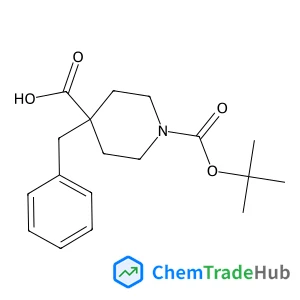
4-Benzyl-1-(tert-butoxycarbonyl)piperidine-4-carboxylic acid
CAS Number:
170838-87-6
Molecular Formula:
C18H25NO4
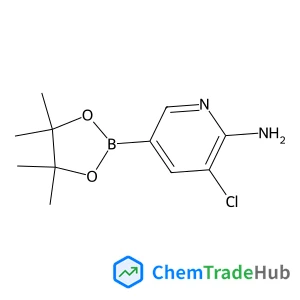
3-Chloro-5-(4,4,5,5-tetramethyl-1,3,2-dioxaborolan-2-yl)-2-pyridinamine
CAS Number:
1032758-99-8
Molecular Formula:
C11H16BClN2O2
Recommended Suppliers




Disclaimer
This page provides academic journal information for reference and research purposes only. We are not affiliated with any journal publishers and do not handle publication submissions. For publication-related inquiries, please contact the respective journal publishers directly.
If you notice any inaccuracies in the information displayed, please contact us at support@chemtradehub.com. We will promptly review and address your concerns.