













Mechanisms of lipid extraction from skin lipid bilayers by sebum triglycerides
Literature Information
Publication Date
2018-12-17
DOI
10.1039/C8CP05706K
Impact Factor
3.676
Authors
Anna Sofia Tascini, Massimo G. Noro, John M. Seddon, Rongjun Chen, Fernando Bresme
View Original
Abstract
The skin surface, our first barrier against the external environment, is covered by the sebum oil, a lipid film composed of sebaceous and epidermal lipids, which is important in the regulation of the hydration level of our skin. Here, we investigate the pathways leading to the transfer of epidermal lipids from the skin lipid bilayer to the sebum. We show that the sebum triglycerides, a major component of sebum, interact strongly with the epidermal lipids and extract them from the bilayer. Using microsecond time scale molecular dynamics simulations, we identify and quantify the free energy associated with the skin lipid extraction process.
Related Literature
Enantioselective organocatalytic Michael addition of malonate esters to nitroolefins using bifunctional cinchonine derivatives‡
Jinxing Ye, Darren J. Dixon, Peter S. Hynes
2005-08-08
Communication
DOI: 10.1039/B508833J
A latent photoreaction predominates within water-soluble calixarenes: photochemistry of benzoinalkyl ethers
Raja Kaliappan, Lakshmi S. Kaanumalle, V. Ramamurthy
2005-07-13
Communication
DOI: 10.1039/B507517C
Solvolytic routes to new nonabismuth hydroxy- and alkoxy-oxo complexes: synthesis, characterization and solid-state structures of novel nonabismuth polyoxo cations Bi9(μ3-O)8(μ3-OR)65+ (R = H, Et)
John H. Thurston, Dale C. Swenson, Louis Messerle
2005-07-27
Communication
DOI: 10.1039/B504864H
Palladium(0) alkyne complexes as active species: a DFT investigation
Mårten Ahlquist, Giancarlo Fabrizi, Sandro Cacchi, Per-Ola Norrby
2005-07-20
Communication
DOI: 10.1039/B507784B
Polydipyrrole- and polydicarbazole-nanorods as new nanosized supports for DNA hybridization
Jean-Paul Lellouche, Senthil Govindaraji, Augustine Joseph, Jyongsik Jang, Kyung Jin Lee
2005-07-14
Communication
DOI: 10.1039/B502483H
Gold nanoparticle-based competitive colorimetric assay for detection of protein–protein interactions
Charng-Sheng Tsai, Ting-Bin Yu, Chao-Tsen Chen
2005-07-28
Communication
DOI: 10.1039/B507237A
Layer-by-layer assembly of charged poly(phenylacetylene)s with induced macromolecular helicity
Katsuhiro Maeda, Yasuaki Matsushita, Muneyoshi Ezaka
2005-07-26
Communication
DOI: 10.1039/B507863F
Targeting of mixed sequence double-stranded DNA using pyrene-functionalized 2′-amino-α-l-LNA
Patrick J. Hrdlicka, T. Santhosh Kumar, Jesper Wengel
2005-07-21
Communication
DOI: 10.1039/B506986F
Surfactant-free hydrothermal synthesis of lithium aluminate microbricks and nanorods from aluminium oxide nanoparticles
Upendra. A. Joshi, Soo Hyun Chung, Jae Sung Lee
2005-08-04
Communication
DOI: 10.1039/B508168H
You might also like
Compound Q&A
How should waste containing N-Methoxy-N-methyl-1,3-thiazole-5-carboxamide (CAS: 898825-89-3) be handled?
Waste containing N-Methoxy-N-methyl-1,3-thiazole-5-carboxamide (CAS: 898825-89-3...
898825-89-3N-Methoxy-N-methyl-1...
Compound Q&A
How should N-(4-Biphenylyl)dibenzo[b,d]furan-4-amine (CAS: 1318338-47-4) be stored?
N-(4-Biphenylyl)dibenzo[b,d]furan-4-amine should be stored in a tightly sealed c...
1318338-47-4N-(4-Biphenylyl)dibe...
Compound Q&A
What is the market or research trend for 3-Acetamido-5-amino-2,4,6-triiodobenzoic acid (CAS: 1713-07-1)?
The market for 3-Acetamido-5-amino-2,4,6-triiodobenzoic acid (CAS: 1713-07-1) is...
1713-07-13-Acetamido-5-amino-...
Compound Q&A
How should Benzyl 2-O-acetyl-3,4,6-tri-O-benzyl-beta-D-galactopyranoside (CAS: 61820-03-9) be stored?
Benzyl 2-O-acetyl-3,4,6-tri-O-benzyl-beta-D-galactopyranoside (CAS: 61820-03-9) ...
61820-03-9Benzyl 2-O-acetyl-3,...
Compound Q&A
What regulatory guidelines apply to 2-Ethylpiperazine dihydrochloride (CAS: 438050-52-3)?
2-Ethylpiperazine dihydrochloride (CAS: 438050-52-3) is regulated under the Glob...
438050-52-32-Ethylpiperazine di...
Compound Q&A
What regulatory guidelines apply to 1,1'-[1,3-Phenylenebis(methylene)]bis(3-methyl-1H-pyrrole-2,5-dione) (CAS: 119462-56-5)?
1,1'-[1,3-Phenylenebis(methylene)]bis(3-methyl-1H-pyrrole-2,5-dione) (CAS: 11946...
119462-56-51,1'-[1,3-Phenyleneb...
Compound Q&A
Are there alternatives to 5-Fluoro-2-(1-pyrrolidinyl)pyridine (CAS: 1287217-79-1) in synthesis?
Several alternatives can be used in the synthesis of 5-Fluoro-2-(1-pyrrolidinyl)...
1287217-79-15-Fluoro-2-(1-pyrrol...
Compound Q&A
What precautions should be taken when handling 1-((2R,3R,4R,5R)-5-((bis(4-methoxyphenyl)(phenyl)methoxy)methyl)-4-hydroxy-3-methoxytetrahydrofuran-2-yl)-5-methylpyrimidine-2,4(1H,3H)-dione (CAS: 153631-19-7)?
Proper personal protective equipment (PPE) must be worn when handling this compo...
153631-19-71-((2R,3R,4R,5R)-5-(...
Compound Q&A
What precautions should be taken when handling 6-Bromoimidazo[1,2-a]pyridin-8-amine (CAS: 676371-00-9)?
When handling 6-Bromoimidazo[1,2-a]pyridin-8-amine, it is important to wear appr...
676371-00-96-Bromoimidazo[1,2-a...
Compound Q&A
Are there alternatives to (2S,4R)-4-(4-Nitrobenzyl)pyrrolidine-2-carboxylic acid hydrochloride (CAS: 1049740-22-8) in synthesis?
Alternatives to (2S,4R)-4-(4-Nitrobenzyl)pyrrolidine-2-carboxylic acid hydrochlo...
1049740-22-8(2S,4R)-4-(4-Nitrobe...
Source Journal
Physical Chemistry Chemical Physics

CiteScore:
5.5
Self-citation Rate:
10.3%
Articles per Year:
3036
Physical Chemistry Chemical Physics (PCCP) is an international journal co-owned by 19 physical chemistry and physics societies from around the world. This journal publishes original, cutting-edge research in physical chemistry, chemical physics and biophysical chemistry. To be suitable for publication in PCCP, articles must include significant innovation and/or insight into physical chemistry; this is the most important criterion that reviewers and Editors will judge against when evaluating submissions. The journal has a broad scope and welcomes contributions spanning experiment, theory, computation and data science. Topical coverage includes spectroscopy, dynamics, kinetics, statistical mechanics, thermodynamics, electrochemistry, catalysis, surface science, quantum mechanics, quantum computing and machine learning. Interdisciplinary research areas such as polymers and soft matter, materials, nanoscience, energy, surfaces/interfaces, and biophysical chemistry are welcomed if they demonstrate significant innovation and/or insight into physical chemistry. Joined experimental/theoretical studies are particularly appreciated when complementary and based on up-to-date approaches.
Recommended Compounds
![[5-fluoro-2-(morpholine-4-carbonyl)phenyl]boronic acid structure](https://static.chemtradehub.com/structs/121/1217501-26-2-505c.webp "[5-fluoro-2-(morpholine-4-carbonyl)phenyl]boronic acid structure")
[5-fluoro-2-(morpholine-4-carbonyl)phenyl]boronic acid
CAS Number:
1217501-26-2
Molecular Formula:
C11H13BFNO4
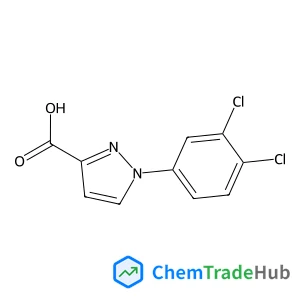
1-(3,4-Dichlorophenyl)-1H-pyrazole-3-carboxylic acid
CAS Number:
1152949-12-6
Molecular Formula:
C10H6Cl2N2O2

Recommended Suppliers







Disclaimer
This page provides academic journal information for reference and research purposes only. We are not affiliated with any journal publishers and do not handle publication submissions. For publication-related inquiries, please contact the respective journal publishers directly.
If you notice any inaccuracies in the information displayed, please contact us at support@chemtradehub.com. We will promptly review and address your concerns.