












Kinetics of the defunctionalization of oxidized few-layer graphene nanoflakes
Literature Information
Publication Date
2018-08-30
DOI
10.1039/C8CP05149F
Impact Factor
3.676
Authors
Sergei A. Chernyak, Anton S. Ivanov, Angelina M. Podgornova, Ekaterina A. Arkhipova, Stepan Yu. Kupreenko, Alexei V. Shumyantsev, Natalia E. Strokova, Konstantin I. Maslakov, Serguei V. Savilov, Valery V. Lunin
View Original
Abstract
Thermal defunctionalization of oxidized jellyfish-like few-layer graphene nanoflakes was studied under non-isothermal conditions by simultaneous thermal analysis. Activation energies for thermal decomposition of different oxygen functional groups were calculated by the Kissinger method and compared with those for oxidized carbon nanotubes. Oxygen content in graphene nanoflakes was found to significantly affect the decomposition activation energies of carboxylic and keto/hydroxy acids because of their acceptor properties and strong distortion of the graphene layers at the edges of the nanoflakes. The structure of the carbon material and the oxygen chemical state significantly influence the decomposition kinetics of thermally stable oxygen-containing groups. The activation energy for thermal decomposition of phenol groups (110–150 kJ mol−1) is close to that for graphene oxide reduction.
Related Literature
Feature engineering applied to intraoperative in vivo Raman spectroscopy sheds light on molecular processes in brain cancer: a retrospective study of 65 patients
Rajeev Yadav, Rajeev Agarwal, Samuel Kadoury, Dominique Trudel, Marie-Christine Guiot, Kevin Petrecca
2019-10-15
Communication
DOI: 10.1039/C9AN01144G
The origin of the band at around 730 cm−1 in the SERS spectra of bacteria: a stable isotope approach
Patrick Kubryk, Reinhard Niessner, Natalia P. Ivleva
2016-04-20
Communication
DOI: 10.1039/C6AN00306K
Fluorescence array-based sensing of nitroaromatics using conjugated polyelectrolytes
Yu Zong Chen
2016-05-03
Communication
DOI: 10.1039/C6AN00678G
A fully battery-powered inexpensive spectrophotometric system for high-sensitivity point-of-care analysis on a microfluidic chip
Maowei Dou, Juan Lopez, Misael Rios, Oscar Garcia, Chuan Xiao, Michael Eastman, XiuJun Li
2016-04-20
Paper
DOI: 10.1039/C6AN00370B
A new label-free fluorescent sensor for human immunodeficiency virus detection based on exonuclease III-assisted quadratic recycling amplification and DNA-scaffolded silver nanoclusters
Wen Yang, Jianniao Tian, Lijun Wang, Shui Fu, Hongyun Huang, Yanchun Zhao, Shulin Zhao
2016-03-23
Paper
DOI: 10.1039/C6AN00184J
DNA tetrahedron and star trigon nanostructures for target recycling detection of nucleic acid
Xifeng Chen, Bidou Wang, Guangxing Liu, Yuguo Tang, Peng Miao
2016-05-04
Communication
DOI: 10.1039/C6AN00762G
Emerging paper microfluidic devices
Bingbing Gao, Xin Li, Yaqiong Yang, Jianlin Chu, Bingfang He
2019-09-18
Critical Review
DOI: 10.1039/C9AN01275C
Development of portable defocusing micro-scale spatially offset Raman spectroscopy
Marco Realini, Alessandra Botteon, Claudia Conti, Chiara Colombo, Pavel Matousek
2016-04-08
Paper
DOI: 10.1039/C6AN00413J
Addressing the practicalities of anodic stripping voltammetry for heavy metal detection: a tutorial review
Julie V. Macpherson
2019-10-15
Tutorial Review
DOI: 10.1039/C9AN01437C
Smartphone spectrometer for colorimetric biosensing
Xiaohu Liu, Peng Chen, Nhung Thi Tran, Jinling Zhang, Wei Sheng Chia, Bo Liedberg
2016-04-29
Communication
DOI: 10.1039/C5AN02508G
You might also like
Compound Q&A
What precautions should be taken when handling 4-(2-Furylmethyl)thiomorpholine 1,1-dioxide (CAS: 79206-94-3)?
When handling 4-(2-Furylmethyl)thiomorpholine 1,1-dioxide (CAS: 79206-94-3), it ...
79206-94-34-(2-Furylmethyl)thi...
Compound Q&A
What precautions should be taken when handling 4-Chloro-N-[2-(4-morpholinyl)ethyl]benzamide (CAS: 71320-77-9)?
When handling 4-Chloro-N-[2-(4-morpholinyl)ethyl]benzamide (CAS: 71320-77-9), it...
71320-77-94-Chloro-N-[2-(4-mor...
Compound Q&A
How should waste containing 2-[2-(2-Methoxyethoxy)ethoxy]ethyl 4-methylbenzenesulfonate (CAS: 62921-74-8) be handled?
Waste containing this compound (CAS: 62921-74-8) should be handled according to ...
62921-74-82-[2-(2-Methoxyethox...
Compound Q&A
How should waste containing (S)-Methyl 2-amino-3-cyclohexylpropanoate be handled?
Waste containing (S)-Methyl 2-amino-3-cyclohexylpropanoate should be collected i...
40056-18-6(S)-Methyl 2-amino-3...
Compound Q&A
How is 5-({4-[(2S,4R)-4-Hydroxy-2-methyltetrahydro-2H-pyran-4-yl]-2-thienyl}sulfanyl)-1-methyl-1,3-dihydro-2H-indol-2-one (CAS: 166882-70-8) typically synthesized?
This compound can be synthesized using a multi-step process involving the conjug...
166882-70-85-({4-[(2S,4R)-4-Hyd...
Compound Q&A
Are there alternatives to (2E)-3-(3,4-Dichlorophenyl)acrylic acid (CAS: 7312-27-8) in synthesis?
There are several alternatives to (2E)-3-(3,4-Dichlorophenyl)acrylic acid in syn...
7312-27-8(2E)-3-(3,4-Dichloro...
Compound Q&A
How should Ethyl 6-(2-nitrophenyl)imidazo[2,1-b][1,3]thiazole-3-carboxylate (CAS: 925437-84-9) be stored?
Ethyl 6-(2-nitrophenyl)imidazo[2,1-b][1,3]thiazole-3-carboxylate (CAS: 925437-84...
925437-84-9Ethyl 6-(2-nitrophen...
Compound Q&A
How should waste containing 2-(1,3-Thiazol-2-yl)ethanamine (CAS: 18453-07-1) be handled?
Waste containing 2-(1,3-Thiazol-2-yl)ethanamine (CAS: 18453-07-1) should be coll...
18453-07-12-(1,3-Thiazol-2-yl)...
Compound Q&A
How is Methyl 5-iodo-2-methylbenzoate (CAS: 103440-54-6) typically synthesized?
Methyl 5-iodo-2-methylbenzoate can be synthesized through the iodination of meth...
103440-54-6Methyl 5-iodo-2-meth...
Compound Q&A
How is 5-Chloro[1,2,4]triazolo[1,5-a]pyridine (CAS: 1427399-34-5) typically synthesized?
5-Chloro[1,2,4]triazolo[1,5-a]pyridine is commonly synthesized via the condensat...
1427399-34-55-Chloro[1,2,4]triaz...
Source Journal
Physical Chemistry Chemical Physics

CiteScore:
5.5
Self-citation Rate:
10.3%
Articles per Year:
3036
Physical Chemistry Chemical Physics (PCCP) is an international journal co-owned by 19 physical chemistry and physics societies from around the world. This journal publishes original, cutting-edge research in physical chemistry, chemical physics and biophysical chemistry. To be suitable for publication in PCCP, articles must include significant innovation and/or insight into physical chemistry; this is the most important criterion that reviewers and Editors will judge against when evaluating submissions. The journal has a broad scope and welcomes contributions spanning experiment, theory, computation and data science. Topical coverage includes spectroscopy, dynamics, kinetics, statistical mechanics, thermodynamics, electrochemistry, catalysis, surface science, quantum mechanics, quantum computing and machine learning. Interdisciplinary research areas such as polymers and soft matter, materials, nanoscience, energy, surfaces/interfaces, and biophysical chemistry are welcomed if they demonstrate significant innovation and/or insight into physical chemistry. Joined experimental/theoretical studies are particularly appreciated when complementary and based on up-to-date approaches.
Recommended Compounds
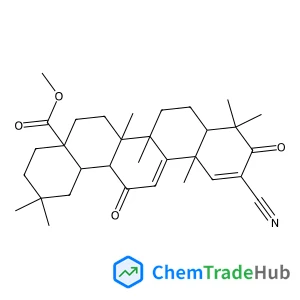
Methyl 2-cyano-3,12-dioxooleana-1,9(11)-dien-28-oate
CAS Number:
218600-53-4
Molecular Formula:
C32H43NO4

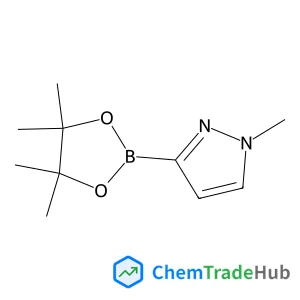
1-Methyl-3-(4,4,5,5-tetramethyl-1,3,2-dioxaborolan-2-yl)-1H-pyrazole
CAS Number:
1020174-04-2
Molecular Formula:
C10H17BN2O2

Recommended Suppliers



Disclaimer
This page provides academic journal information for reference and research purposes only. We are not affiliated with any journal publishers and do not handle publication submissions. For publication-related inquiries, please contact the respective journal publishers directly.
If you notice any inaccuracies in the information displayed, please contact us at support@chemtradehub.com. We will promptly review and address your concerns.