


Multiple binding modes of a moderate ice-binding protein from a polar microalga
Literature Information
Publication Date
2018-09-13
DOI
10.1039/C8CP04727H
Impact Factor
3.676
Authors
Maddalena Bayer-Giraldi
View Original
Abstract
Ice-binding proteins (IBPs) produced by cold-tolerant organisms interact with ice and strongly control crystal growth. The molecular basis for the different magnitudes of activity displayed by various IBPs (moderate and hyperactive) has not yet been clarified. Previous studies questioned whether the moderate activity of some IBPs relies on their weaker binding modus to the ice surface, compared to hyperactive IBPs, rather than relying on binding only to selected faces of the ice crystal. We present the structure of one moderate IBP from the sea-ice diatom Fragilariopsis cylindrus (fcIBP) as determined by X-ray crystallography and investigate the protein's binding modes to the growing ice-water interface using molecular dynamics simulations. The structure of fcIBP is the IBP-1 fold, defined by a discontinuous β-solenoid delimitated by three faces (A, B and C-faces) and braced by an α-helix. The fcIBP structure shows capping loops on both N- and C-terminal parts of the solenoid. We show that the protein adsorbs on both the prism and the basal faces of ice crystals, confirming experimental results. The fcIBP binds irreversibly to the prism face using the loop between the B and the C-faces, involving also the B-face in water immobilization despite its irregular structure. The α-helix attaches the protein to the basal face with a partly reversible modus. Our results suggest that fcIBP has a looser attachment to ice and that this weaker binding modus is the basis to explain the moderate activity of fcIBP.
Recommended Journals

Pharmacological Reviews

Organic Preparations and Procedures International

Proceedings of the National Academy of Sciences of the United States of America

Science Progress

Journal of Organometallic Chemistry

Kinetics and Catalysis

Journal of Heterocyclic Chemistry

Planta Medica

Journal of Medicinal Chemistry

Journal of Catalysis
Related Literature
Broadening of the derivative discontinuity in density functional theory
P. Schmitteckert
2011-07-27
Paper
DOI: 10.1039/C1CP21247H
Voltammetry and in situscanning tunnelling spectroscopy of osmium, iron, and ruthenium complexes of 2,2′:6′,2′′-terpyridine covalently linked to Au(111)-electrodes
Princia Salvatore, Allan Glargaard Hansen, Thomas Bjørnholm, Richard John Nichols, Jens Ulstrup
2011-06-23
Paper
DOI: 10.1039/C1CP21197H
Structural, morphological, and kinetic studies of β-amyloid peptide aggregation on self-assembled monolayers
Qiuming Wang, Nilam Shah, Jun Zhao, Chengshan Wang, Chao Zhao, Lingyun Liu, Lingyan Li, Feimeng Zhou, Jie Zheng
2011-07-19
Paper
DOI: 10.1039/C1CP21156K
Aromaticity in all-metal annular systems: the counter-ion effect
Arindam Chakraborty, Santanab Giri, Soma Duley, Anakuthil Anoop, Patrick Bultinck, Pratim K. Chattaraj
2011-07-26
Perspective
DOI: 10.1039/C1CP21430F
A tunable single-component warm white-light Sr3Y(PO4)3:Eu2+,Mn2+ phosphor for white-light emitting diodes
Hongpeng You
2011-07-20
Paper
DOI: 10.1039/C1CP20635D
Acid properties of solid acid catalysts characterized by solid-state 31P NMR of adsorbed phosphorous probe molecules
Anmin Zheng, Shing-Jong Huang, Feng Deng
2011-07-25
Perspective
DOI: 10.1039/C1CP20417C
The protein folding transition-state ensemble from a Gō-like model
Athi N. Naganathan
2011-07-21
Paper
DOI: 10.1039/C1CP20964G
Excited-state N–H⋯S hydrogen bond between indole and dimethyl sulfide: time-dependent density functional theory study
Yufang Liu, Kai Jiang, Deheng Shi, Jinfeng Sun
2011-07-25
Paper
DOI: 10.1039/C1CP20729F
Hierarchical micro/nano structures of carbon composites as anodes for microbial fuel cells
Yong Zhao
2011-07-25
Paper
DOI: 10.1039/C1CP21813A
You might also like
Compound Q&A
What are the main uses of 1-(3-Aminophenyl)-3-[(3R)-1-(3,3-dimethyl-2-oxobutyl)-2-oxo-5-(2-pyridinyl)-2,3-dihydro-1H-1,4-benzodiazepin-3-yl]urea (CAS: 155412-88-7)?
This compound is mainly used as an intermediate in the synthesis of antipsychoti...
155412-88-71-(3-Aminophenyl)-3-...
Compound Q&A
How should waste containing 1-(D-Ribofuranosyl)-1,4-dihydro-3-pyridinecarboxamide (CAS: 19132-12-8) be handled?
Waste containing 1-(D-Ribofuranosyl)-1,4-dihydro-3-pyridinecarboxamide (CAS: 191...
19132-12-81-(D-Ribofuranosyl)-...
Compound Q&A
What regulatory guidelines apply to 2-Methyl-2-propanyl 3-bromo-3-(hydroxymethyl)-1-azetidinecarboxylate (CAS: 2007919-81-3)?
2-Methyl-2-propanyl 3-bromo-3-(hydroxymethyl)-1-azetidinecarboxylate (CAS: 20079...
2007919-81-32-Methyl-2-propanyl ...
Compound Q&A
What is N-(4-Chloro-2-pyridinyl)acetamide (CAS: 245056-66-0)?
N-(4-Chloro-2-pyridinyl)acetamide (CAS: 245056-66-0) is a chemical compound with...
245056-66-0N-(4-Chloro-2-pyridi...
Compound Q&A
What is 5-Chloro-2-hydroxybenzoic acid (CAS: 321-14-2)?
5-Chloro-2-hydroxybenzoic acid, also known as 5-chlorosalicylic acid, is an arom...
321-14-25-Chloro-2-hydroxybe...
Compound Q&A
What precautions should be taken when handling 1,1-Dichloro-1-fluoroethane (CAS: 1717-00-6)?
When handling 1,1-Dichloro-1-fluoroethane (CAS: 1717-00-6), it is important to u...
1717-00-61,1-Dichloro-1-fluor...
Compound Q&A
What are the physical and chemical properties of Fmoc-(2S,3R)-3-phenylpyrrolidine-2-carboxylic acid (CAS: 281655-32-1)?
Fmoc-(2S,3R)-3-phenylpyrrolidine-2-carboxylic acid is a white crystalline solid ...
281655-32-1Fmoc-(2S,3R)-3-pheny...
Compound Q&A
What are the main uses of 4-Amino-5-bromo-2-pyridinecarboxylic acid (CAS: 1363381-01-4)?
4-Amino-5-bromo-2-pyridinecarboxylic acid is primarily used as a precursor in th...
1363381-01-44-Amino-5-bromo-2-py...
Compound Q&A
What precautions should be taken when handling (S)-tert-butyl 2-((2-(4-bromophenyl)-2-oxoethyl)carbamoyl)pyrrolidine-1-carboxylate (CAS: 1007881-98-2)?
Handling this compound should be done with personal protective equipment (PPE) i...
1007881-98-2(S)-tert-butyl 2-((2...
Compound Q&A
What precautions should be taken when handling 8-bromo-2,2-dimethyl-3,4-dihydro-2H-1,4-benzoxazin-3-one (CAS: 688363-73-7)?
When handling 8-bromo-2,2-dimethyl-3,4-dihydro-2H-1,4-benzoxazin-3-one, use prop...
688363-73-78-bromo-2,2-dimethyl...
Source Journal
Physical Chemistry Chemical Physics

CiteScore:
5.5
Self-citation Rate:
10.3%
Articles per Year:
3036
Physical Chemistry Chemical Physics (PCCP) is an international journal co-owned by 19 physical chemistry and physics societies from around the world. This journal publishes original, cutting-edge research in physical chemistry, chemical physics and biophysical chemistry. To be suitable for publication in PCCP, articles must include significant innovation and/or insight into physical chemistry; this is the most important criterion that reviewers and Editors will judge against when evaluating submissions. The journal has a broad scope and welcomes contributions spanning experiment, theory, computation and data science. Topical coverage includes spectroscopy, dynamics, kinetics, statistical mechanics, thermodynamics, electrochemistry, catalysis, surface science, quantum mechanics, quantum computing and machine learning. Interdisciplinary research areas such as polymers and soft matter, materials, nanoscience, energy, surfaces/interfaces, and biophysical chemistry are welcomed if they demonstrate significant innovation and/or insight into physical chemistry. Joined experimental/theoretical studies are particularly appreciated when complementary and based on up-to-date approaches.
Recommended Compounds

(3-Oxo-1,2,3,4-tetrahydro-2-quinoxalinyl)acetic acid
CAS Number:
136584-14-0
Molecular Formula:
C10H10N2O3
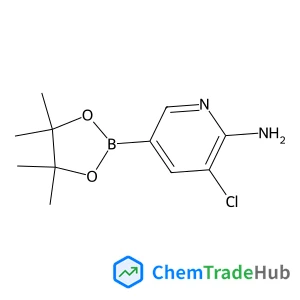
3-Chloro-5-(4,4,5,5-tetramethyl-1,3,2-dioxaborolan-2-yl)-2-pyridinamine
CAS Number:
1032758-99-8
Molecular Formula:
C11H16BClN2O2
Recommended Suppliers




Disclaimer
This page provides academic journal information for reference and research purposes only. We are not affiliated with any journal publishers and do not handle publication submissions. For publication-related inquiries, please contact the respective journal publishers directly.
If you notice any inaccuracies in the information displayed, please contact us at support@chemtradehub.com. We will promptly review and address your concerns.