


Time-gated triplet-state optical spectroscopy to decipher organic luminophores embedded in rigid matrices
Literature Information
Publication Date
2018-08-27
DOI
10.1039/C8CP03952F
Impact Factor
3.676
Authors
Atul D. Sontakke, Jean-Marie Mouesca, Victor Castaing, Mathieu Salaün, Isabelle Gautier-Luneau, Vincent Maurel, Alain Ibanez, Bruno Viana
View Original
Abstract
Wet-chemically synthesized inorganic materials often exhibit luminescence behavior. We have recently shown that the amorphous yttrium-aluminium-borate (a-YAB) powders obtained by sol–gel and modified Pechini methods exhibit organic impurities, responsible for their intense visible photoluminescence and phosphorescence afterglow. However, the heterogeneity of impurity organic compounds and difficulties in their intact extraction from the solid inorganic host matrix limit the extraction-based chemical analysis for luminophore identification. Here, we propose a photo-physical route based on time-gated triplet-state optical spectroscopy (TGTSS) to construct the electronic structures of the trapped unknown luminophores, which successfully illustrates the luminescence properties of a-YAB powders in more detail and also provides important insights intrinsic to the nature of the luminophores. The experimental results accompanied with TD-DFT calculations of the theoretical electronic structures thus help us to propose the probable luminophore compounds trapped in rigid a-YAB matrices. We anticipate that the present approach will open new opportunities for analyzing similar complex luminescent materials, including carbon dots, graphene oxides, etc., which is vital for their improvement.
Recommended Journals

Russian Journal of Coordination Chemistry

Current Opinion in Colloid & Interface Science

Russian Journal of General Chemistry

Chemistry Education Research and Practice

Crystallography Reports

Drug Discovery Today

Chemical Communications

Journal of Peptide Science

Russian Journal of Applied Chemistry

Russian Chemical Bulletin
Related Literature
Hole-transporting interlayers based on pyrazine-containing conjugated polymers for perovskite solar cells
D. S. Zamoretskov, I. E. Kuznetsov, M. M. Tepliakova, D. K. Sagdullina, V. G. Kurbatov, A. G. Nasibulin, A. V. Akkuratov
2023-11-09
Paper
DOI: 10.1039/D3CP04533A
Chiral selectivity vs. noise in spontaneous mirror symmetry breaking
David Hochberg, Thomas Buhse, Jean-Claude Micheau, Josep M. Ribó
2023-10-12
Paper
DOI: 10.1039/D3CP03311B
XANES analysis of phosphate glasses melted with Tb4O7 and SnO: evaluating the impact of valence states on structural, thermal, and luminescent properties
José A. Jiménez, Dugan Hayes, Cali Antolini, Benjamin J. Reinhart
2023-11-28
Paper
DOI: 10.1039/D3CP04784A
Impacts of QM region sizes and conformation numbers on modelling enzyme reactions: a case study of polyethylene terephthalate hydrolase
Mingna Zheng, Yanwei Li, Qingzhu Zhang, Wenxing Wang
2023-10-24
Paper
DOI: 10.1039/D3CP04519F
Osmolyte induced protein stabilization: modulation of associated water dynamics might be a key factor
Kuldeep Singh Negi, Nilimesh Das, Tanmoy Khan, Pratik Sen
2023-11-27
Paper
DOI: 10.1039/D3CP03357K
Double strengthening induced by grain boundary segregation of solute elements in gradient nano Ni–Co alloys
Wei Zhang, Xin Guo, Junqiang Ren, Junchen Li, Hongtao Xue, Fuling Tang, Peiqing La, Xuefeng Lu
2023-11-21
Paper
DOI: 10.1039/D3CP03613H
Co-aggregation of α-synuclein with amyloid-β stabilizes β-sheet-rich oligomers and enhances the formation of β-barrels
Fengjuan Huang, Yuying Liu, Ying Wang, Jia Xu, Jiangfang Lian, Yu Zou, Chuang Wang, Feng Ding
2023-11-02
Paper
DOI: 10.1039/D3CP04138G
You might also like
Compound Q&A
Are there alternatives to 1-(4-Chlorophenyl)-N-hydroxymethanimine (CAS: 3848-36-0) in synthesis?
When considering alternatives to 1-(4-Chlorophenyl)-N-hydroxymethanimine (CAS: 3...
3848-36-01-(4-Chlorophenyl)-N...
Compound Q&A
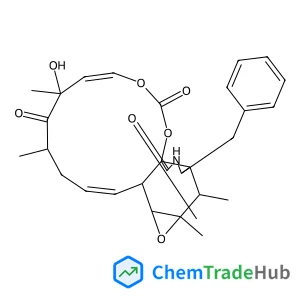
How should (1R,9S,10S,12S,14E,16S,19R,20R,21S,22R)-3,9,21-Trihydroxy-5,10,12,14,16,20,22-heptamethyl-23,24-dioxatetracyclo[17.3.1.1~6,9~.0~2,7~]tetracosa-2,5,7,14-tetraen-4-one (CAS: 183202-73-5) be stored?
This compound should be stored in a cool, dry place away from direct sunlight. I...
183202-73-5(1R,9S,10S,12S,14E,1...
Compound Q&A
How is 3-(4-Bromophenyl)-5-(2-fluorophenyl)-1,2,4-oxadiazole (CAS: 419553-16-5) typically synthesized?
3-(4-Bromophenyl)-5-(2-fluorophenyl)-1,2,4-oxadiazole is synthesized through a m...
419553-16-53-(4-Bromophenyl)-5-...
Compound Q&A
How is 5-Chloro-2-(4-chlorophenyl)-4-methyl-6-[3-(1-piperidinyl)propoxy]pyrimidine (CAS: 1639220-19-1) typically synthesized?
5-Chloro-2-(4-chlorophenyl)-4-methyl-6-[3-(1-piperidinyl)propoxy]pyrimidine (CAS...
1639220-19-15-Chloro-2-(4-chloro...
Compound Q&A
What industries use 2-Chloro-4-(difluoromethoxy)pyridine (CAS: 1206978-15-5)?
2-Chloro-4-(difluoromethoxy)pyridine is used in the pharmaceutical industry for ...
1206978-15-52-Chloro-4-(difluoro...
Compound Q&A
What regulatory guidelines apply to 3-Chloro-6-methylpyridazine (CAS: 1121-79-5)?
3-Chloro-6-methylpyridazine (CAS: 1121-79-5) is classified under the Globally Ha...
1121-79-53-Chloro-6-methylpyr...
Compound Q&A
Are there alternatives to Methyl 4,5-dimethyl-2-nitrobenzoate in synthesis?
Several alternatives can be used in the synthesis of Methyl 4,5-dimethyl-2-nitro...
90922-74-0Methyl 4,5-dimethyl-...
Compound Q&A
Are there alternatives to (2E,2'E)-3,3'-(1,4-Phenylene)bisacrylaldehyde in synthesis?
Alternatives to (2E,2'E)-3,3'-(1,4-Phenylene)bisacrylaldehyde include other acry...
63405-68-5(2E,2'E)-3,3'-(1,4-P...
Compound Q&A
What is 3-Amino-5-chloropyridin-2-ol hydrochloride (CAS: 1261906-29-9)?
3-Amino-5-chloropyridin-2-ol hydrochloride is an organic compound with the CAS n...
1261906-29-93-Amino-5-chloropyri...
Compound Q&A
What precautions should be taken when handling 6,7-Difluoro-2,3-dihydro-4H-chromen-4-one (CAS: 1092349-93-3)?
When handling 6,7-Difluoro-2,3-dihydro-4H-chromen-4-one, it is essential to wear...
1092349-93-36,7-Difluoro-2,3-dih...
Source Journal
Physical Chemistry Chemical Physics

CiteScore:
5.5
Self-citation Rate:
10.3%
Articles per Year:
3036
Physical Chemistry Chemical Physics (PCCP) is an international journal co-owned by 19 physical chemistry and physics societies from around the world. This journal publishes original, cutting-edge research in physical chemistry, chemical physics and biophysical chemistry. To be suitable for publication in PCCP, articles must include significant innovation and/or insight into physical chemistry; this is the most important criterion that reviewers and Editors will judge against when evaluating submissions. The journal has a broad scope and welcomes contributions spanning experiment, theory, computation and data science. Topical coverage includes spectroscopy, dynamics, kinetics, statistical mechanics, thermodynamics, electrochemistry, catalysis, surface science, quantum mechanics, quantum computing and machine learning. Interdisciplinary research areas such as polymers and soft matter, materials, nanoscience, energy, surfaces/interfaces, and biophysical chemistry are welcomed if they demonstrate significant innovation and/or insight into physical chemistry. Joined experimental/theoretical studies are particularly appreciated when complementary and based on up-to-date approaches.
Recommended Compounds
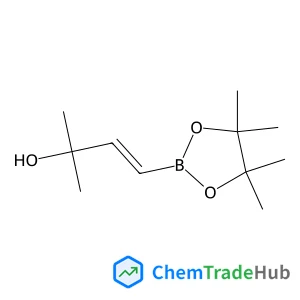
(E)-2-methyl-4-(4,4,5,5-tetramethyl-1,3,2-dioxaborolan-2-yl)but-3-en-2-ol
CAS Number:
581802-26-8
Molecular Formula:
C11H21BO3
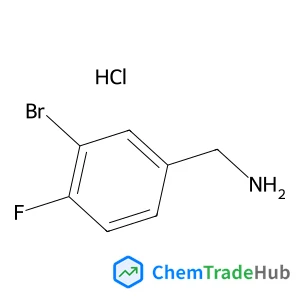
1-(3-Bromo-4-fluorophenyl)methanamine hydrochloride (1:1)
CAS Number:
202865-68-7
Molecular Formula:
C7H8BrClFN
Recommended Suppliers





Disclaimer
This page provides academic journal information for reference and research purposes only. We are not affiliated with any journal publishers and do not handle publication submissions. For publication-related inquiries, please contact the respective journal publishers directly.
If you notice any inaccuracies in the information displayed, please contact us at support@chemtradehub.com. We will promptly review and address your concerns.