












High-frequency pulsed electron–electron double resonance spectroscopy on DNA duplexes using trityl tags and shaped microwave pulses
Literature Information
Publication Date
2018-10-04
DOI
10.1039/C8CP03951H
Impact Factor
3.676
Authors
D. Akhmetzyanov, V. Denysenkov, T. Prisner
View Original
Abstract
Accurate distances between two trityl paramagnetic tags site-specifically attached to DNA duplexes were measured by pulsed electron–electron double resonance spectroscopy at 180 and 260 GHz microwave frequencies. Up to a threefold increase in the sensitivity of 260 GHz PELDOR measurements was achieved by using shaped broad-band microwave pulses.
Related Literature
A theoretical study on charge transport of dithiolene nickel complexes
Vu Thi Thu Huong, Truong Ba Tai, Minh Tho Nguyen
2016-01-27
Paper
DOI: 10.1039/C5CP07277H
Global optimization of small bimetallic Pd–Co binary nanoalloy clusters: a genetic algorithm approach at the DFT level
Mikail Aslan, Jack B. A. Davis, Roy L. Johnston
2016-02-04
Paper
DOI: 10.1039/C6CP00342G
The structure–function relationship for alumina supported platinum during the formation of ammonia from nitrogen oxide and hydrogen in the presence of oxygen
Emma Catherine Adams, Lindsay Richard Merte, Anders Hellman, Magnus Skoglundh, Johan Gustafson, Eva Charlotte Bendixen, Pär Gabrielsson, Florian Bertram, Jonas Evertsson, Chu Zhang, Stefan Carlson, Per-Anders Carlsson
2016-03-30
Communication
DOI: 10.1039/C5CP07624B
Molecular structure and vibrations of NTCDA monolayers on Ag(111) from density-functional theory and infrared absorption spectroscopy
Phil Rosenow
2016-02-03
Paper
DOI: 10.1039/C5CP06619K
Structural determination of niobium-doped silicon clusters by far-infrared spectroscopy and theory
Xiaojun Li, Pieterjan Claes, Marko Haertelt, Peter Lievens, Ewald Janssens
2016-01-27
Paper
DOI: 10.1039/C5CP07298K
Palladium-atom catalyzed formic acid decomposition and the switch of reaction mechanism with temperature
Nan He, Zhen Hua Li
2016-03-07
Paper
DOI: 10.1039/C6CP00186F
Electronic transport properties of ultra-thin Ni and Ni–C nanowires
Leining Zhang, Weikang Wu, Yi Zhou, Hongru Ren, Jichen Dong, Hui Li
2016-01-21
Paper
DOI: 10.1039/C5CP07641B
Numerical simulations of the role of a ferroelectric polymer interfacial layer in organic solar cells
Bo Liu, Feng Xu, Xinghua Zhang, Dadong Yan, Dan Lu
2016-01-07
Paper
DOI: 10.1039/C5CP04872A
New insights into water oxidation reactions from photocatalysis, electrocatalysis to chemical catalysis: an example of iron-based oxides doped with foreign elements
Jingwei Huang, Xiaoqiang Du, YingYing Feng, Yukun Zhao
2016-03-18
Communication
DOI: 10.1039/C6CP01543C
You might also like
Compound Q&A
What are the main uses of 1-(3-Aminophenyl)-3-[(3R)-1-(3,3-dimethyl-2-oxobutyl)-2-oxo-5-(2-pyridinyl)-2,3-dihydro-1H-1,4-benzodiazepin-3-yl]urea (CAS: 155412-88-7)?
This compound is mainly used as an intermediate in the synthesis of antipsychoti...
155412-88-71-(3-Aminophenyl)-3-...
Compound Q&A
How should waste containing 1-(D-Ribofuranosyl)-1,4-dihydro-3-pyridinecarboxamide (CAS: 19132-12-8) be handled?
Waste containing 1-(D-Ribofuranosyl)-1,4-dihydro-3-pyridinecarboxamide (CAS: 191...
19132-12-81-(D-Ribofuranosyl)-...
Compound Q&A
What regulatory guidelines apply to 2-Methyl-2-propanyl 3-bromo-3-(hydroxymethyl)-1-azetidinecarboxylate (CAS: 2007919-81-3)?
2-Methyl-2-propanyl 3-bromo-3-(hydroxymethyl)-1-azetidinecarboxylate (CAS: 20079...
2007919-81-32-Methyl-2-propanyl ...
Compound Q&A
What is N-(4-Chloro-2-pyridinyl)acetamide (CAS: 245056-66-0)?
N-(4-Chloro-2-pyridinyl)acetamide (CAS: 245056-66-0) is a chemical compound with...
245056-66-0N-(4-Chloro-2-pyridi...
Compound Q&A
What is 5-Chloro-2-hydroxybenzoic acid (CAS: 321-14-2)?
5-Chloro-2-hydroxybenzoic acid, also known as 5-chlorosalicylic acid, is an arom...
321-14-25-Chloro-2-hydroxybe...
Compound Q&A
What precautions should be taken when handling 1,1-Dichloro-1-fluoroethane (CAS: 1717-00-6)?
When handling 1,1-Dichloro-1-fluoroethane (CAS: 1717-00-6), it is important to u...
1717-00-61,1-Dichloro-1-fluor...
Compound Q&A
What are the physical and chemical properties of Fmoc-(2S,3R)-3-phenylpyrrolidine-2-carboxylic acid (CAS: 281655-32-1)?
Fmoc-(2S,3R)-3-phenylpyrrolidine-2-carboxylic acid is a white crystalline solid ...
281655-32-1Fmoc-(2S,3R)-3-pheny...
Compound Q&A
What are the main uses of 4-Amino-5-bromo-2-pyridinecarboxylic acid (CAS: 1363381-01-4)?
4-Amino-5-bromo-2-pyridinecarboxylic acid is primarily used as a precursor in th...
1363381-01-44-Amino-5-bromo-2-py...
Compound Q&A
What precautions should be taken when handling (S)-tert-butyl 2-((2-(4-bromophenyl)-2-oxoethyl)carbamoyl)pyrrolidine-1-carboxylate (CAS: 1007881-98-2)?
Handling this compound should be done with personal protective equipment (PPE) i...
1007881-98-2(S)-tert-butyl 2-((2...
Compound Q&A
What precautions should be taken when handling 8-bromo-2,2-dimethyl-3,4-dihydro-2H-1,4-benzoxazin-3-one (CAS: 688363-73-7)?
When handling 8-bromo-2,2-dimethyl-3,4-dihydro-2H-1,4-benzoxazin-3-one, use prop...
688363-73-78-bromo-2,2-dimethyl...
Source Journal
Physical Chemistry Chemical Physics

CiteScore:
5.5
Self-citation Rate:
10.3%
Articles per Year:
3036
Physical Chemistry Chemical Physics (PCCP) is an international journal co-owned by 19 physical chemistry and physics societies from around the world. This journal publishes original, cutting-edge research in physical chemistry, chemical physics and biophysical chemistry. To be suitable for publication in PCCP, articles must include significant innovation and/or insight into physical chemistry; this is the most important criterion that reviewers and Editors will judge against when evaluating submissions. The journal has a broad scope and welcomes contributions spanning experiment, theory, computation and data science. Topical coverage includes spectroscopy, dynamics, kinetics, statistical mechanics, thermodynamics, electrochemistry, catalysis, surface science, quantum mechanics, quantum computing and machine learning. Interdisciplinary research areas such as polymers and soft matter, materials, nanoscience, energy, surfaces/interfaces, and biophysical chemistry are welcomed if they demonstrate significant innovation and/or insight into physical chemistry. Joined experimental/theoretical studies are particularly appreciated when complementary and based on up-to-date approaches.
Recommended Compounds
![1-[3-(4-Morpholinylsulfonyl)phenyl]methanamine structure](https://static.chemtradehub.com/structs/933/933989-32-3-51af.webp "1-[3-(4-Morpholinylsulfonyl)phenyl]methanamine structure")
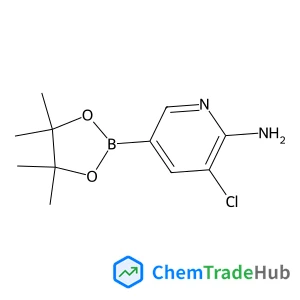
3-Chloro-5-(4,4,5,5-tetramethyl-1,3,2-dioxaborolan-2-yl)-2-pyridinamine
CAS Number:
1032758-99-8
Molecular Formula:
C11H16BClN2O2
Recommended Suppliers





Disclaimer
This page provides academic journal information for reference and research purposes only. We are not affiliated with any journal publishers and do not handle publication submissions. For publication-related inquiries, please contact the respective journal publishers directly.
If you notice any inaccuracies in the information displayed, please contact us at support@chemtradehub.com. We will promptly review and address your concerns.