











The structure–function relationship for alumina supported platinum during the formation of ammonia from nitrogen oxide and hydrogen in the presence of oxygen
Literature Information
Publication Date
2016-03-30
DOI
10.1039/C5CP07624B
Impact Factor
3.676
Authors
Emma Catherine Adams, Lindsay Richard Merte, Anders Hellman, Magnus Skoglundh, Johan Gustafson, Eva Charlotte Bendixen, Pär Gabrielsson, Florian Bertram, Jonas Evertsson, Chu Zhang, Stefan Carlson, Per-Anders Carlsson
View Original
Abstract
We study the structure–function relationship of alumina supported platinum during the formation of ammonia from nitrogen oxide and dihydrogen by employing in situ X-ray absorption and Fourier transform infrared spectroscopy. Particular focus has been directed towards the effect of oxygen on the reaction as a model system for emerging technologies for passive selective catalytic reduction of nitrogen oxides. The suppressed formation of ammonia observed as the feed becomes net-oxidizing is accompanied by a considerable increase in the oxidation state of platinum as well as the formation of surface nitrates and the loss of NH-containing surface species. In the presence of (excess) oxygen, the ammonia formation is proposed to be limited by weak interaction between nitrogen oxide and the oxidized platinum surface. This leads to a slow dissociation rate of nitrogen oxide and thus low abundance of the atomic nitrogen surface species that can react with the adsorbed hydrogen species. In this case the consumption of hydrogen through the competing water formation reaction and decomposition/oxidation of ammonia are of less importance for the net ammonia formation.
Related Literature
Characteristics and origin of char and coke from fast and slow, catalytic and thermal pyrolysis of biomass and relevant model compounds
Shoucheng Du, Julia A. Valla, George M. Bollas
2013-09-13
Paper
DOI: 10.1039/C3GC41581C
A simple and highly effective water-compatible organocatalytic system for asymmetric direct Michael reactions of linear aldehydes to maleimides
Yupu Qiao, Allan D. Headley
2013-08-06
Communication
DOI: 10.1039/C3GC41024B
Revisiting the Brønsted acid catalysed hydrolysis kinetics of polymeric carbohydrates in ionic liquids by in situ ATR-FTIR spectroscopy
Andreas J. Kunov-Kruse, Anders Riisager, Shunmugavel Saravanamurugan, Rolf W. Berg, Steffen B. Kristensen, Rasmus Fehrmann
2013-07-22
Paper
DOI: 10.1039/C3GC41174E
Continuous flow nanocatalysis: reaction pathways in the conversion of levulinic acid to valuable chemicals
J. Angel Menéndez, Antonio A. Romero, Elena Serrano, Javier Garcia-Martinez, Rafael Luque
2013-07-31
Paper
DOI: 10.1039/C3GC41022F
Metal-free arylations via photochemical activation of the Ar–OSO2R bond in aryl nonaflates
Carlotta Raviola, Veronica Canevari, Stefano Protti, Angelo Albini, Maurizio Fagnoni
2013-07-22
Communication
DOI: 10.1039/C3GC41009A
Green metrics evaluation of isoprene production by microalgae and bacteria
Cristina T. Matos, Luisa Gouveia, Ana Rita C. Morais, Alberto Reis, Rafał Bogel-Łukasik
2013-07-24
Paper
DOI: 10.1039/C3GC40997J
Design and functionalization of chitin-based microsphere scaffolds
2013-08-29
Paper
DOI: 10.1039/C3GC41060A
Selective autoxidation of benzylamines: application to the synthesis of some nitrogen heterocycles
Thanh Binh Nguyen, Ludmila Ermolenko, Ali Al-Mourabit
2013-08-14
Communication
DOI: 10.1039/C3GC41186A
An efficient and flexible synthesis of model lignin oligomers
W. Graham Forsythe, Mark D. Garrett, Christopher Hardacre, Mark Nieuwenhuyzen, Gary N. Sheldrake
2013-09-04
Paper
DOI: 10.1039/C3GC41110A
A self-assembled Pd6L8 nanoball for Suzuki–Miyaura coupling reactions in both homogeneous and heterogeneous formats
Chao-Wei Zhao, Jian-Ping Ma, Qi-Kui Liu, Yang Yu, Peng Wang, Yan-An Li, Kui Wang, Yu-Bin Dong
2013-09-05
Communication
DOI: 10.1039/C3GC41154K
You might also like
Compound Q&A
What are the main uses of 1-(3-Aminophenyl)-3-[(3R)-1-(3,3-dimethyl-2-oxobutyl)-2-oxo-5-(2-pyridinyl)-2,3-dihydro-1H-1,4-benzodiazepin-3-yl]urea (CAS: 155412-88-7)?
This compound is mainly used as an intermediate in the synthesis of antipsychoti...
155412-88-71-(3-Aminophenyl)-3-...
Compound Q&A
How should waste containing 1-(D-Ribofuranosyl)-1,4-dihydro-3-pyridinecarboxamide (CAS: 19132-12-8) be handled?
Waste containing 1-(D-Ribofuranosyl)-1,4-dihydro-3-pyridinecarboxamide (CAS: 191...
19132-12-81-(D-Ribofuranosyl)-...
Compound Q&A
What regulatory guidelines apply to 2-Methyl-2-propanyl 3-bromo-3-(hydroxymethyl)-1-azetidinecarboxylate (CAS: 2007919-81-3)?
2-Methyl-2-propanyl 3-bromo-3-(hydroxymethyl)-1-azetidinecarboxylate (CAS: 20079...
2007919-81-32-Methyl-2-propanyl ...
Compound Q&A
What is N-(4-Chloro-2-pyridinyl)acetamide (CAS: 245056-66-0)?
N-(4-Chloro-2-pyridinyl)acetamide (CAS: 245056-66-0) is a chemical compound with...
245056-66-0N-(4-Chloro-2-pyridi...
Compound Q&A
What is 5-Chloro-2-hydroxybenzoic acid (CAS: 321-14-2)?
5-Chloro-2-hydroxybenzoic acid, also known as 5-chlorosalicylic acid, is an arom...
321-14-25-Chloro-2-hydroxybe...
Compound Q&A
What precautions should be taken when handling 1,1-Dichloro-1-fluoroethane (CAS: 1717-00-6)?
When handling 1,1-Dichloro-1-fluoroethane (CAS: 1717-00-6), it is important to u...
1717-00-61,1-Dichloro-1-fluor...
Compound Q&A
What are the physical and chemical properties of Fmoc-(2S,3R)-3-phenylpyrrolidine-2-carboxylic acid (CAS: 281655-32-1)?
Fmoc-(2S,3R)-3-phenylpyrrolidine-2-carboxylic acid is a white crystalline solid ...
281655-32-1Fmoc-(2S,3R)-3-pheny...
Compound Q&A
What are the main uses of 4-Amino-5-bromo-2-pyridinecarboxylic acid (CAS: 1363381-01-4)?
4-Amino-5-bromo-2-pyridinecarboxylic acid is primarily used as a precursor in th...
1363381-01-44-Amino-5-bromo-2-py...
Compound Q&A
What precautions should be taken when handling (S)-tert-butyl 2-((2-(4-bromophenyl)-2-oxoethyl)carbamoyl)pyrrolidine-1-carboxylate (CAS: 1007881-98-2)?
Handling this compound should be done with personal protective equipment (PPE) i...
1007881-98-2(S)-tert-butyl 2-((2...
Compound Q&A
What precautions should be taken when handling 8-bromo-2,2-dimethyl-3,4-dihydro-2H-1,4-benzoxazin-3-one (CAS: 688363-73-7)?
When handling 8-bromo-2,2-dimethyl-3,4-dihydro-2H-1,4-benzoxazin-3-one, use prop...
688363-73-78-bromo-2,2-dimethyl...
Source Journal
Physical Chemistry Chemical Physics

CiteScore:
5.5
Self-citation Rate:
10.3%
Articles per Year:
3036
Physical Chemistry Chemical Physics (PCCP) is an international journal co-owned by 19 physical chemistry and physics societies from around the world. This journal publishes original, cutting-edge research in physical chemistry, chemical physics and biophysical chemistry. To be suitable for publication in PCCP, articles must include significant innovation and/or insight into physical chemistry; this is the most important criterion that reviewers and Editors will judge against when evaluating submissions. The journal has a broad scope and welcomes contributions spanning experiment, theory, computation and data science. Topical coverage includes spectroscopy, dynamics, kinetics, statistical mechanics, thermodynamics, electrochemistry, catalysis, surface science, quantum mechanics, quantum computing and machine learning. Interdisciplinary research areas such as polymers and soft matter, materials, nanoscience, energy, surfaces/interfaces, and biophysical chemistry are welcomed if they demonstrate significant innovation and/or insight into physical chemistry. Joined experimental/theoretical studies are particularly appreciated when complementary and based on up-to-date approaches.
Recommended Compounds
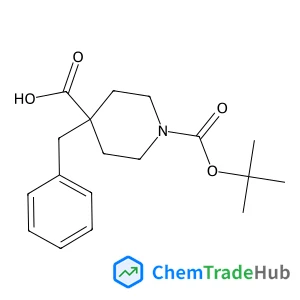
4-Benzyl-1-(tert-butoxycarbonyl)piperidine-4-carboxylic acid
CAS Number:
170838-87-6
Molecular Formula:
C18H25NO4
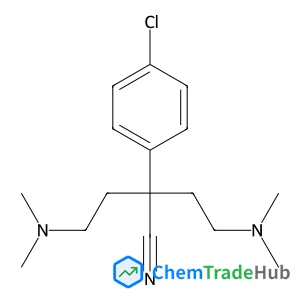
2-(4-Chlorophenyl)-4-(dimethylamino)-2-(2-(dimethylamino)ethyl)butanenitrile
CAS Number:
1246816-57-8
Molecular Formula:
C16H24ClN3

Recommended Suppliers





Disclaimer
This page provides academic journal information for reference and research purposes only. We are not affiliated with any journal publishers and do not handle publication submissions. For publication-related inquiries, please contact the respective journal publishers directly.
If you notice any inaccuracies in the information displayed, please contact us at support@chemtradehub.com. We will promptly review and address your concerns.