












Model – free approach to quadrupole spin relaxation in solid 209Bi-aryl compounds
Literature Information
Publication Date
2018-09-04
DOI
10.1039/C8CP03848A
Impact Factor
3.676
Authors
Danuta Kruk, Christian Goesweiner, Elzbieta Masiewicz, Evrim Umut, Carina Sampl, Hermann Scharfetter
View Original
Abstract
Nuclear Quadrupole Resonance (NQR) experiments were performed for deuterated and non-deuterated triphenylbismuth (BiPh3) to inquire into 209Bi relaxation mechanisms. The studies are motivated by the idea of exploiting Quadrupole Relaxation Enhancement (QRE) as a novel contrast mechanism for Magnetic Resonance Imaging. From this perspective relaxation features of nuclei possessing quadrupole moment (quadrupole nuclei) are of primary importance for the contrast effect. Spin–spin relaxation rates associated with the NQR lines were described in terms of the Redfield relaxation theory assuming that the relaxation is caused by fluctuations of the electric field gradient tensor at the position of the quadrupole nucleus that are described by an exponential correlation function. The description referred to as a model-free approach is an analogy of the description used for paramagnetic contrast agents. It was demonstrated that for the deuterated compound this approach captures the essential features of 209Bi relaxation, but it should not be applied for non-deuterated compounds as dipolar interactions between neighbouring protons and the quadrupole nucleus considerably contribute to the relaxation of the last one. Thus, the relaxation scenario for species containing quadrupole nuclei is fundamentally different than for paramagnetic contrast agents and this fact has to be taken into account when predicting contrast effects based on QRE.
Related Literature
A highly sensitive and selective fluorescent molecular sensor for Pb(ii) based on a calix[4]arene bearing four dansyl groups
Rémi Métivier, Isabelle Leray, Bernard Valeur
2003-03-26
Communication
DOI: 10.1039/B301323E
Enhancement of facilitated olefin transport by amino acid in silver–polymer complex membranes
Sang Wook Kang, Jong Hak Kim, Jongok Won, Kookheon Char, Yong Soo Kang
2003-02-25
Communication
DOI: 10.1039/B211933A
Regiocontrolled Ru-catalyzed addition of carboxylic acids to alkynes: practical protocols for the synthesis of vinyl esters
2003-02-17
Communication
DOI: 10.1039/B211277A
Preparation of ZnO nanocrystalsvia ultrasonic irradiation
Dong Qian, J.Z. Jiang, Poul Lenvig Hansen
2003-03-28
Communication
DOI: 10.1039/B301504A
Asymmetric protonation of lithium enolates of α-amino acid derivatives with α-amino acid-based chiral Brønsted acids
Kentaro Futatsugi, Akira Yanagisawa, Hisashi Yamamoto
2003-01-30
Communication
DOI: 10.1039/B211523A
Photoluminescent supramolecular networks from metal-mediated assembly of polythia conjugated dieneyne
Yuan-Te Fu, Vincent M. Lynch, Richard J. Lagow
2003-03-31
Communication
DOI: 10.1039/B212789J
Ion-exchange synthesis and magneto-optical spectra of colored magnetic thin films composed of metal(ii) hexacyanochromate(iii)
Masanori Tozawa, Norimichi Kojima, Kazuhito Hashimoto
2003-04-22
Communication
DOI: 10.1039/B212861F
Anion-directed assembly: the first fluoride-directed double helix
Simon J. Coles, Jeremy G. Frey, Philip A. Gale, Michael B. Hursthouse, Mark E. Light, Korakot Navakhun, Gemma L. Thomas
2003-02-04
Communication
DOI: 10.1039/B210847J
You might also like
Compound Q&A
What precautions should be taken when handling 4-(2-Furylmethyl)thiomorpholine 1,1-dioxide (CAS: 79206-94-3)?
When handling 4-(2-Furylmethyl)thiomorpholine 1,1-dioxide (CAS: 79206-94-3), it ...
79206-94-34-(2-Furylmethyl)thi...
Compound Q&A
What precautions should be taken when handling 4-Chloro-N-[2-(4-morpholinyl)ethyl]benzamide (CAS: 71320-77-9)?
When handling 4-Chloro-N-[2-(4-morpholinyl)ethyl]benzamide (CAS: 71320-77-9), it...
71320-77-94-Chloro-N-[2-(4-mor...
Compound Q&A
How should waste containing 2-[2-(2-Methoxyethoxy)ethoxy]ethyl 4-methylbenzenesulfonate (CAS: 62921-74-8) be handled?
Waste containing this compound (CAS: 62921-74-8) should be handled according to ...
62921-74-82-[2-(2-Methoxyethox...
Compound Q&A
How should waste containing (S)-Methyl 2-amino-3-cyclohexylpropanoate be handled?
Waste containing (S)-Methyl 2-amino-3-cyclohexylpropanoate should be collected i...
40056-18-6(S)-Methyl 2-amino-3...
Compound Q&A
How is 5-({4-[(2S,4R)-4-Hydroxy-2-methyltetrahydro-2H-pyran-4-yl]-2-thienyl}sulfanyl)-1-methyl-1,3-dihydro-2H-indol-2-one (CAS: 166882-70-8) typically synthesized?
This compound can be synthesized using a multi-step process involving the conjug...
166882-70-85-({4-[(2S,4R)-4-Hyd...
Compound Q&A
Are there alternatives to (2E)-3-(3,4-Dichlorophenyl)acrylic acid (CAS: 7312-27-8) in synthesis?
There are several alternatives to (2E)-3-(3,4-Dichlorophenyl)acrylic acid in syn...
7312-27-8(2E)-3-(3,4-Dichloro...
Compound Q&A
How should Ethyl 6-(2-nitrophenyl)imidazo[2,1-b][1,3]thiazole-3-carboxylate (CAS: 925437-84-9) be stored?
Ethyl 6-(2-nitrophenyl)imidazo[2,1-b][1,3]thiazole-3-carboxylate (CAS: 925437-84...
925437-84-9Ethyl 6-(2-nitrophen...
Compound Q&A
How should waste containing 2-(1,3-Thiazol-2-yl)ethanamine (CAS: 18453-07-1) be handled?
Waste containing 2-(1,3-Thiazol-2-yl)ethanamine (CAS: 18453-07-1) should be coll...
18453-07-12-(1,3-Thiazol-2-yl)...
Compound Q&A
How is Methyl 5-iodo-2-methylbenzoate (CAS: 103440-54-6) typically synthesized?
Methyl 5-iodo-2-methylbenzoate can be synthesized through the iodination of meth...
103440-54-6Methyl 5-iodo-2-meth...
Compound Q&A
How is 5-Chloro[1,2,4]triazolo[1,5-a]pyridine (CAS: 1427399-34-5) typically synthesized?
5-Chloro[1,2,4]triazolo[1,5-a]pyridine is commonly synthesized via the condensat...
1427399-34-55-Chloro[1,2,4]triaz...
Source Journal
Physical Chemistry Chemical Physics

CiteScore:
5.5
Self-citation Rate:
10.3%
Articles per Year:
3036
Physical Chemistry Chemical Physics (PCCP) is an international journal co-owned by 19 physical chemistry and physics societies from around the world. This journal publishes original, cutting-edge research in physical chemistry, chemical physics and biophysical chemistry. To be suitable for publication in PCCP, articles must include significant innovation and/or insight into physical chemistry; this is the most important criterion that reviewers and Editors will judge against when evaluating submissions. The journal has a broad scope and welcomes contributions spanning experiment, theory, computation and data science. Topical coverage includes spectroscopy, dynamics, kinetics, statistical mechanics, thermodynamics, electrochemistry, catalysis, surface science, quantum mechanics, quantum computing and machine learning. Interdisciplinary research areas such as polymers and soft matter, materials, nanoscience, energy, surfaces/interfaces, and biophysical chemistry are welcomed if they demonstrate significant innovation and/or insight into physical chemistry. Joined experimental/theoretical studies are particularly appreciated when complementary and based on up-to-date approaches.
Recommended Compounds
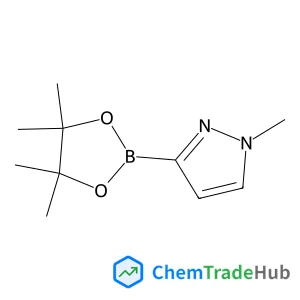
1-Methyl-3-(4,4,5,5-tetramethyl-1,3,2-dioxaborolan-2-yl)-1H-pyrazole
CAS Number:
1020174-04-2
Molecular Formula:
C10H17BN2O2
![[4-(Heptyloxy)phenyl]boronic acid structure](https://static.chemtradehub.com/structs/136/136370-19-9-ad33.webp "[4-(Heptyloxy)phenyl]boronic acid structure")


Recommended Suppliers






Disclaimer
This page provides academic journal information for reference and research purposes only. We are not affiliated with any journal publishers and do not handle publication submissions. For publication-related inquiries, please contact the respective journal publishers directly.
If you notice any inaccuracies in the information displayed, please contact us at support@chemtradehub.com. We will promptly review and address your concerns.