












Photo-induced heat generation in non-plasmonic nanoantennas
Literature Information
Publication Date
2018-05-01
DOI
10.1039/C8CP01919C
Impact Factor
3.676
Authors
Luca Carletti, Nicolò Bontempi
View Original
Abstract
Light-to-heat conversion in non-plasmonic, high refractive index nanoantennas is a key topic for many applications, including Raman sensing, laser writing, nanofabrication and photo-thermal therapy. However, heat generation and propagation in non-plasmonic antennas is increasingly debated and contradictory results have been reported so far. Here we report a finite element analysis of the steady-state temperature distribution and heat flow in SiO2/Si core/shell systems (silicon nanoshells) irradiated with different continuous wave lasers (λ = 532, 633 and 785 nm), under real working conditions. The complex interplay among the optical properties, morphology, degree of crystallinity of the nanoshells, thickness dependence of thermal conductivity and interactions with the substrate has been elucidated. This study reveals that all of these parameters can be appropriately combined for obtaining either stable nanoshells for Raman sensing or highly efficient sources of local heating. The optimal balance between thermal stability and field enhancement was found for crystalline Si shell layers with thicknesses ranging from 40 to 60 nm, irradiated by a NIR laser source. On the other hand, non-conformal amorphous or crystalline shell layers with a thickness >50 nm can reach a very high local temperature (above 1000 K) when irradiated with a low power density (less than 1 mW μm−2) laser sources. This work provides a general approach for an extensive investigation of the opto-thermal properties of high-index nanoantennas.
Recommended Journals
Related Literature
Molecular dynamics simulations of the aqueous interface with the [BMI][PF6] ionic liquid: comparison of different solvent models‡
G. Chevrot, R. Schurhammer, G. Wipff
2006-08-03
Paper
DOI: 10.1039/B608218A
On the fraction of CrII sites involved in the C2H4 polymerization on the Cr/SiO2 Phillips catalyst: a quantification by FTIR spectroscopy
E. Groppo, C. Lamberti, F. Cesano, A. Zecchina
2006-05-02
Communication
DOI: 10.1039/B604515D
Quantitative chirality synchronization in trifluoroethanol dimers‡
Tina Scharge, Thomas Häber, Martin A. Suhm
2006-09-21
Communication
DOI: 10.1039/B609868A
Is perturbation DFT approach applicable to purely repulsive fluids?
Shiqi Zhou, Andrej Jamnik
2006-07-14
Paper
DOI: 10.1039/B606401A
Static and dynamic solution properties of monodisperse oligofluorenes
C. Chi, G. Wegner
2006-05-23
Paper
DOI: 10.1039/B601531J
High field ENDOR as a characterization tool for functional sites in microporous materials
2006-04-07
Invited Article
DOI: 10.1039/B601513C
Optical detection of singlet oxygen from single cells
John W. Snyder, Esben Skovsen, John D. C. Lambert, Lars Poulsen, Peter R. Ogilby
2006-08-08
Invited Article
DOI: 10.1039/B609070M
You might also like
Compound Q&A
How is Ethyl 4-chlorothieno[2,3-b]pyridine-5-carboxylate (CAS: 59713-58-5) typically synthesized?
Ethyl 4-chlorothieno[2,3-b]pyridine-5-carboxylate (CAS: 59713-58-5) can be synth...
59713-58-5Ethyl 4-chlorothieno...
Compound Q&A
What regulatory guidelines apply to 5-Methyl-1H-indole-3-carbaldehyde (CAS: 52562-50-2)?
5-Methyl-1H-indole-3-carbaldehyde (CAS: 52562-50-2) is subject to various regula...
52562-50-25-Methyl-1H-indole-3...
Compound Q&A
What are the physical and chemical properties of (1,3-Dimethyl-2,4-dioxo-1,2,3,4-tetrahydro-5-pyrimidinyl)boronic acid (CAS: 223418-73-3)?
(1,3-Dimethyl-2,4-dioxo-1,2,3,4-tetrahydro-5-pyrimidinyl)boronic acid is a white...
223418-73-3(1,3-Dimethyl-2,4-di...
Compound Q&A
How should waste containing Sulfocostunolide A (CAS: 1016983-51-9) be handled?
Waste containing Sulfocostunolide A (CAS: 1016983-51-9) should be handled with c...
1016983-51-9Sulfocostunolide A
Compound Q&A
What precautions should be taken when handling Murraxocin (CAS: 88478-44-8)?
When handling Murraxocin (CAS: 88478-44-8), ensure proper personal protective eq...
88478-44-8Murraxocin
Compound Q&A
What are the physical and chemical properties of Formvar (CAS: 63148-64-1)?
Formvar (CAS: 63148-64-1) is an alkyd resin characterized by a high molecular we...
63148-64-1Formvar(R)
Compound Q&A
Is (S)-4-benzyl-2-((benzyloxy)methyl)morpholine (CAS: 205242-66-6) safe?
(S)-4-benzyl-2-((benzyloxy)methyl)morpholine is generally safe when handled with...
205242-66-6(S)-4-benzyl-2-((ben...
Compound Q&A
What industries use Methyl 1-(5-bromo-2-pyrimidinyl)cyclopropanecarboxylate (CAS: 1447607-69-3)?
Methyl 1-(5-bromo-2-pyrimidinyl)cyclopropanecarboxylate (CAS: 1447607-69-3) is p...
1447607-69-3Methyl 1-(5-bromo-2-...
Compound Q&A
Is 2-Methyl-1-phenyl-1-propanamine hydrochloride (CAS: 24290-47-9) safe?
2-Methyl-1-phenyl-1-propanamine hydrochloride (CAS: 24290-47-9) is generally con...
24290-47-92-Methyl-1-phenyl-1-...
Compound Q&A
How is 3-(4-Bromophenyl)-2-methylpropanoic acid (CAS: 66735-01-1) typically synthesized?
3-(4-Bromophenyl)-2-methylpropanoic acid is synthesized through a multi-step pro...
66735-01-13-(4-Bromophenyl)-2-...
Source Journal
Physical Chemistry Chemical Physics

CiteScore:
5.5
Self-citation Rate:
10.3%
Articles per Year:
3036
Physical Chemistry Chemical Physics (PCCP) is an international journal co-owned by 19 physical chemistry and physics societies from around the world. This journal publishes original, cutting-edge research in physical chemistry, chemical physics and biophysical chemistry. To be suitable for publication in PCCP, articles must include significant innovation and/or insight into physical chemistry; this is the most important criterion that reviewers and Editors will judge against when evaluating submissions. The journal has a broad scope and welcomes contributions spanning experiment, theory, computation and data science. Topical coverage includes spectroscopy, dynamics, kinetics, statistical mechanics, thermodynamics, electrochemistry, catalysis, surface science, quantum mechanics, quantum computing and machine learning. Interdisciplinary research areas such as polymers and soft matter, materials, nanoscience, energy, surfaces/interfaces, and biophysical chemistry are welcomed if they demonstrate significant innovation and/or insight into physical chemistry. Joined experimental/theoretical studies are particularly appreciated when complementary and based on up-to-date approaches.
Recommended Compounds
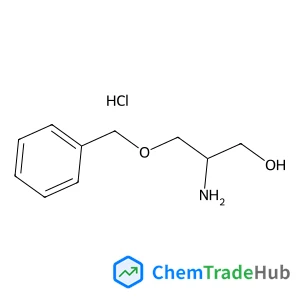
(R)-2-amino-3-(benzyloxy)propan-1-ol hydrochloride
CAS Number:
58577-95-0
Molecular Formula:
C10H16ClNO2
![[2-(Benzyloxy)-3-bromo-5-methylphenyl]boronic acid structure](https://static.chemtradehub.com/structs/870/870777-20-1-24ac.webp "[2-(Benzyloxy)-3-bromo-5-methylphenyl]boronic acid structure")
[2-(Benzyloxy)-3-bromo-5-methylphenyl]boronic acid
CAS Number:
870777-20-1
Molecular Formula:
C14H14BBrO3
Recommended Suppliers






Disclaimer
This page provides academic journal information for reference and research purposes only. We are not affiliated with any journal publishers and do not handle publication submissions. For publication-related inquiries, please contact the respective journal publishers directly.
If you notice any inaccuracies in the information displayed, please contact us at support@chemtradehub.com. We will promptly review and address your concerns.