













Prediction of the binding mode and resistance profile for a dual-target pyrrolyl diketo acid scaffold against HIV-1 integrase and reverse-transcriptase-associated ribonuclease H
Literature Information
Publication Date
2018-06-12
DOI
10.1039/C8CP01843J
Impact Factor
3.676
Authors
Xiaojun Yao, Weiwei Xue
View Original
Abstract
The rapid emergence of drug-resistant variants is one of the most common causes of highly active antiretroviral therapeutic (HAART) failure in patients infected with HIV-1. Compared with the existing HAART, the recently developed pyrrolyl diketo acid scaffold targeting both HIV-1 integrase (IN) and reverse transcriptase-associated ribonuclease H (RNase H) is an efficient approach to counteract the failure of anti-HIV treatment due to drug resistance. However, the binding mode and potential resistance profile of these inhibitors with important mechanistic principles remain poorly understood. To address this issue, an integrated computational method was employed to investigate the binding mode of inhibitor JMC6F with HIV-1 IN and RNase H. By using per-residue binding free energy decomposition analysis, the following residues: Asp64, Thr66, Leu68, Asp116, Tyr143, Gln148 and Glu152 in IN, Asp443, Glu478, Trp536, Lys541 and Asp549 in RNase H were identified as key residues for JMC6F binding. And then computational alanine scanning was carried to further verify the key residues. Moreover, the resistance profile of the currently known major mutations in HIV-1 IN and 2 mutations in RNase H against JMC6F was predicted by in silico mutagenesis studies. The results demonstrated that only three mutations in HIV-1 IN (Y143C, Q148R and N155H) and two mutations in HIV-1 RNase H (Y501R and Y501W) resulted in a reduction of JMC6F potency, thus indicating their potential role in providing resistance to JMC6F. These data provided important insights into the binding mode and resistance profile of the inhibitors with a pyrrolyl diketo acid scaffold in HIV-1 IN and RNase H, which would be helpful for the development of more effective dual HIV-1 IN and RNase H inhibitors.
Related Literature
Cleavage of the C–C triple bond of ketoalkynes: synthesis of 4(3H)-quinazolinones
Xifa Yang, Guolin Cheng, Jinhai Shen, Changsheng Kuai, Xiuling Cui
2015-02-11
Research Article
DOI: 10.1039/C4QO00260A
Target-oriented design and biosynthesis of thiostrepton-derived thiopeptide antibiotics with improved pharmaceutical properties
Shoufeng Wang, Qingfei Zheng, Jianfeng Wang, Zhixiong Zhao, Qingye Li, Yunsong Yu, Renxiao Wang
2014-12-05
Research Article
DOI: 10.1039/C4QO00288A
Transition metal-free controlled synthesis of bis[(trifluoromethyl)sulfonyl]ethyl-decorated heterocycles‡
Pedro Almendros, Hikaru Yanai, Shoki Hoshikawa, Cristina Aragoncillo, Carlos Lázaro-Milla, Mireia Toledano-Pinedo, Takashi Matsumoto, Benito Alcaide
2018-09-20
Research Article
DOI: 10.1039/C8QO00955D
Rhodium(iii)/amine synergistically catalyzed enantioselective Michael addition of cyclic ketones with α,β-unsaturated 2-acyl imidazoles
Yu Du, Qiang Kang
2018-09-03
Research Article
DOI: 10.1039/C8QO00809D
Transition-metal-free cleavage of C–C double bonds: a three-component reaction of aromatic alkenes with S8 and amides towards aryl thioamides‡
Zhanghong Guo, Kai Xu, Shuangshuang Hui, Xiaofang Zhao, Yangjie Wu
2018-10-05
Research Article
DOI: 10.1039/C8QO00835C
You might also like
Compound Q&A
Is 2-(2-chloroacetamido)-3-phenylpropanoic acid (CAS: 7765-11-9) safe?
2-(2-Chloroacetamido)-3-phenylpropanoic acid (CAS: 7765-11-9) is generally consi...
7765-11-92-(2-chloroacetamido...
Compound Q&A
Is 2-(Benzyloxy)-5-bromobenzoic acid (CAS: 62176-31-2) safe?
2-(Benzyloxy)-5-bromobenzoic acid can be handled safely if appropriate precautio...
62176-31-22-(Benzyloxy)-5-brom...
Compound Q&A
What is (4-Methyl-1,2,5-oxadiazol-3-yl)methanamine hydrochloride (CAS: 1159825-48-5)?
(4-Methyl-1,2,5-oxadiazol-3-yl)methanamine hydrochloride is a chemical compound ...
1159825-48-5(4-Methyl-1,2,5-oxad...
Compound Q&A
What is 2-(5-Hexylthiophen-2-yl)-4,4,5,5-tetramethyl-1,3,2-dioxaborolane (CAS: 917985-54-7)?
2-(5-Hexylthiophen-2-yl)-4,4,5,5-tetramethyl-1,3,2-dioxaborolane (CAS: 917985-54...
917985-54-72-(5-Hexylthiophen-2...
Compound Q&A
Are there alternatives to 4-(8-Methyl-9H-1,3-dioxolo[4,5-h][2,3]benzodiazepin-5-yl)benzenamine (CAS: 102771-26-6) in synthesis?
While 4-(8-Methyl-9H-1,3-dioxolo[4,5-h][2,3]benzodiazepin-5-yl)benzenamine (CAS:...
102771-26-64-(8-Methyl-9H-1,3-d...
Compound Q&A
What is the market or research trend for tert-butyl 3-hydroxy-4,5,7,8-tetrahydro-2H-pyrazolo[3,4-d]azepine-6-carboxylate (CAS: 851376-80-2)?
The market for tert-butyl 3-hydroxy-4,5,7,8-tetrahydro-2H-pyrazolo[3,4-d]azepine...
851376-80-2tert-butyl 3-hydroxy...
Compound Q&A
How should waste containing 3,5-Diamino-1H-pyrazole-4-carbonitrile (CAS: 6844-58-2) be handled?
Waste containing 3,5-Diamino-1H-pyrazole-4-carbonitrile (CAS: 6844-58-2) should ...
6844-58-23,5-Diamino-1H-pyraz...
Compound Q&A
How is (6-Fluoro-3-pyridinyl)boronic acid (CAS: 351019-18-6) typically synthesized?
(6-Fluoro-3-pyridinyl)boronic acid can be synthesized through the reaction of 6-...
351019-18-6(6-Fluoro-3-pyridiny...
Compound Q&A
What industries use Dibenzyl carbonimidoylbiscarbamate (CAS: 10065-79-9)?
Dibenzyl carbonimidoylbiscarbamate (CAS: 10065-79-9) finds applications in vario...
10065-79-9Dibenzyl carbonimido...
Compound Q&A
What is the market or research trend for (beta,beta,2,3,4,5,6-~2~H_7_)Phenylalanine (CAS: 74228-83-4)?
The market for (beta,beta,2,3,4,5,6-~2~H_7_)Phenylalanine (CAS: 74228-83-4) is g...
74228-83-4(beta,beta,2,3,4,5,6...
Source Journal
Physical Chemistry Chemical Physics

CiteScore:
5.5
Self-citation Rate:
10.3%
Articles per Year:
3036
Physical Chemistry Chemical Physics (PCCP) is an international journal co-owned by 19 physical chemistry and physics societies from around the world. This journal publishes original, cutting-edge research in physical chemistry, chemical physics and biophysical chemistry. To be suitable for publication in PCCP, articles must include significant innovation and/or insight into physical chemistry; this is the most important criterion that reviewers and Editors will judge against when evaluating submissions. The journal has a broad scope and welcomes contributions spanning experiment, theory, computation and data science. Topical coverage includes spectroscopy, dynamics, kinetics, statistical mechanics, thermodynamics, electrochemistry, catalysis, surface science, quantum mechanics, quantum computing and machine learning. Interdisciplinary research areas such as polymers and soft matter, materials, nanoscience, energy, surfaces/interfaces, and biophysical chemistry are welcomed if they demonstrate significant innovation and/or insight into physical chemistry. Joined experimental/theoretical studies are particularly appreciated when complementary and based on up-to-date approaches.
Recommended Compounds
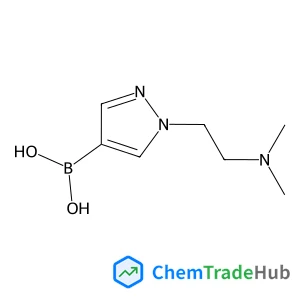
(1-(2-(Dimethylamino)ethyl)-1H-pyrazol-4-yl)boronic acid
CAS Number:
1086063-73-1
Molecular Formula:
C7H14BN3O2
![(3S,4aS,8aS)-2-[(2R,3S)-3-Amino-2-hydroxy-4-phenylbutyl]-N-(2-methyl-2-propanyl)decahydro-3-isoquinolinecarboxamide structure](https://static.chemtradehub.com/structs/136/136522-17-3-4d77.webp "(3S,4aS,8aS)-2-[(2R,3S)-3-Amino-2-hydroxy-4-phenylbutyl]-N-(2-methyl-2-propanyl)decahydro-3-isoquinolinecarboxamide structure")
(3S,4aS,8aS)-2-[(2R,3S)-3-Amino-2-hydroxy-4-phenylbutyl]-N-(2-methyl-2-propanyl)decahydro-3-isoquinolinecarboxamide
CAS Number:
136522-17-3
Molecular Formula:
C24H39N3O2

Recommended Suppliers




Disclaimer
This page provides academic journal information for reference and research purposes only. We are not affiliated with any journal publishers and do not handle publication submissions. For publication-related inquiries, please contact the respective journal publishers directly.
If you notice any inaccuracies in the information displayed, please contact us at support@chemtradehub.com. We will promptly review and address your concerns.