












Solvent dependent morphology and 59Co internal field NMR study of Co-aggregates synthesized by a wet chemical method
Literature Information
Publication Date
2018-06-04
DOI
10.1039/C8CP01780H
Impact Factor
3.676
Authors
Harish K. Choudhary, M. Manjunatha, R. Damle, K. P. Ramesh, B. Sahoo
View Original
Abstract
Different shapes of Co-aggregates were synthesized via reduction of a Co salt (CoCl2·6H2O) by chemical precipitation using glycerol, ethylene glycol and ethanol as solvents. The effect of solvent on the morphology, fcc or hcp phase-content and the magnetic properties of the synthesized samples were investigated. The Co-aggregates synthesized using glycerol have a dense spherical shape and high saturation magnetization (MS), whereas ethylene glycol leads to formation of flower-shaped spherical aggregates through loose packing of smaller plate-like particles which have a moderate MS value. When ethanol was used as a solvent, a dendritic (leaf like)-shape of the aggregates with the lowest MS value was obtained. The formation of the obtained morphology of the aggregates was explained based on the size of the solvent molecule, the viscosity of the solvent and the number of polar groups (–OH) present in the solvent molecules. The magnetic domain state and domain wall dynamics of all the Co-samples were investigated using 59Co Internal Field Nuclear Magnetic Resonance (IFNMR) spectroscopy at RT and at 77 K. Through the IFNMR spectroscopy, the presence of gain boundaries, single domain particles and multi-domain particles/aggregates with domain walls associated with fcc and hcp phases were identified and quantified. We observed that the use of ethanol facilitates formation of a higher amount of hcp phase in the sample than the use of glycerol or ethylene glycol.
Related Literature
Correction: Shell-isolated nanoparticle-enhanced Raman spectroscopy study of the adsorption behaviour of DNA bases on Au(111) electrode surfaces
Bao-Ying Wen, Xi Jin, Yue Li, Ya-Hao Wang, Chao-Yu Li, Miao-Miao Liang, Rajapandiyan Panneerselvam, Qing-Chi Xu, De-Yin Wu, Zhi-Lin Yang, Jian-Feng Li, Zhong-Qun Tian
2016-04-15
Correction
DOI: 10.1039/C6AN90033J
Ambient electrospray deposition Raman spectroscopy (AESD RS) using soft landed preformed silver nanoparticles for rapid and sensitive analysis
Tripti Ahuja, Atanu Ghosh, Sandip Mondal, Pallab Basuri, Shantha Kumar Jenifer, Pillalamarri Srikrishnarka, Jyoti Sarita Mohanty, Sandeep Bose, Thalappil Pradeep
2019-10-15
Paper
DOI: 10.1039/C9AN01700C
An ionic liquid composed of purely functional sensing molecules: a colorimetrically calcium responsive ionic liquid
Yusuke Niwa, Tatsumi Mizuta, Kenji Sueyoshi, Tatsuro Endo, Hideaki Hisamoto
2019-10-21
Communication
DOI: 10.1039/C9AN01769K
High-throughput endogenous measurement of S-nitrosylation in Alzheimer's disease using oxidized cysteine-selective cPILOT
Liqing Gu, Renã A. S. Robinson
2016-05-06
Paper
DOI: 10.1039/C6AN00417B
A flowing atmospheric pressure afterglow as an ion source coupled to a differential mobility analyzer for volatile organic compound detection
Marcos Bouza, Jaime Orejas, Silvia López-Vidal, Jorge Pisonero, Nerea Bordel, Rosario Pereiro, Alfredo Sanz-Medel
2016-04-13
Paper
DOI: 10.1039/C5AN01938A
Paper-based biodetection using luminescent nanoparticles
M. Omair Noor, Ulrich J. Krull
2016-04-13
Critical Review
DOI: 10.1039/C6AN00129G
Metabolomics for improved treatment monitoring of phenylketonuria: urinary biomarkers for non-invasive assessment of dietary adherence and nutritional deficiencies
Jennifer Wild, Meera Shanmuganathan, Mika Hayashi, Murray Potter
2019-10-03
Paper
DOI: 10.1039/C9AN01642B
The origin of the band at around 730 cm−1 in the SERS spectra of bacteria: a stable isotope approach
Patrick Kubryk, Reinhard Niessner, Natalia P. Ivleva
2016-04-20
Communication
DOI: 10.1039/C6AN00306K
Yolk–shell structured Au@Ag@mSiO2 as a probe for sensing cysteine enantiomers and Cu2+ based on circular dichroism
Jing Wang, Xu Xu, Xiaolin Qiu, Shuaishuai Zhang, Yinxian Peng
2019-10-23
Paper
DOI: 10.1039/C9AN01541H
You might also like
Compound Q&A
What precautions should be taken when handling 4-(2-Furylmethyl)thiomorpholine 1,1-dioxide (CAS: 79206-94-3)?
When handling 4-(2-Furylmethyl)thiomorpholine 1,1-dioxide (CAS: 79206-94-3), it ...
79206-94-34-(2-Furylmethyl)thi...
Compound Q&A
What precautions should be taken when handling 4-Chloro-N-[2-(4-morpholinyl)ethyl]benzamide (CAS: 71320-77-9)?
When handling 4-Chloro-N-[2-(4-morpholinyl)ethyl]benzamide (CAS: 71320-77-9), it...
71320-77-94-Chloro-N-[2-(4-mor...
Compound Q&A
How should waste containing 2-[2-(2-Methoxyethoxy)ethoxy]ethyl 4-methylbenzenesulfonate (CAS: 62921-74-8) be handled?
Waste containing this compound (CAS: 62921-74-8) should be handled according to ...
62921-74-82-[2-(2-Methoxyethox...
Compound Q&A
How should waste containing (S)-Methyl 2-amino-3-cyclohexylpropanoate be handled?
Waste containing (S)-Methyl 2-amino-3-cyclohexylpropanoate should be collected i...
40056-18-6(S)-Methyl 2-amino-3...
Compound Q&A
How is 5-({4-[(2S,4R)-4-Hydroxy-2-methyltetrahydro-2H-pyran-4-yl]-2-thienyl}sulfanyl)-1-methyl-1,3-dihydro-2H-indol-2-one (CAS: 166882-70-8) typically synthesized?
This compound can be synthesized using a multi-step process involving the conjug...
166882-70-85-({4-[(2S,4R)-4-Hyd...
Compound Q&A
Are there alternatives to (2E)-3-(3,4-Dichlorophenyl)acrylic acid (CAS: 7312-27-8) in synthesis?
There are several alternatives to (2E)-3-(3,4-Dichlorophenyl)acrylic acid in syn...
7312-27-8(2E)-3-(3,4-Dichloro...
Compound Q&A
How should Ethyl 6-(2-nitrophenyl)imidazo[2,1-b][1,3]thiazole-3-carboxylate (CAS: 925437-84-9) be stored?
Ethyl 6-(2-nitrophenyl)imidazo[2,1-b][1,3]thiazole-3-carboxylate (CAS: 925437-84...
925437-84-9Ethyl 6-(2-nitrophen...
Compound Q&A
How should waste containing 2-(1,3-Thiazol-2-yl)ethanamine (CAS: 18453-07-1) be handled?
Waste containing 2-(1,3-Thiazol-2-yl)ethanamine (CAS: 18453-07-1) should be coll...
18453-07-12-(1,3-Thiazol-2-yl)...
Compound Q&A
How is Methyl 5-iodo-2-methylbenzoate (CAS: 103440-54-6) typically synthesized?
Methyl 5-iodo-2-methylbenzoate can be synthesized through the iodination of meth...
103440-54-6Methyl 5-iodo-2-meth...
Compound Q&A
How is 5-Chloro[1,2,4]triazolo[1,5-a]pyridine (CAS: 1427399-34-5) typically synthesized?
5-Chloro[1,2,4]triazolo[1,5-a]pyridine is commonly synthesized via the condensat...
1427399-34-55-Chloro[1,2,4]triaz...
Source Journal
Physical Chemistry Chemical Physics

CiteScore:
5.5
Self-citation Rate:
10.3%
Articles per Year:
3036
Physical Chemistry Chemical Physics (PCCP) is an international journal co-owned by 19 physical chemistry and physics societies from around the world. This journal publishes original, cutting-edge research in physical chemistry, chemical physics and biophysical chemistry. To be suitable for publication in PCCP, articles must include significant innovation and/or insight into physical chemistry; this is the most important criterion that reviewers and Editors will judge against when evaluating submissions. The journal has a broad scope and welcomes contributions spanning experiment, theory, computation and data science. Topical coverage includes spectroscopy, dynamics, kinetics, statistical mechanics, thermodynamics, electrochemistry, catalysis, surface science, quantum mechanics, quantum computing and machine learning. Interdisciplinary research areas such as polymers and soft matter, materials, nanoscience, energy, surfaces/interfaces, and biophysical chemistry are welcomed if they demonstrate significant innovation and/or insight into physical chemistry. Joined experimental/theoretical studies are particularly appreciated when complementary and based on up-to-date approaches.
Recommended Compounds

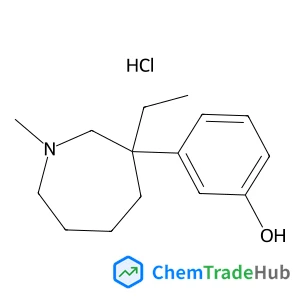
3-(3-Ethyl-1-methyl-3-azepanyl)phenol hydrochloride (1:1)
CAS Number:
59263-76-2
Molecular Formula:
C15H24ClNO

Recommended Suppliers





Disclaimer
This page provides academic journal information for reference and research purposes only. We are not affiliated with any journal publishers and do not handle publication submissions. For publication-related inquiries, please contact the respective journal publishers directly.
If you notice any inaccuracies in the information displayed, please contact us at support@chemtradehub.com. We will promptly review and address your concerns.