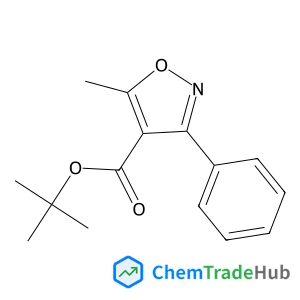
2-Methyl-2-propanyl 5-methyl-3-phenyl-1,2-oxazole-4-carboxylate
CAS Number:
211429-79-7
Molecular Formula:
C15H17NO3
Avi Mathur, Hua Fan, Vivek Maheshwari
Conventional electronic devices powered by lithium-ion batteries or supercapacitors face the challenge of offering long-term and self-sustaining operations. Self-powered devices based on emerging energy harvesting technologies can help of the development of long-lasting transducers with a small form factor. Organolead halide perovskites due to their excellent electro-optical properties are promising photosensitive materials for the development of such self-powered devices. The following review aims at summarizing recent developments made in the field of organolead halide perovskite based self-powered applications. The underlying mechanism driving the self-powered operation in electronic devices such as photodetectors, tactile sensors, and gas sensors is discussed in detail. Finally, the current challenges and prospects of these perovskite based optoelectronic applications are highlighted.

Journal of Organometallic Chemistry

Journal of Catalysis

Pharmacological Reviews

Planta Medica

Pure and Applied Chemistry

Kinetics and Catalysis

Journal of Medicinal Chemistry

Journal of Physics and Chemistry of Solids

Proceedings of the National Academy of Sciences of the United States of America

Organic Preparations and Procedures International
José R. B. Gomes, Francesc Viñes, Francesc Illas, José L. C. Fajín
DOI: 10.1039/C9CP02817J
Marina Chong, Mark E. Bowden, Hui Wu, Wei Zhou, Iffat Nayyar, Bojana Ginovska, Thomas Gennett, Tom Autrey, Craig M. Jensen, Terrence J. Udovic
DOI: 10.1039/C9CP03311D
Jefferson Maul, Giuseppe Spoto, Lorenzo Mino, Alessandro Erba
DOI: 10.1039/C9CP05418A
Dennis Palagin
DOI: 10.1039/C9CP04973H
Ping-Ping Sun, Devesh R. Kripalani
DOI: 10.1039/C9CP04672K
Alireza Azizi, Roya Momen, Steven R. Kirk, Samantha Jenkins
DOI: 10.1039/C9CP05066C
Pei-Ling Luo, Chen-An Chung
DOI: 10.1039/C9CP03333E
Alberto Jiménez-Solano, Laura Martínez-Sarti, Antonio Pertegás, Gabriel Lozano, Henk J. Bolink, Hernán Míguez
DOI: 10.1039/C9CP05505C
When handling 4-Methyl-6-(trifluoromethyl)quinoline (CAS: 40716-16-3), safety go...
4-(3,5-Difluorophenyl)aniline is an aromatic organic compound with the CAS numbe...
5-{[4-(Trifluoromethyl)phenyl]sulfanyl}-1,2,3-thiadiazole-4-carboxylic acid can ...
The market for 4-Benzylaniline hydrochloride (CAS: 6317-57-3) is steadily growin...
[3-(Diethylsulfamoyl)phenyl]boronic acid is generally considered safe when handl...
3-Bromo-2,5-dimethoxyaniline is mainly used in the pharmaceutical and chemical i...
N-Methyl-1-(5-methyl-1H-indol-3-yl)methanamine (CAS: 915922-67-7) is subject to ...
This compound is primarily used in the pharmaceutical industry for the synthesis...
2-Methyl-2-propanyl [(1S,3R)-3-aminocyclohexyl]carbamate (CAS: 1298101-47-9) sho...
Ethyl 2-bromo-4,4,4-trifluorobutanoate (CAS: 367-33-9) is utilized in the pharma...
![6,7-Dihydro-5H-pyrrolo[1,2-a]imidazole-6-carboxylic acid structure](https://static.chemtradehub.com/structs/136/1369160-12-2-6524.webp "6,7-Dihydro-5H-pyrrolo[1,2-a]imidazole-6-carboxylic acid structure")