



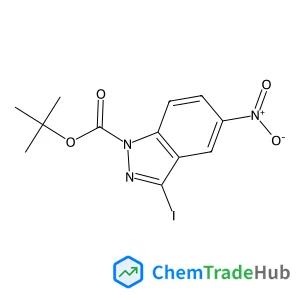
Tert-butyl 3-iodo-5-nitro-1H-indazole-1-carboxylate
CAS Number:
459133-69-8
Molecular Formula:
C12H12IN3O4
Xiaosong Xiong, Ruoyu Zhi, Qi Zhou, Wenqi Yan, Yusong Zhu, Yuhui Chen, Lijun Fu, Nengfei Yu, Yuping Wu
Metallic lithium is a promising next generation electrode material due to its ultrahigh specific capacity and lowest redox potential. However, its short cycling lifespan and safety hazards have hindered its practical application. To improve the cycling performance of lithium metal anodes, dendrite-free lithium deposition and a stable electrode–electrolyte interface are of vital importance. Here, we prepared a thin PMMA/PVDF gel coating using an electrospinning technique on a Cu substrate as the anode directly, which can not only homogenize lithium ion flux, promoting uniform lithium deposition, but can also alleviate the dramatic volume change in the lithium anode, improving the stability of the electrode interface. Owing to the excellent lithiophilic properties and high mechanical flexibility of the binary blend polymer coating, stable cycling for over 1400 h is achieved in a Li/Li symmetric cell using modified coating at 1 mA cm−2 with a cycling capacity of 1 mA h cm−2. The binary blend polymer coating with complementary properties prepared by this facile method provides a new insight for the lithium metal anode improvement.

Journal of Physics and Chemistry of Solids

Fibre Chemistry

Organic Preparations and Procedures International

Proceedings of the National Academy of Sciences of the United States of America

Journal of Heterocyclic Chemistry

Nature

Molecular Pharmacology

Journal of Catalysis

Journal of Medicinal Chemistry

Pharmacological Reviews
Wei-xi Zhang, Yong Li, Hui Jin, Yan-chao She
DOI: 10.1039/C9CP03337H
Monique Comte, Lionel Montagne, Bertrand Doumert, Laurent Cormier
DOI: 10.1039/C9CP03181B
Carla D. Nunes, Svemir Rudić
DOI: 10.1039/C9CP06278E
DOI: 10.1039/C9CP04436A
Alberto Jiménez-Solano, Laura Martínez-Sarti, Antonio Pertegás, Gabriel Lozano, Henk J. Bolink, Hernán Míguez
DOI: 10.1039/C9CP05505C
Chen Qian, Jiugen Wang
DOI: 10.1039/C9CP03757H
Jinzhe Zeng, Liqun Cao, Haisheng Ren
DOI: 10.1039/C9CP05091D
José R. B. Gomes, Francesc Viñes, Francesc Illas, José L. C. Fajín
DOI: 10.1039/C9CP02817J
When handling 4-Methyl-6-(trifluoromethyl)quinoline (CAS: 40716-16-3), safety go...
4-(3,5-Difluorophenyl)aniline is an aromatic organic compound with the CAS numbe...
5-{[4-(Trifluoromethyl)phenyl]sulfanyl}-1,2,3-thiadiazole-4-carboxylic acid can ...
The market for 4-Benzylaniline hydrochloride (CAS: 6317-57-3) is steadily growin...
[3-(Diethylsulfamoyl)phenyl]boronic acid is generally considered safe when handl...
3-Bromo-2,5-dimethoxyaniline is mainly used in the pharmaceutical and chemical i...
N-Methyl-1-(5-methyl-1H-indol-3-yl)methanamine (CAS: 915922-67-7) is subject to ...
This compound is primarily used in the pharmaceutical industry for the synthesis...
2-Methyl-2-propanyl [(1S,3R)-3-aminocyclohexyl]carbamate (CAS: 1298101-47-9) sho...
Ethyl 2-bromo-4,4,4-trifluorobutanoate (CAS: 367-33-9) is utilized in the pharma...
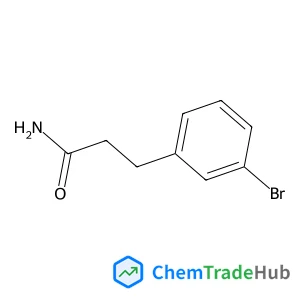

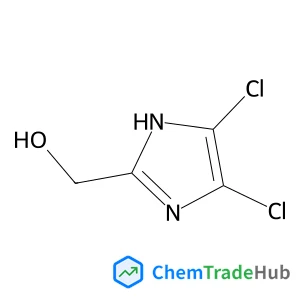
![Imidazo[1,2-c]pyrimidine structure](https://static.chemtradehub.com/structs/274/274-78-2-8b4c.webp "Imidazo[1,2-c]pyrimidine structure")



