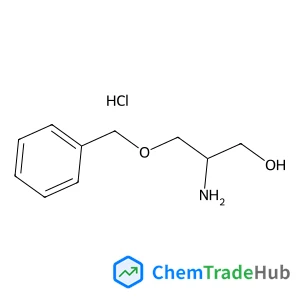
(R)-2-amino-3-(benzyloxy)propan-1-ol hydrochloride
CAS Number:
58577-95-0
Molecular Formula:
C10H16ClNO2
Helder M. Marques
A set of six binary complexes that feature iodine-centered halogen bonding, extracted from structures deposited in the Cambridge Structure Database, has been examined computationally using density functional theory calculations with the M06-2X global hybrid, and dispersion corrected B3LYP-D3 and B97-D3, to determine their equilibrium geometries, binding energies and electronic properties. The results show that gas phase calculations are very informative in evaluating what occurs in the solid state, even though these calculations ignore the importance of lattice packing and counter ion effects. The calculated binding energies for the non-covalent interactions responsible for these complexes lie between −4.15 and −7.48 kcal mol−1 (M06-2X), which enables us to characterize them as weak-to-moderate in strength. The basis set superposition error energies are calculated to vary between 0.60 and 2.42 kcal mol−1 for all the complexes examined, even though an all-electron QZP basis set used in the analysis was of quadrupole-ζ (plus polarization) quality. Dispersion is found to have a profound effect on the binding energy of some of these complexes, and was estimated to be as large as 5.0 kcal mol−1. For one complex, the crystal geometry could not be precisely reproduced using a gas phase calculation. While both halogen- and hydrogen-bonding interactions were found competitive, they cooperate with each other to determine the stable configuration of the binary complex. The molecular electrostatic surface potential, quantum theory of atoms in molecules, and reduced density gradient non-covalent Interaction models were utilized to arrive at a fundamental understanding of the various inter- and intra-molecular molecular interactions involved, as well as some other previously-overlooked non-covalent interactions that emerge in the modelling.
Wolfgang Preis
DOI: 10.1039/B600033A
Samuel Rentsch, Ramon Pericet-Camara, Georg Papastavrou, Michal Borkovec
DOI: 10.1039/B602145J
M. Riese, Z. Altug, J. Grotemeyer
DOI: 10.1039/B607402B
Pascal Pratte, Michel J. Rossi
DOI: 10.1039/B604321F
Wei Chen, Jaemin Kim, Shouheng Sun, Shaowei Chen
DOI: 10.1039/B603045A
Ethyl 4-chlorothieno[2,3-b]pyridine-5-carboxylate (CAS: 59713-58-5) can be synth...
5-Methyl-1H-indole-3-carbaldehyde (CAS: 52562-50-2) is subject to various regula...
(1,3-Dimethyl-2,4-dioxo-1,2,3,4-tetrahydro-5-pyrimidinyl)boronic acid is a white...
Waste containing Sulfocostunolide A (CAS: 1016983-51-9) should be handled with c...
When handling Murraxocin (CAS: 88478-44-8), ensure proper personal protective eq...
Formvar (CAS: 63148-64-1) is an alkyd resin characterized by a high molecular we...
(S)-4-benzyl-2-((benzyloxy)methyl)morpholine is generally safe when handled with...
Methyl 1-(5-bromo-2-pyrimidinyl)cyclopropanecarboxylate (CAS: 1447607-69-3) is p...
2-Methyl-1-phenyl-1-propanamine hydrochloride (CAS: 24290-47-9) is generally con...
3-(4-Bromophenyl)-2-methylpropanoic acid is synthesized through a multi-step pro...

Physical Chemistry Chemical Physics (PCCP) is an international journal co-owned by 19 physical chemistry and physics societies from around the world. This journal publishes original, cutting-edge research in physical chemistry, chemical physics and biophysical chemistry. To be suitable for publication in PCCP, articles must include significant innovation and/or insight into physical chemistry; this is the most important criterion that reviewers and Editors will judge against when evaluating submissions. The journal has a broad scope and welcomes contributions spanning experiment, theory, computation and data science. Topical coverage includes spectroscopy, dynamics, kinetics, statistical mechanics, thermodynamics, electrochemistry, catalysis, surface science, quantum mechanics, quantum computing and machine learning. Interdisciplinary research areas such as polymers and soft matter, materials, nanoscience, energy, surfaces/interfaces, and biophysical chemistry are welcomed if they demonstrate significant innovation and/or insight into physical chemistry. Joined experimental/theoretical studies are particularly appreciated when complementary and based on up-to-date approaches.
![4-{1-[4-(4,4,5,5-Tetramethyl-1,3,2-dioxaborolan-2-yl)phenyl]cyclopropyl}morpholine structure](https://static.chemtradehub.com/structs/120/1206594-08-2-7afb.webp "4-{1-[4-(4,4,5,5-Tetramethyl-1,3,2-dioxaborolan-2-yl)phenyl]cyclopropyl}morpholine structure")