












Germanene on single-layer ZnSe substrate: novel electronic and optical properties
Literature Information
Publication Date
2018-05-14
DOI
10.1039/C8CP00870A
Impact Factor
3.676
Authors
H. Y. Tang, L. W. Yang, L. G. Wang, G. Q. Zhang
View Original
Abstract
In this work, the structural, electronic and optical properties of germanene and ZnSe substrate nanocomposites have been investigated using first-principles calculations. We found that the large direct-gap ZnSe semiconductors and zero-gap germanene form a typical orbital hybridization heterostructure with a strong binding energy, which shows a moderate direct band gap of 0.503 eV in the most stable pattern. Furthermore, the heterostructure undergoes semiconductor-to-metal band gap transition when subjected to external out-of-plane electric field. We also found that applying external strain and compressing the interlayer distance are two simple ways of tuning the electronic structure. An unexpected indirect–direct band gap transition is also observed in the AAII pattern via adjusting the interlayer distance. Quite interestingly, the calculated results exhibit that the germanene/ZnSe heterobilayer structure has perfect optical absorption in the solar spectrum as well as the infrared and UV light zones, which is superior to that of the individual ZnSe substrate and germanene. The staggered interfacial gap and tunability of the energy band structure via interlayer distance and external electric field and strain thus make the germanene/ZnSe heterostructure a promising candidate for field effect transistors (FETs) and nanoelectronic applications.
Related Literature
Investigations of the hygroscopic properties of ammonium sulfate and mixed ammonium sulfate and glutaric acid micro droplets by means of optical levitation and Raman spectroscopy
R. Zellner
2006-05-16
Paper
DOI: 10.1039/B604439E
Photodissociation of thymine
Theofanis Kitsopoulos, Luis R. Lago
2006-02-22
Paper
DOI: 10.1039/B518443F
An NMR and relativistic DFT investigation of one-bond nuclear spin–spin coupling in solid triphenyl group-14 chlorides
Mathew J. Willans, Bryan A. Demko, Roderick E. Wasylishen
2006-05-10
Paper
DOI: 10.1039/B603937E
The uptake of O3 by myristic acid–oleic acid mixed particles: evidence for solid surface layers
David G. Nash, Tomas Baer
2006-08-24
Paper
DOI: 10.1039/B609855J
New organic noble gas molecules: energetics, stability and potential energy surfaces of HCCXeCCH and HCCKrCCH
2006-08-14
Paper
DOI: 10.1039/B606478G
Planar tripods of platinum: formation and self-assembly
Sean Maksimuk, Xiaowei Teng, Hong Yang
2006-09-21
Communication
DOI: 10.1039/B611186F
On the nature of metallic nanoparticles obtained from molecular Co3Ru–carbonyl clusters in mesoporous silica matrices‡
Claude Estournès, Pierre Braunstein, Jean Guille, Jean-Louis Paillaud, Mireille Richard-Plouet, Jacky Rosé
2006-08-01
Paper
DOI: 10.1039/B603404G
Is perturbation DFT approach applicable to purely repulsive fluids?
Shiqi Zhou, Andrej Jamnik
2006-07-14
Paper
DOI: 10.1039/B606401A
You might also like
Compound Q&A
How is Ethyl 4-chlorothieno[2,3-b]pyridine-5-carboxylate (CAS: 59713-58-5) typically synthesized?
Ethyl 4-chlorothieno[2,3-b]pyridine-5-carboxylate (CAS: 59713-58-5) can be synth...
59713-58-5Ethyl 4-chlorothieno...
Compound Q&A
What regulatory guidelines apply to 5-Methyl-1H-indole-3-carbaldehyde (CAS: 52562-50-2)?
5-Methyl-1H-indole-3-carbaldehyde (CAS: 52562-50-2) is subject to various regula...
52562-50-25-Methyl-1H-indole-3...
Compound Q&A
What are the physical and chemical properties of (1,3-Dimethyl-2,4-dioxo-1,2,3,4-tetrahydro-5-pyrimidinyl)boronic acid (CAS: 223418-73-3)?
(1,3-Dimethyl-2,4-dioxo-1,2,3,4-tetrahydro-5-pyrimidinyl)boronic acid is a white...
223418-73-3(1,3-Dimethyl-2,4-di...
Compound Q&A
How should waste containing Sulfocostunolide A (CAS: 1016983-51-9) be handled?
Waste containing Sulfocostunolide A (CAS: 1016983-51-9) should be handled with c...
1016983-51-9Sulfocostunolide A
Compound Q&A
What precautions should be taken when handling Murraxocin (CAS: 88478-44-8)?
When handling Murraxocin (CAS: 88478-44-8), ensure proper personal protective eq...
88478-44-8Murraxocin
Compound Q&A
What are the physical and chemical properties of Formvar (CAS: 63148-64-1)?
Formvar (CAS: 63148-64-1) is an alkyd resin characterized by a high molecular we...
63148-64-1Formvar(R)
Compound Q&A
Is (S)-4-benzyl-2-((benzyloxy)methyl)morpholine (CAS: 205242-66-6) safe?
(S)-4-benzyl-2-((benzyloxy)methyl)morpholine is generally safe when handled with...
205242-66-6(S)-4-benzyl-2-((ben...
Compound Q&A
What industries use Methyl 1-(5-bromo-2-pyrimidinyl)cyclopropanecarboxylate (CAS: 1447607-69-3)?
Methyl 1-(5-bromo-2-pyrimidinyl)cyclopropanecarboxylate (CAS: 1447607-69-3) is p...
1447607-69-3Methyl 1-(5-bromo-2-...
Compound Q&A
Is 2-Methyl-1-phenyl-1-propanamine hydrochloride (CAS: 24290-47-9) safe?
2-Methyl-1-phenyl-1-propanamine hydrochloride (CAS: 24290-47-9) is generally con...
24290-47-92-Methyl-1-phenyl-1-...
Compound Q&A
How is 3-(4-Bromophenyl)-2-methylpropanoic acid (CAS: 66735-01-1) typically synthesized?
3-(4-Bromophenyl)-2-methylpropanoic acid is synthesized through a multi-step pro...
66735-01-13-(4-Bromophenyl)-2-...
Source Journal
Physical Chemistry Chemical Physics

CiteScore:
5.5
Self-citation Rate:
10.3%
Articles per Year:
3036
Physical Chemistry Chemical Physics (PCCP) is an international journal co-owned by 19 physical chemistry and physics societies from around the world. This journal publishes original, cutting-edge research in physical chemistry, chemical physics and biophysical chemistry. To be suitable for publication in PCCP, articles must include significant innovation and/or insight into physical chemistry; this is the most important criterion that reviewers and Editors will judge against when evaluating submissions. The journal has a broad scope and welcomes contributions spanning experiment, theory, computation and data science. Topical coverage includes spectroscopy, dynamics, kinetics, statistical mechanics, thermodynamics, electrochemistry, catalysis, surface science, quantum mechanics, quantum computing and machine learning. Interdisciplinary research areas such as polymers and soft matter, materials, nanoscience, energy, surfaces/interfaces, and biophysical chemistry are welcomed if they demonstrate significant innovation and/or insight into physical chemistry. Joined experimental/theoretical studies are particularly appreciated when complementary and based on up-to-date approaches.
Recommended Compounds
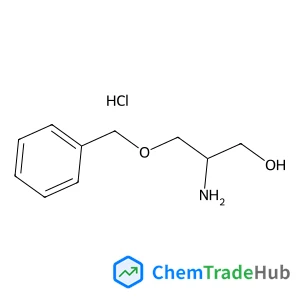
(R)-2-amino-3-(benzyloxy)propan-1-ol hydrochloride
CAS Number:
58577-95-0
Molecular Formula:
C10H16ClNO2
Recommended Suppliers






Disclaimer
This page provides academic journal information for reference and research purposes only. We are not affiliated with any journal publishers and do not handle publication submissions. For publication-related inquiries, please contact the respective journal publishers directly.
If you notice any inaccuracies in the information displayed, please contact us at support@chemtradehub.com. We will promptly review and address your concerns.