












Flexible plasmonic graphene oxide/heterostructures for dual-channel detection
Literature Information
Publication Date
2019-04-10
DOI
10.1039/C8AN02495B
Impact Factor
4.616
Authors
Varnika Prakash, Raul D. Rodriguez, Ammar Al-Hamry, Anna Lipovka, Elena Dorozhko, Oleksandr Selyshchev, Bing Ma, Shweta Sharma, Surinder K. Mehta, Ashutosh Mukherjee, Dietrich R. T. Zahn, Olfa Kanoun, Evgeniya Sheremet
View Original
Abstract
Graphene oxide (GO) films are deposited on flexible Kapton substrates and selectively modified to conductive reduced graphene oxide (rGO) electrodes using laser patterning. Based on this, we design, fabricate, and test a flexible sensor integrating laser-reduced GO with silver plasmonic nanostructures. The fabricated device results in dual transduction channels: for electrochemical and plasmonic nanostructure-based surface-enhanced Raman spectroscopy (SERS) detection. The spectroscopic analysis verifying the formation of rGO and the modification by silver nanostructures is performed by Raman, energy dispersive X-ray (EDX), and X-ray photoelectron spectroscopy (XPS). The morphological investigation is followed by optical and scanning electron microscopy imaging. In addition to pristine silver nanostructures, the Raman spectroscopy results show the formation of species such as Ag2O, Ag2CO3, and Ag2SOx. A dual-channel sensor device based on electrochemical and plasmonic detection is fabricated as a demonstration of our Ag–rGO flexible concept architecture. The dual-channel device performance is successfully demonstrated in the electrochemical and SERS detection of 4-nitrobenzenethiol (4-NBT) using the same device. Our results show that without Ag nanostructures the sensitivity in the electrochemical and optical channels is not sufficient to detect 4-NBT. The performance and stability of the silver modified device are also verified. This work demonstrates an inexpensive, highly efficient, and greener way that is compatible with solution-processing technology for the production of flexible GO-based electrochemical and SERS detection devices integrated with plasmonic nanostructures.
Related Literature
Growth and auto-oxidation of Pd on single-layer AgOx/Ag(111)
Vikram Mehar, Christopher R. O’Connor, Mustafa Karatok, Robert J. Madix, Jason F. Weaver
2020-02-25
Paper
DOI: 10.1039/C9CP06973A
Electronic structure, doping effect and topological signature in realistic intermetallics Li3−xNaxM (x = 3, 2, 1, 0; M = N, P, As, Sb, Bi)
Lei Jin, Xiaoming Zhang, Tingli He, Weizhen Meng, Xuefang Dai, Guodong Liu
2020-02-28
Paper
DOI: 10.1039/C9CP06033B
How flexible is the water molecule structure? Analysis of crystal structures and the potential energy surface
Milan R. Milovanović, Jelena M. Živković, Dragan B. Ninković, Ivana M. Stanković
2020-01-28
Paper
DOI: 10.1039/C9CP07042G
Focus on the overlap density of wavefunctions in GW approximations
2020-02-25
Paper
DOI: 10.1039/C9CP06862G
Phase transition and mechanical properties of cesium bismuth silver halide double perovskites (Cs2AgBiX6, X = Cl, Br, I): a DFT approach
Javad Beheshtian
2020-02-05
Paper
DOI: 10.1039/C9CP05342E
Identification of a receiver triplet state in the ultrafast intersystem crossing of carbonylpyrenes
Lekshmi R. S., Gayathri B. Kurup, Sivaranjana Reddy Vennapusa
2020-02-17
Paper
DOI: 10.1039/C9CP06857K
Formation of N2 bubbles along grain boundaries in (ZnO)1−x(GaN)x: nanoscale STEM-EELS studies
Calliope Bazioti, Vegard S. Olsen, Andrej Y. Kuznetsov, Lasse Vines, Øystein Prytz
2020-01-31
Communication
DOI: 10.1039/C9CP06025A
Weak-field ligands enable inert early transition metal oxides to convert methane to methanol: the case of ZrO
Benjamin A. Jackson, Evangelos Miliordos
2020-03-05
Paper
DOI: 10.1039/C9CP06050B
You might also like
Compound Q&A
What is the market or research trend for N-(4-Methoxybenzyl)-2-pyridinamine (CAS: 52818-63-0)?
N-(4-Methoxybenzyl)-2-pyridinamine (CAS: 52818-63-0) is increasingly being used ...
52818-63-0N-(4-Methoxybenzyl)-...
Compound Q&A
What precautions should be taken when handling Ethyl 4-(2-chlorophenyl)-1,3-thiazole-2-carboxylate (CAS: 1050507-06-6)?
When handling Ethyl 4-(2-chlorophenyl)-1,3-thiazole-2-carboxylate, appropriate p...
1050507-06-6Ethyl 4-(2-chlorophe...
Compound Q&A
What regulatory guidelines apply to diethyldiselane (CAS: 628-39-7)?
Diethyldiselane (CAS: 628-39-7) is classified under the Globally Harmonized Syst...
628-39-7Diethyldiselane
Compound Q&A
What is the market or research trend for oxocopper (CAS: 12053-18-8)?
The market for oxocopper (CAS: 12053-18-8) is primarily driven by its use in cat...
12053-18-8oxocopper; oxo-(oxoc...
Compound Q&A
What is the market or research trend for 5-{[(2-Methyl-2-propanyl)oxy]carbonyl}-5-azaspiro[2.4]heptane-7-carboxylic acid?
The market for 5-{[(2-Methyl-2-propanyl)oxy]carbonyl}-5-azaspiro[2.4]heptane-7-c...
1268519-54-55-{[(2-Methyl-2-prop...
Compound Q&A
What is 2-(1-Pyrrolidinyl)-4-pyridinamine (CAS: 35981-63-6)?
2-(1-Pyrrolidinyl)-4-pyridinamine is a chemical compound with the CAS number 359...
35981-63-62-(1-Pyrrolidinyl)-4...
Compound Q&A
What are the physical and chemical properties of 2-(3-Pyridinyl)-1-azabicyclo[2.2.2]octane (CAS: 91556-75-1)?
2-(3-Pyridinyl)-1-azabicyclo[2.2.2]octane (CAS: 91556-75-1) is a crystalline sol...
91556-75-12-(3-Pyridinyl)-1-az...
Compound Q&A
How is (S)-Alpha-allyl-proline hydrochloride (CAS: 129704-91-2) typically synthesized?
(S)-Alpha-allyl-proline hydrochloride is usually synthesized via a Wittig reacti...
129704-91-2(S)-Alpha-allyl-prol...
Compound Q&A
What is 3-Methyl-1,2-oxazole-5-carboxylic acid (CAS: 4857-42-5)?
3-Methyl-1,2-oxazole-5-carboxylic acid (CAS: 4857-42-5) is an organic compound w...
4857-42-53-Methyl-1,2-oxazole...
Compound Q&A
How is Lys-SMCC-DM1 (CAS: 1281816-04-3) typically synthesized?
Lys-SMCC-DM1 is synthesized via a multi-step process involving the coupling of S...
1281816-04-3Lys-SMCC-DM1
Source Journal
Analyst

CiteScore:
7.8
Self-citation Rate:
5.6%
Articles per Year:
653
Analyst publishes analytical and bioanalytical research that reports premier fundamental discoveries and inventions, and the applications of those discoveries, unconfined by traditional discipline barriers.
Recommended Compounds
![N-{3-[Benzyl(methyl)amino]propyl}-9-chloro-5,6,7,8-tetrahydro-2-acridinecarboxamide structure](https://static.chemtradehub.com/structs/142/1426944-49-1-1e4c.webp "N-{3-[Benzyl(methyl)amino]propyl}-9-chloro-5,6,7,8-tetrahydro-2-acridinecarboxamide structure")
N-{3-[Benzyl(methyl)amino]propyl}-9-chloro-5,6,7,8-tetrahydro-2-acridinecarboxamide
CAS Number:
1426944-49-1
Molecular Formula:
C25H28ClN3O
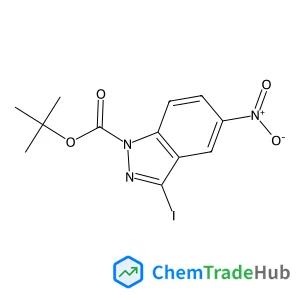
Tert-butyl 3-iodo-5-nitro-1H-indazole-1-carboxylate
CAS Number:
459133-69-8
Molecular Formula:
C12H12IN3O4
Recommended Suppliers





Disclaimer
This page provides academic journal information for reference and research purposes only. We are not affiliated with any journal publishers and do not handle publication submissions. For publication-related inquiries, please contact the respective journal publishers directly.
If you notice any inaccuracies in the information displayed, please contact us at support@chemtradehub.com. We will promptly review and address your concerns.