












One-step scalable fluorescent microgel bioassay for the ultrasensitive detection of endogenous viral miR-US4-5p
Literature Information
Publication Date
2018-12-06
DOI
10.1039/C8AN02166J
Impact Factor
4.616
Authors
Tania Mariastella Caputo, Annunziata Cummaro, Vincenzo Lettera, Alessia Mazzarotta
View Original
Abstract
Human cytomegalovirus (hCMV) infection is the leading cause of birth defects in newborns and death in immunosuppressed people. Traditional techniques require time-consuming and costly analyses, and sometimes result in false positive results; thus, a rapid and accurate detection for hCMV infection is necessary. Recently, hcmv-miR-US4-5p was selected as the biomarker for cytomegalovirus diagnosis and follow-up. Herein, we propose a bioassay based on microgels endowed with optical fluorescent oligonucleotide probes for the detection of circulating endogenous hcmv-microRNAs. In particular, a double strand probe, based on the fluorescence recovery after target capture, was conjugated on microgels and the probe density was opportunely optimised. Then, the microgels were directly mixed with the sample. The fluorescence read-out was measured as a function of target concentration at a fixed number of microgels per tube. As a bead-based assay, the performances of optical detection in terms of dynamic working range and limit of detection could be finely tuned by tuning the number of microgels per tube. The limit of detection of the assay could be tuned in the range from 39.1 fM to 156 aM by changing the microgel concentration from 50 μg mL−1 to 0.5 μg mL−1, respectively. The assay results specific for the selected target were stable over a one-year time span and they were not affected by the presence of human serum. Therefore, this bioassay based on microgels might represent a flexible platform that should be able to predict, identify and follow-up several diseases by monitoring freely circulating oligonucleotides in body fluids.
Related Literature
Superconducting properties of BaBi3 at ambient and high pressures
Yanan Wang, Tomoya Taguchi, Huan Li, Ai Suzuki, Yanting Zhang, Akari Miura, Mitsuki Ikeda, Hidenori Goto, Ritsuko Eguchi, Takafumi Miyazaki, Yen-Fa Liao, Hirofumi Ishii, Yoshihiro Kubozono
2021-09-20
Paper
DOI: 10.1039/D1CP00042J
The growth of a large GdPO4 crystal guided by theoretical simulation and the study of its phonon properties
Xinghong Gong, Yujin Chen, Jianhua Huang, Yanfu Lin, Zundu Luo, Shuiquan Deng, Yidong Huang
2021-09-16
Paper
DOI: 10.1039/D1CP02977K
Theoretical study of spodium bonding in the active site of three Zn-proteins and several model systems
Rosa Llull, Gaizca Montalbán, Ivan Vidal, Rosa M. Gomila, Antonio Bauzá, Antonio Frontera
2021-07-13
Paper
DOI: 10.1039/D1CP02150H
Extinction, absorption, and scattering of light by plasmonic spheres embedded in an absorbing host medium
2021-09-15
Paper
DOI: 10.1039/D1CP03057D
A theoretical approach to evaluate and understand the electrical properties of the electrode materials of batteries
Hatef Yousefi-Mashhour, Mohammad Mahdi Kalantarian
2021-07-06
Paper
DOI: 10.1039/D1CP01796A
Strain engineering of polar optical phonon scattering mechanism – an effective way to optimize the power-factor and lattice thermal conductivity of ScN
Man Hea Kim, Carlos Baldo, III, Yan Wang, Mahalakshmi Sahasranaman
2021-09-27
Paper
DOI: 10.1039/D1CP02971A
The effect of interface angle on the thermal conductivity of Si/Ge superlattices
Aleksandr Chernatynskiy, Xiao-Feng Zhao
2021-10-08
Paper
DOI: 10.1039/D1CP03544D
Scouting for strong light–matter coupling signatures in Raman spectra
Lukasz Piatkowski, Frank Wackenhut, Sylwester Gawinkowski, Alfred J. Meixner
2021-07-29
Paper
DOI: 10.1039/D1CP01863A
Photochemistry and UV/vis spectroscopy of hydrated vanadium cations, V+(H2O)n, n = 1–41, a model system for photochemical hydrogen evolution
Jakob Heller, Tobias F. Pascher, Dominik Muß, Christian van der Linde, Martin K. Beyer, Milan Ončák
2021-08-06
Paper
DOI: 10.1039/D1CP02382A
You might also like
Compound Q&A
How is Ethyl 4-chlorothieno[2,3-b]pyridine-5-carboxylate (CAS: 59713-58-5) typically synthesized?
Ethyl 4-chlorothieno[2,3-b]pyridine-5-carboxylate (CAS: 59713-58-5) can be synth...
59713-58-5Ethyl 4-chlorothieno...
Compound Q&A
What regulatory guidelines apply to 5-Methyl-1H-indole-3-carbaldehyde (CAS: 52562-50-2)?
5-Methyl-1H-indole-3-carbaldehyde (CAS: 52562-50-2) is subject to various regula...
52562-50-25-Methyl-1H-indole-3...
Compound Q&A
What are the physical and chemical properties of (1,3-Dimethyl-2,4-dioxo-1,2,3,4-tetrahydro-5-pyrimidinyl)boronic acid (CAS: 223418-73-3)?
(1,3-Dimethyl-2,4-dioxo-1,2,3,4-tetrahydro-5-pyrimidinyl)boronic acid is a white...
223418-73-3(1,3-Dimethyl-2,4-di...
Compound Q&A
How should waste containing Sulfocostunolide A (CAS: 1016983-51-9) be handled?
Waste containing Sulfocostunolide A (CAS: 1016983-51-9) should be handled with c...
1016983-51-9Sulfocostunolide A
Compound Q&A
What precautions should be taken when handling Murraxocin (CAS: 88478-44-8)?
When handling Murraxocin (CAS: 88478-44-8), ensure proper personal protective eq...
88478-44-8Murraxocin
Compound Q&A
What are the physical and chemical properties of Formvar (CAS: 63148-64-1)?
Formvar (CAS: 63148-64-1) is an alkyd resin characterized by a high molecular we...
63148-64-1Formvar(R)
Compound Q&A
Is (S)-4-benzyl-2-((benzyloxy)methyl)morpholine (CAS: 205242-66-6) safe?
(S)-4-benzyl-2-((benzyloxy)methyl)morpholine is generally safe when handled with...
205242-66-6(S)-4-benzyl-2-((ben...
Compound Q&A
What industries use Methyl 1-(5-bromo-2-pyrimidinyl)cyclopropanecarboxylate (CAS: 1447607-69-3)?
Methyl 1-(5-bromo-2-pyrimidinyl)cyclopropanecarboxylate (CAS: 1447607-69-3) is p...
1447607-69-3Methyl 1-(5-bromo-2-...
Compound Q&A
Is 2-Methyl-1-phenyl-1-propanamine hydrochloride (CAS: 24290-47-9) safe?
2-Methyl-1-phenyl-1-propanamine hydrochloride (CAS: 24290-47-9) is generally con...
24290-47-92-Methyl-1-phenyl-1-...
Compound Q&A
How is 3-(4-Bromophenyl)-2-methylpropanoic acid (CAS: 66735-01-1) typically synthesized?
3-(4-Bromophenyl)-2-methylpropanoic acid is synthesized through a multi-step pro...
66735-01-13-(4-Bromophenyl)-2-...
Source Journal
Analyst

CiteScore:
7.8
Self-citation Rate:
5.6%
Articles per Year:
653
Analyst publishes analytical and bioanalytical research that reports premier fundamental discoveries and inventions, and the applications of those discoveries, unconfined by traditional discipline barriers.
Recommended Compounds
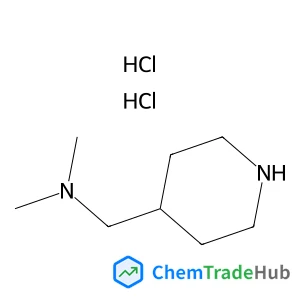
N,N-dimethyl(piperidin-4-yl)methanamine hydrochloride
CAS Number:
172281-72-0
Molecular Formula:
C8H20Cl2N2
![[2-(Benzyloxy)-3-bromo-5-methylphenyl]boronic acid structure](https://static.chemtradehub.com/structs/870/870777-20-1-24ac.webp "[2-(Benzyloxy)-3-bromo-5-methylphenyl]boronic acid structure")
[2-(Benzyloxy)-3-bromo-5-methylphenyl]boronic acid
CAS Number:
870777-20-1
Molecular Formula:
C14H14BBrO3
Recommended Suppliers






Disclaimer
This page provides academic journal information for reference and research purposes only. We are not affiliated with any journal publishers and do not handle publication submissions. For publication-related inquiries, please contact the respective journal publishers directly.
If you notice any inaccuracies in the information displayed, please contact us at support@chemtradehub.com. We will promptly review and address your concerns.