












Bacterial detection and identification from human synovial fluids on an integrated microfluidic system‡
Literature Information
Publication Date
2018-11-16
DOI
10.1039/C8AN01764F
Impact Factor
4.616
Authors
Ting-Hang Liu, Shu-Shen Cheng, Huey-Ling You, Mel S. Lee
View Original
Abstract
Periprosthetic joint infections (PJIs) are among the most severe complications emerging from prosthetic joint replacement surgeries. In order to possess a rapid means of diagnosing PJIs, an integrated microfluidic system was developed herein for detecting and identifying bacteria in human synovial fluid (HSF). The entire molecular diagnostic process, including (1) sample treatment, (2) bacterial isolation, (3) bacterial lysis, (4) nucleic acid amplification (via polymerase chain reaction (PCR)), and (5) optical detection, could be automated on a single chip. First, N-acetyl-L-cysteine was used to decrease the viscosity of HSF samples and consequently enhance bacterial isolation with vancomycin-coated nano-magnetic beads. Then, a universal 16S ribosomal ribonucleic acid PCR primer set and four species-specific primer sets were used for PCR-based detection and identification of four common bacteria previously associated with PJIs, including Staphylococcus aureus, methicillin-resistant S. aureus, Escherichia coli, and Acinetobacter baumannii. With this approach, the limit of detection was as low as 100 colony forming units (CFUs) per milliliter (or 20 CFUs per reaction), which is suitable for clinical diagnostics and for making informed decisions regarding post-operative antibiotic administration. More importantly, bacterial detection and identification data could be acquired within 90 minutes, representing a significant improvement over traditional culture-based methods (3–7 days). The developed microfluidic system may therefore serve as a promising tool for rapid diagnosis of PJIs.
Related Literature
Characterizing hydrogen and tetrel bonds in clusters of CO2 with carboxylic acids
Weixing Li, Sonia Melandri, Luca Evangelisti, Camilla Calabrese, Annalisa Vigorito, Assimo Maris
2021-07-24
Paper
DOI: 10.1039/D1CP02568F
Strain engineering of polar optical phonon scattering mechanism – an effective way to optimize the power-factor and lattice thermal conductivity of ScN
Man Hea Kim, Carlos Baldo, III, Yan Wang, Mahalakshmi Sahasranaman
2021-09-27
Paper
DOI: 10.1039/D1CP02971A
Active Brownian particle in homogeneous media of different viscosities: numerical simulations
E. A. Lisin, O. S. Vaulina, I. I. Lisina, O. F. Petrov
2021-07-26
Paper
DOI: 10.1039/D1CP02511B
A flat-lying dimer as a key intermediate in NO reduction on Cu(100)
Kenta Kuroishi, Thanh Ngoc Pham, Yuelin Wang, Yuji Hamamoto, Kouji Inagaki, Akitoshi Shiotari, Hiroshi Okuyama, Shinichiro Hatta, Tetsuya Aruga
2021-07-08
Paper
DOI: 10.1039/D1CP02746H
Mixed-diphosphine-protected chiral undecagold clusters Au11(S,S-DIOP)4(rac-/R-/S-BINAP): effect of the handedness of BINAP on their chiroptical responses
Yasuhiko Sato, Hiroshi Yao
2021-07-26
Paper
DOI: 10.1039/D1CP02106K
Theoretical characterization of zeolite encapsulated platinum clusters in the presence of water molecules
2021-10-07
Paper
DOI: 10.1039/D1CP03766H
Single sheets of graphene for fabrication of fibers with enhanced mechanical properties
Muhammad G. Salim, Luke A. Thimons, Min A. Kim, Brennan Carr, Michelle Montgomery, Nathan Tolman, Tevis D. B. Jacobs, Haitao Liu
2021-09-20
Paper
DOI: 10.1039/D1CP03238K
Superconducting properties of BaBi3 at ambient and high pressures
Yanan Wang, Tomoya Taguchi, Huan Li, Ai Suzuki, Yanting Zhang, Akari Miura, Mitsuki Ikeda, Hidenori Goto, Ritsuko Eguchi, Takafumi Miyazaki, Yen-Fa Liao, Hirofumi Ishii, Yoshihiro Kubozono
2021-09-20
Paper
DOI: 10.1039/D1CP00042J
Self-standing, conducting and capacitive biomimetic hybrid nanomembranes for selective molecular ion separation
Catherine Michaux, Eric A. Perpète, David Zanuy
2021-07-05
Paper
DOI: 10.1039/D1CP01840J
Kinetic and thermodynamic stability comparison for the fibrillar form of small amyloid-β(1–42) oligomers using scaled molecular dynamics
Debasis Saha, Biman Jana
2021-07-06
Paper
DOI: 10.1039/D1CP01866C
You might also like
Compound Q&A
How is Ethyl 4-chlorothieno[2,3-b]pyridine-5-carboxylate (CAS: 59713-58-5) typically synthesized?
Ethyl 4-chlorothieno[2,3-b]pyridine-5-carboxylate (CAS: 59713-58-5) can be synth...
59713-58-5Ethyl 4-chlorothieno...
Compound Q&A
What regulatory guidelines apply to 5-Methyl-1H-indole-3-carbaldehyde (CAS: 52562-50-2)?
5-Methyl-1H-indole-3-carbaldehyde (CAS: 52562-50-2) is subject to various regula...
52562-50-25-Methyl-1H-indole-3...
Compound Q&A
What are the physical and chemical properties of (1,3-Dimethyl-2,4-dioxo-1,2,3,4-tetrahydro-5-pyrimidinyl)boronic acid (CAS: 223418-73-3)?
(1,3-Dimethyl-2,4-dioxo-1,2,3,4-tetrahydro-5-pyrimidinyl)boronic acid is a white...
223418-73-3(1,3-Dimethyl-2,4-di...
Compound Q&A
How should waste containing Sulfocostunolide A (CAS: 1016983-51-9) be handled?
Waste containing Sulfocostunolide A (CAS: 1016983-51-9) should be handled with c...
1016983-51-9Sulfocostunolide A
Compound Q&A
What precautions should be taken when handling Murraxocin (CAS: 88478-44-8)?
When handling Murraxocin (CAS: 88478-44-8), ensure proper personal protective eq...
88478-44-8Murraxocin
Compound Q&A
What are the physical and chemical properties of Formvar (CAS: 63148-64-1)?
Formvar (CAS: 63148-64-1) is an alkyd resin characterized by a high molecular we...
63148-64-1Formvar(R)
Compound Q&A
Is (S)-4-benzyl-2-((benzyloxy)methyl)morpholine (CAS: 205242-66-6) safe?
(S)-4-benzyl-2-((benzyloxy)methyl)morpholine is generally safe when handled with...
205242-66-6(S)-4-benzyl-2-((ben...
Compound Q&A
What industries use Methyl 1-(5-bromo-2-pyrimidinyl)cyclopropanecarboxylate (CAS: 1447607-69-3)?
Methyl 1-(5-bromo-2-pyrimidinyl)cyclopropanecarboxylate (CAS: 1447607-69-3) is p...
1447607-69-3Methyl 1-(5-bromo-2-...
Compound Q&A
Is 2-Methyl-1-phenyl-1-propanamine hydrochloride (CAS: 24290-47-9) safe?
2-Methyl-1-phenyl-1-propanamine hydrochloride (CAS: 24290-47-9) is generally con...
24290-47-92-Methyl-1-phenyl-1-...
Compound Q&A
How is 3-(4-Bromophenyl)-2-methylpropanoic acid (CAS: 66735-01-1) typically synthesized?
3-(4-Bromophenyl)-2-methylpropanoic acid is synthesized through a multi-step pro...
66735-01-13-(4-Bromophenyl)-2-...
Source Journal
Analyst

CiteScore:
7.8
Self-citation Rate:
5.6%
Articles per Year:
653
Analyst publishes analytical and bioanalytical research that reports premier fundamental discoveries and inventions, and the applications of those discoveries, unconfined by traditional discipline barriers.
Recommended Compounds

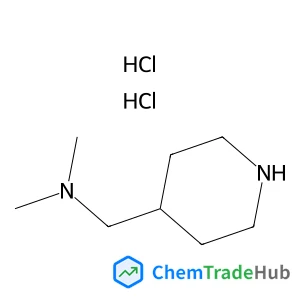
N,N-dimethyl(piperidin-4-yl)methanamine hydrochloride
CAS Number:
172281-72-0
Molecular Formula:
C8H20Cl2N2
Recommended Suppliers





Disclaimer
This page provides academic journal information for reference and research purposes only. We are not affiliated with any journal publishers and do not handle publication submissions. For publication-related inquiries, please contact the respective journal publishers directly.
If you notice any inaccuracies in the information displayed, please contact us at support@chemtradehub.com. We will promptly review and address your concerns.