


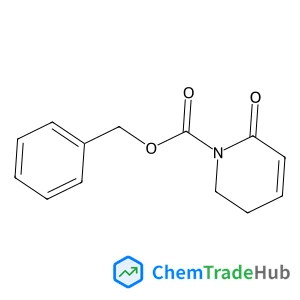
Benzyl 6-oxo-3,6-dihydro-1(2H)-pyridinecarboxylate
CAS Number:
725746-35-0
Molecular Formula:
C13H13NO3
Sang-Yong Lee, Xihuan Luo, Vigneshwaran Namasivayam, Jennifer Geiss, Salahuddin Mirza, Julie Pelletier, Holger Stephan, Christa E. Müller
Ecto-nucleoside triphosphate diphosphohydrolase1 (NTPDase1, CD39) is a major ectonucleotidase that hydrolyzes proinflammatory ATP via ADP to AMP, which is subsequently converted by ecto-5′-nucleotidase (CD73) to immunosuppressive adenosine. Activation of CD39 has potential for treating inflammatory diseases, while inhibition was suggested as a novel strategy for the immunotherapy of cancer. In the present study, we developed a selective and highly sensitive capillary electrophoresis (CE) assay using a novel fluorescent CD39 substrate, a fluorescein-labelled ATP (PSB-170621A) that is converted to its AMP derivative. To accelerate the assays, a two-directional (forward and reverse) CE system was implemented using 96-well plates, which is suitable for the screening of compound libraries (Z′-factor: 0.7). The detection limits for the forward and reverse operation were 11.7 and 2.00 pM, respectively, indicating a large enhancement in sensitivity as compared to previous methods (e.g. malachite-green assay: 1 000 000-fold, CE-UV assay: 500 000-fold, fluorescence polarization immunoassay: 12 500-fold). Enzyme kinetic studies at human CD39 revealed a Km value of 19.6 μM, and a kcat value of 119 × 10−3 s−1 for PSB-170621A, which shows similar substrate properties as ATP (11.4 μM and 82.5 × 10⁻³ s−1). The compound displayed similar properties at rat and mouse CD39. Subsequent docking studies into a homology model of human CD39 revealed a hydrophobic pocket that accommodates the fluorescein tag. PSB-170621A was found to be preferably hydrolyzed by CD39 as compared to other ectonucleotidases. The new assay was validated by performing inhibition assays with several standard CD39 inhibitors yielding results that were consonant with data using the natural substrates.

Journal of Physics and Chemistry of Solids

Pure and Applied Chemistry

Organic Preparations and Procedures International

Journal of Medicinal Chemistry

Journal of Catalysis

Proceedings of the National Academy of Sciences of the United States of America

Science

Pharmacological Reviews

Journal of Heterocyclic Chemistry

Kinetics and Catalysis
Jakub Goclon, Bernd Meyer
DOI: 10.1039/C3CP44546A
Paola D'Angelo, Valentina Migliorati, Riccardo Spezia, Simone De Panfilis, Ingmar Persson, Andrea Zitolo
DOI: 10.1039/C3CP50842K
Armin Hoffmann, Krishna Neupane
DOI: 10.1039/C3CP44564J
Gabriel J. Cuello, Shinji Kohara, Chris J. Benmore, David L. Price, Eugene Bychkov
DOI: 10.1039/C3CP50536G
Farid El Gabaly, Kevin F. McCarty, Hendrik Bluhm, Anthony H. McDaniel
DOI: 10.1039/C3CP50366F
Jean-François Greisch, Michael E. Harding, Mattias Kordel
DOI: 10.1039/C3CP44362K
Małgorzata Wierzbowska, Adam Dominiak, Kamil Tokar
DOI: 10.1039/C3CP44378G
Zhiguo Wang, Qiulei Su, Huiqiu Deng
DOI: 10.1039/C3CP51167G
Florian Löw, Katrin Amann-Winkel, Thomas Loerting, Franz Fujara, Burkhard Geil
DOI: 10.1039/C3CP50818H
Maria Baias, Cory M. Widdifield, Jean-Nicolas Dumez, Hugh P. G. Thompson, Timothy G. Cooper, Elodie Salager, Sirena Bassil, Robin S. Stein, Anne Lesage, Graeme M. Day, Lyndon Emsley
DOI: 10.1039/C3CP41095A
N-(4-Methoxybenzyl)-2-pyridinamine (CAS: 52818-63-0) is increasingly being used ...
When handling Ethyl 4-(2-chlorophenyl)-1,3-thiazole-2-carboxylate, appropriate p...
Diethyldiselane (CAS: 628-39-7) is classified under the Globally Harmonized Syst...
The market for oxocopper (CAS: 12053-18-8) is primarily driven by its use in cat...
The market for 5-{[(2-Methyl-2-propanyl)oxy]carbonyl}-5-azaspiro[2.4]heptane-7-c...
2-(1-Pyrrolidinyl)-4-pyridinamine is a chemical compound with the CAS number 359...
2-(3-Pyridinyl)-1-azabicyclo[2.2.2]octane (CAS: 91556-75-1) is a crystalline sol...
(S)-Alpha-allyl-proline hydrochloride is usually synthesized via a Wittig reacti...
3-Methyl-1,2-oxazole-5-carboxylic acid (CAS: 4857-42-5) is an organic compound w...
Lys-SMCC-DM1 is synthesized via a multi-step process involving the coupling of S...

Analyst publishes analytical and bioanalytical research that reports premier fundamental discoveries and inventions, and the applications of those discoveries, unconfined by traditional discipline barriers.
![(2R,6S)-6-[(Benzyloxy)methyl]-4-{[(2-methyl-2-propanyl)oxy]carbonyl}-2-morpholinecarboxylic acid structure](https://static.chemtradehub.com/structs/109/1093085-91-6-3382.webp "(2R,6S)-6-[(Benzyloxy)methyl]-4-{[(2-methyl-2-propanyl)oxy]carbonyl}-2-morpholinecarboxylic acid structure")
![1,10-bis(3,5-dimethylphenyl)-12-hydroxy-4,5,6,7-tetrahydroiindeno[7,1-de:1',7'-fg][1,3,2]dioxaphosphocine 12-oxide structure](https://static.chemtradehub.com/structs/141/1412439-82-7-b9a9.webp "1,10-bis(3,5-dimethylphenyl)-12-hydroxy-4,5,6,7-tetrahydroiindeno[7,1-de:1',7'-fg][1,3,2]dioxaphosphocine 12-oxide structure")




