












Glycopolymer–peptidebioconjugates with antioxidant activity via RAFT polymerization
Literature Information
Publication Date
2012-02-29
DOI
10.1039/C2PY20021J
Impact Factor
5.582
Authors
Haiting Shi, Li Liu, Xiaobei Wang, Jingyi Li
View Original
Abstract
Well-defined protected glycopolymer poly(2-(2,3,4,6-tetra-O-acetyl-β-D-glucosyloxy)ethyl methacrylate) (PAcGlcEMA) is synthesized by reversible addition–fragmentation chain transfer (RAFT) radical polymerization. In the presence of ethanolamine and 2,2′-dithiodipyridine, PAcGlcEMA-PDS with end thiol-reactive pyridyldisulfide (PDS) group is generated by a one-pot approach. After deprotection of PAcGlcEMA, tripeptide reduced glutathione (GSH) is conjugated to PGlcEMA-PDS by thiol–disulfide exchange reaction under mild conditions. Fluorescent assay and TEM studies demonstrate that the pendant glucose residues on PGlcEMA have specific recognition with protein Concanavalin A (Con A). In comparison to PGlcEMA-PDS, the bioconjugation of GSH to PGlcEMA enhances the affinity of glycopolymer to Con A. The association constant (Ka) for the interaction of PGlcEMA-GSH bioconjugate and Con A is 6.1 × 10³ M−1, displaying a high glycoside cluster effect. The disulfide-linked GSH bioconjugate PGlcEMA-GSH shows antioxidant activity. The radical scavenging activity is validated in vitro by 1,1-diphenyl-2-picrylhydrazyl (DPPH) assay. It is found that the scavenging activity is dependent on reaction time and temperature. A sustained radical scavenging activity is observed at 37 °C, and about 50% DPPH radical is cleared after 24 h incubation. The recognition and the antioxidant activity make the peptide–glycopolymer bioconjugate PGlcEMA-GSH have potential for biodetection, biomimetics and targeted antioxidant delivery.
Related Literature
A dendrimer–hydrophobic interaction synergy improves the stability of polyion complex micelles
Marcos Fernandez-Villamarin, Ana Sousa-Herves, Silvia Porto, Noelia Guldris, José Martínez-Costas, Ricardo Riguera, Eduardo Fernandez-Megia
2017-03-28
Paper
DOI: 10.1039/C7PY00304H
“Arm-first” approach for the synthesis of star-shaped stereoregular polymers through living coordination polymerization
Zhenghai Shi, Fang Guo, Rui Tan, Hui Niu, Tingting Li, Yang Li
2017-01-31
Communication
DOI: 10.1039/C6PY02097F
Block, random and palm-tree amphiphilic fluorinated copolymers: controlled synthesis, surface activity and use as dispersion polymerization stabilizers
David Alaimo, Alexandre Beigbeder, Philippe Dubois, Guy Broze, Christine Jérôme, Bruno Grignard
2014-05-09
Paper
DOI: 10.1039/C4PY00366G
New violet to yellow light sensitive diketo pyrrolo–pyrrole photoinitiators: high performance systems with unusual bleaching properties and solubility in water
Mariem Bouzrati-Zerelli, Nicolas Zivic, Frédéric Dumur, Didier Gigmes, Bernadette Graff, Jean Pierre Fouassier, Jacques Lalevée
2017-02-28
Paper
DOI: 10.1039/C7PY00202E
Thermo-responsive gold/poly(vinyl alcohol)-b-poly(N-vinylcaprolactam) core–corona nanoparticles as a drug delivery system
Christophe Detrembleur, Marie Hurtgen, Antoine Debuigne, Marie-Claire De Pauw-Gillet, Stéphane Mornet, Etienne Duguet, Christine Jérôme
2014-05-09
Paper
DOI: 10.1039/C4PY00352G
Unusual thermal phase transition behavior of an ionic liquid and poly(ionic liquid) in water with significantly different LCST and dynamic mechanism
Wenlong Li, Peiyi Wu
2014-05-16
Paper
DOI: 10.1039/C4PY00593G
Fast conversion of terminal thiocarbonylthio groups of RAFT polymers to “clickable” thiol groups via versatile sodium azide
Yang Wu, Yanyan Zhou, Jian Zhu, Wei Zhang, Xiangqiang Pan, Zhengbiao Zhang, Xiulin Zhu
2014-06-17
Communication
DOI: 10.1039/C4PY00732H
Janus nanoparticles inside polymeric materials: interfacial arrangement toward functional hybrid materials
Qiuyan Yang, Katja Loos
2016-11-17
Review Article
DOI: 10.1039/C6PY01795A
You might also like
Compound Q&A
Are there alternatives to 1-(4-Chlorophenyl)-N-hydroxymethanimine (CAS: 3848-36-0) in synthesis?
When considering alternatives to 1-(4-Chlorophenyl)-N-hydroxymethanimine (CAS: 3...
3848-36-01-(4-Chlorophenyl)-N...
Compound Q&A
How should (1R,9S,10S,12S,14E,16S,19R,20R,21S,22R)-3,9,21-Trihydroxy-5,10,12,14,16,20,22-heptamethyl-23,24-dioxatetracyclo[17.3.1.1~6,9~.0~2,7~]tetracosa-2,5,7,14-tetraen-4-one (CAS: 183202-73-5) be stored?
This compound should be stored in a cool, dry place away from direct sunlight. I...
183202-73-5(1R,9S,10S,12S,14E,1...
Compound Q&A
How is 3-(4-Bromophenyl)-5-(2-fluorophenyl)-1,2,4-oxadiazole (CAS: 419553-16-5) typically synthesized?
3-(4-Bromophenyl)-5-(2-fluorophenyl)-1,2,4-oxadiazole is synthesized through a m...
419553-16-53-(4-Bromophenyl)-5-...
Compound Q&A
How is 5-Chloro-2-(4-chlorophenyl)-4-methyl-6-[3-(1-piperidinyl)propoxy]pyrimidine (CAS: 1639220-19-1) typically synthesized?
5-Chloro-2-(4-chlorophenyl)-4-methyl-6-[3-(1-piperidinyl)propoxy]pyrimidine (CAS...
1639220-19-15-Chloro-2-(4-chloro...
Compound Q&A
What industries use 2-Chloro-4-(difluoromethoxy)pyridine (CAS: 1206978-15-5)?
2-Chloro-4-(difluoromethoxy)pyridine is used in the pharmaceutical industry for ...
1206978-15-52-Chloro-4-(difluoro...
Compound Q&A
What regulatory guidelines apply to 3-Chloro-6-methylpyridazine (CAS: 1121-79-5)?
3-Chloro-6-methylpyridazine (CAS: 1121-79-5) is classified under the Globally Ha...
1121-79-53-Chloro-6-methylpyr...
Compound Q&A
Are there alternatives to Methyl 4,5-dimethyl-2-nitrobenzoate in synthesis?
Several alternatives can be used in the synthesis of Methyl 4,5-dimethyl-2-nitro...
90922-74-0Methyl 4,5-dimethyl-...
Compound Q&A
Are there alternatives to (2E,2'E)-3,3'-(1,4-Phenylene)bisacrylaldehyde in synthesis?
Alternatives to (2E,2'E)-3,3'-(1,4-Phenylene)bisacrylaldehyde include other acry...
63405-68-5(2E,2'E)-3,3'-(1,4-P...
Compound Q&A
What is 3-Amino-5-chloropyridin-2-ol hydrochloride (CAS: 1261906-29-9)?
3-Amino-5-chloropyridin-2-ol hydrochloride is an organic compound with the CAS n...
1261906-29-93-Amino-5-chloropyri...
Compound Q&A
What precautions should be taken when handling 6,7-Difluoro-2,3-dihydro-4H-chromen-4-one (CAS: 1092349-93-3)?
When handling 6,7-Difluoro-2,3-dihydro-4H-chromen-4-one, it is essential to wear...
1092349-93-36,7-Difluoro-2,3-dih...
Source Journal
Polymer Chemistry

CiteScore:
8.6
Self-citation Rate:
7.3%
Articles per Year:
457
Polymer Chemistry welcomes submissions in all areas of polymer science that have a strong focus on macromolecular chemistry. Manuscripts may cover a broad range of fields, yet no direct application focus is required.
Recommended Compounds
![[4-(Isobutyrylamino)phenyl]boronic acid structure](https://static.chemtradehub.com/structs/874/874219-50-8-6ab5.webp "[4-(Isobutyrylamino)phenyl]boronic acid structure")
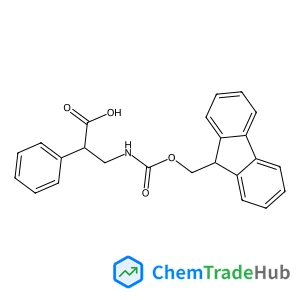
(S)-3-((((9H-Fluoren-9-yl)methoxy)carbonyl)amino)-2-phenylpropanoic acid
CAS Number:
1217663-60-9
Molecular Formula:
C24H21NO4
![2-{[(1R,2S)-2-Aminocyclohexyl]amino}-4-{[3-(2H-1,2,3-triazol-2-yl)phenyl]amino}-5-pyrimidinecarboxamide structure](https://static.chemtradehub.com/structs/137/1370261-96-3-40df.webp "2-{[(1R,2S)-2-Aminocyclohexyl]amino}-4-{[3-(2H-1,2,3-triazol-2-yl)phenyl]amino}-5-pyrimidinecarboxamide structure")
2-{[(1R,2S)-2-Aminocyclohexyl]amino}-4-{[3-(2H-1,2,3-triazol-2-yl)phenyl]amino}-5-pyrimidinecarboxamide
CAS Number:
1370261-96-3
Molecular Formula:
C19H23N9O
Recommended Suppliers



Disclaimer
This page provides academic journal information for reference and research purposes only. We are not affiliated with any journal publishers and do not handle publication submissions. For publication-related inquiries, please contact the respective journal publishers directly.
If you notice any inaccuracies in the information displayed, please contact us at support@chemtradehub.com. We will promptly review and address your concerns.