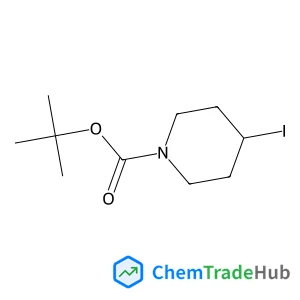
2-Methyl-2-propanyl 4-iodo-1-piperidinecarboxylate
CAS Number:
301673-14-3
Molecular Formula:
C10H18INO2
R. Ruiz-Rosas, I. Fuentes, C. Viñas, F. Teixidor, E. Morallón, D. Cazorla-Amorós
Expanding the operating voltage of aqueous-based electrolytes by using neutral electrolytes and advanced cell designs is a promising strategy for the development of greener and safer supercapacitors. However, solvent decomposition and the oxidation of carbon electrodes are issues that still need to be resolved. Herein, we propose a novel protection strategy for stabilizing aqueous electrolytes at high voltages by using metallacarboranes with tuned redox potentials specifically selected for matching those of the electrolyte decomposition. Such metallacarboranes are strongly adsorbed in the micropores of conventional activated carbons without compromising their capacitance or their power capabilities. As a proof of concept, supercapacitors with optimized electrode weight ratios in 0.5 M Na2SO4 were constructed using a highly stable commercial activated carbon with the aim of operating them at 2.2 V. While this device malfunctioned after several hundreds of cycles, the addition of small amounts of the Na[Co(C2B9Cl2H9)2] metallacarborane (redox pair at −0.98 V vs. Ag/AgCl) dramatically increased its durability. The supercapacitor prepared using 0.15 mmol g−1 of Na[Co(C2B9Cl2H9)2] retained 80% of its original capacitance and an energy density of 10.67 W h kg−1 at 1 kW kg−1 after 5000 cycles at 2.2 V. This strategy has the potential to be extended to different electrolytes, enabling the development of more durable supercapacitors that operate at voltages close to those of organic electrolytes while using safer and greener aqueous electrolytes.
Ludovica Maugeri, Giuseppe Forte, Gianpiero Buscarino, Antonino Gulino, Luca Lanzanò, Paolo Bonacci, Nicolò Musso
DOI: 10.1039/D3TB01863F
Sourav Sarkar
DOI: 10.1039/D3TB01841E
Bo Wang, Linge Nian, Sha Zhao, Jianxi Xiao
DOI: 10.1039/D3TB02749J
Saikat Khamarui, Sirshendu Ghosh
DOI: 10.1039/D3NJ04195F
Pradeep Rawat, Sanjay Mor, Ritu Yadav, Payal Narang, Meena Bisht, Pannuru Venkatesu
DOI: 10.1039/D3NJ04754G
Siavash Iravani
DOI: 10.1039/D3TB02247A
Avijit Mondal, Rashi Salampuriya, Aditya Umesh, Mrinmoy De
DOI: 10.1039/D3TB02403B
Lang Yan, Siyu Shang, Jinyan Hu, Xiaofang Zhang, Jikuai Chen, Bijiang Geng, Yin Zhao, Jiangbo Zhu
DOI: 10.1039/D3TB02018E
Wenjia Xiao, Xiangping Hu
DOI: 10.1039/D3NJ04907H
Waste containing (6-Bromo-2-naphthyl)oxy](dimethyl)(2-methyl-2-propanyl)silane (...
7-Fluoro-4-isoquinolinecarboxylic acid can be synthesized via a multi-step proce...
2,3,5,6-Tetrabromothieno[3,2-b]thiophene is a crystalline compound with a high m...
1-[4-(Benzylamino)-7,8-dihydro-5H-pyrano[4,3-d]pyrimidin-2-yl]-2-methyl-1H-indol...
The market for imidazo[5,1-d]-1,2,3,5-tetrazine-8-carboxylic acid, 3,4-dihydro-3...
3-(Triisopropylsilyl)propiolaldehyde is a synthetic organic compound with the CA...
6-Nitro-2H-1,4-benzoxazin-3(4H)-one (CAS: 81721-87-1) is subject to various regu...
Waste containing (3-Fluorophenyl)(4-{[(2-methyl-2-propanyl)oxy]carbonyl}-1-piper...
N,N'-4,4'-Biphenyldiyldiisonicotinamide is a white crystalline solid with a mole...
6-Bromo-8-fluoro-2-quinazolinol is primarily used in the pharmaceutical industry...
![N-[(E)-Phenylmethylene]benzenesulfonamide structure](https://static.chemtradehub.com/structs/139/13909-34-7-8167.webp "N-[(E)-Phenylmethylene]benzenesulfonamide structure")