












![[(2R)-6,6-Dimethyl-2-morpholinyl]methanol hydrochloride (1:1) structure](https://static.chemtradehub.com/structs/141/1416444-88-6-e06a.webp "[(2R)-6,6-Dimethyl-2-morpholinyl]methanol hydrochloride (1:1) structure")
[(2R)-6,6-Dimethyl-2-morpholinyl]methanol hydrochloride (1:1)
CAS Number:
1416444-88-6
Molecular Formula:
C7H16ClNO2
Wei Lu, Andrew Goodwin, Yangyang Wang, Panchao Yin, Weiyu Wang, Jiahua Zhu, Ting Wu, Xinyi Lu, Bin Hu, Kunlun Hong, Nam-Goo Kang, Jimmy Mays
All-acrylic multigraft copolymers, poly(butyl acrylate)-g-poly(methyl methacrylate), synthesized using a facile grafting-through methodology, exhibit elongation at break (>1700%) and strain recovery behavior far exceeding those of any commercial acrylic (∼500%) and styrenic (∼1000%) triblock copolymers to date. One-batch anionic polymerization of methyl methacrylate (MMA) using the sec-butyl lithium/N-isopropyl-4-vinylbenzylamine (sec-BuLi/PVBA) initiation system gives PMMA macromonomers with quantitative yield, short reaction time, and using simple synthetic procedures. These new all-acrylic superelastomers and the simple synthetic approach greatly expand the range of potential applications of all-acrylic thermoplastic elastomers (TPEs).
Robert J. Baker, Cameron Jones
DOI: 10.1039/B210868M
Junjie Liu, Feng Li, David G. Evans, Xue Duan
DOI: 10.1039/B212233B
Ian Paterson, Jose L. Aceña, Jordi Bach, David Y.-K. Chen, Mark J. Coster
DOI: 10.1039/B212651F
Hidetoshi Kishuku, Mitsuru Shindo, Kozo Shishido
DOI: 10.1039/B211227B
Anastasios J. Tasiopoulos, Khalil A. Abboud, George Christou
DOI: 10.1039/B211345G
James D. Crowley, Andrew J. Goshe, B. Bosnich
DOI: 10.1039/B210957C
C. Madhavaiah, Sandeep Verma
DOI: 10.1039/B300134B
Elena Brasola, Fabrizio Mancin, Enrico Rampazzo, Paolo Tecilla, Umberto Tonellato
DOI: 10.1039/B310582B
Tahar Ayad, Yves Génisson, Michel Baltas, Liliane Gorrichon
DOI: 10.1039/B212217K
Tamotsu Horiuchi, Hidetoshi Miura, Satoshi Uchida
DOI: 10.1039/B307819A
When handling lithium chloride hydrate (1:1:1) (CAS: 16712-20-2), it is importan...
4-(4H-1,2,4-Triazol-4-yl)piperidine is generally considered safe for use in phar...
Waste containing 1,3-Thiazole-2-carboxamide (CAS: 16733-85-0) should be collecte...
5-(Difluoromethyl)-2-fluorobenzonitrile (CAS: 934175-58-3) is subject to regulat...
Methyl 3-acetamido-2-thiophenecarboxylate can be synthesized by the reaction of ...
4-Isoquinolinecarbonitrile is a chemical compound with the CAS number 34846-65-6...
Store Methyl 1H-1,2,3-triazole-4-carboxylate (CAS: 877309-59-6) in a cool, dry p...
6-Bromo[1,3]thiazolo[5,4-b]pyridin-2-amine (CAS: 1160791-13-8) is subject to the...
(2S,3S)-2-Ammonio-3-(3,4-dihydroxyphenyl)-3-hydroxypropanoate (CAS: 23651-95-8) ...
7-Bromo-3-methyl-3,4-dihydroquinazolin-4-one is a solid with a crystalline form....

Polymer Chemistry welcomes submissions in all areas of polymer science that have a strong focus on macromolecular chemistry. Manuscripts may cover a broad range of fields, yet no direct application focus is required.
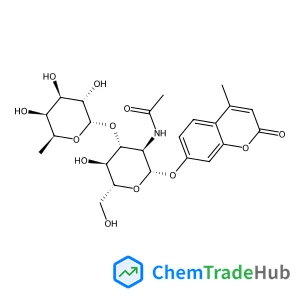
![8-Bromo-6-fluoro[1,2,4]triazolo[1,5-a]pyridin-2-amine structure](https://static.chemtradehub.com/structs/125/1257705-51-3-9f4a.webp "8-Bromo-6-fluoro[1,2,4]triazolo[1,5-a]pyridin-2-amine structure")
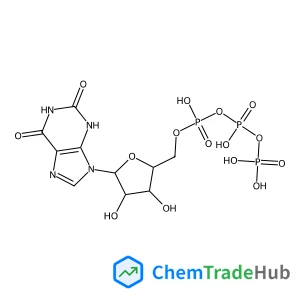
![Benzeneacetic acid, 2-bromo-α-[[(1,1-dimethylethoxy)carbonyl]amino]-, (αS)- structure](https://static.chemtradehub.com/structs/122/1228547-87-2-f296.webp "Benzeneacetic acid, 2-bromo-α-[[(1,1-dimethylethoxy)carbonyl]amino]-, (αS)- structure")





