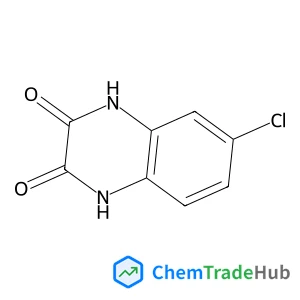
6-CHLORO-2,3-DIOXO-1,2,3,4-TETRAHYDROQUINOXALINE, 97
CAS Number:
169-14-2
Molecular Formula:
C8H5ClN2O2
S. L. Canning, V. J. Cunningham, L. P. D. Ratcliffe, S. P. Armes
Over the last decade or so, polymerization-induced self-assembly (PISA) has become widely recognized as a versatile technique for the rational synthesis of diblock copolymer nano-objects in the form of concentrated dispersions. However, there are relatively few examples of acrylic-based PISA formulations in the literature, partly because such copolymers typically possess relatively low glass transition temperatures (Tg) that preclude morphological characterization by transmission electron microscopy. To address this problem, we have selected phenyl acrylate (PhA) as a model monomer to generate the solvophobic block in three PISA formulations using reversible addition–fragmentation chain transfer (RAFT) polymerization. Thus, a poly(dimethyl acrylamide)-based chain transfer agent (CTA) is chain-extended using PhA via RAFT aqueous emulsion polymerization to produce a series of well-defined sterically-stabilized spheres whose mean diameter can be readily adjusted from 38 nm to 188 nm by varying the target degree of polymerization (DP). In contrast, RAFT alcoholic dispersion polymerization of PhA using a poly(acrylic acid) CTA leads to an evolution of copolymer morphology from spheres to worms to lamellae and finally vesicles as the target DP of the structure-directing PPhA block is increased. Similarly, RAFT dispersion polymerization of PhA in n-heptane also produces spheres, worms or vesicles depending on the target DP of the PPhA block. 1H NMR studies indicate that >98% PhA conversion is achieved in all cases, while GPC analysis indicates high blocking efficiencies. However, relatively broad molecular weight distributions are observed (Mw/Mn = 1.37 to 2.48), which suggests extensive chain transfer to polymer in such PISA syntheses, particularly in the case of the RAFT aqueous emulsion polymerization formulation. Nevertheless, the relatively high Tg of PPhA (50 °C) enables characterization of the various copolymer morphologies using conventional TEM.
Qingqing Zhang, Shuping Liu, Xiaohua Zhang, Cuicui Du, Shihui Si, Jinhua Chen
DOI: 10.1039/D3AN00008G
Nicolas Maïno, Arnaud Bertsch, Philippe Renaud
DOI: 10.1039/D2AN01779B
DOI: 10.1039/D3AN00147D
Pei-Yu Huang, Hao-Chao Chang, Chin-Wei Kuo
DOI: 10.1039/D2AN01546C
Chonghui Wei, Xuan Xie, Yue Mou, Shiqi Cheng, Jin Yang, Kaixin Xue, Kewei Yu, Xinru Lin, Chunfen Zhang, Yujie Zhao, Xingyu Luo, Yilin Wang
DOI: 10.1039/D3AN00089C
Nijiho Ote, Mengze Sun, Shuichi Shimma, Osamu Urakawa, Shinichi Yamaguchi, Tomoya Kudo
DOI: 10.1039/D2AN01953A
Yongliang Dong, Jiali Zhai, Ziwei Zhang, Can Peng, Yunjing Zhang, Zipin Zhang
DOI: 10.1039/D2AN01859D
Lin Jiang, Hang Yang, Weiqi Cheng, Zhonghua Ni, Nan Xiang
DOI: 10.1039/D2AN01747D
4-Nitrophenyl phosphate disodium salt hexahydrate is primarily used as a substra...
2-(Trifluoromethyl)-1,3-oxazole-4-carboxylic Acid (CAS: 1060816-01-4) is widely ...
2-Fluoro-4-biphenylcarboxylic acid should be stored in a cool, dry place at room...
Prednisolone-21-Carboxylic Acid is primarily used in the pharmaceutical industry...
4-(Hydrazinomethyl)-1,2,3-benzenetriol (CAS: 3614-72-0) should be stored in a co...
4-Amino-1-methyl-1H-pyrazole-5-carboxylic acid hydrochloride (CAS: 92534-70-8) i...
Dehydropachymic acid (CAS: 77012-31-8) is regulated by various agencies. It fall...
The market and research trends for 6-[(2,2-Dimethylpropanoyl)amino]nicotinic aci...
1,10-Phenanthroline-2,9-dicarbaldehyde should be stored in a cool, dry place awa...
5-Carbamoyl-11-oxo-10,11-dihydro-5H-dibenzo[b,f]azepin-10-yl acetate can be synt...

Polymer Chemistry welcomes submissions in all areas of polymer science that have a strong focus on macromolecular chemistry. Manuscripts may cover a broad range of fields, yet no direct application focus is required.