


![[(1S,2S,3R,4S,7R,9S,10S,12R,15S)-4,12-Diacetyloxy-15-[(2R,3S)-3-benzamido-3-phenyl-2-(2,2,2-trichloroethoxycarbonyloxy)propanoyl]oxy-1,9-dihydroxy-10,14,17,17-tetramethyl-11-oxo-6-oxatetracyclo[11.3.1.03,10.04,7]heptadec-13-en-2-yl] benzoate structure](https://static.chemtradehub.com/structs/100/100431-55-8-7104.webp "[(1S,2S,3R,4S,7R,9S,10S,12R,15S)-4,12-Diacetyloxy-15-[(2R,3S)-3-benzamido-3-phenyl-2-(2,2,2-trichloroethoxycarbonyloxy)propanoyl]oxy-1,9-dihydroxy-10,14,17,17-tetramethyl-11-oxo-6-oxatetracyclo[11.3.1.03,10.04,7]heptadec-13-en-2-yl] benzoate structure")
Synthesis of molecularly imprinted polymers by photo-iniferter polymerization under visible light
Literature Information
Publication Date
2017-07-20
DOI
10.1039/C7PY01113J
Impact Factor
5.582
Authors
Mariano J. Garcia-Soto, Karsten Haupt, Carlo Gonzato
View Original
Abstract
The easiest way to make polymers able to specifically recognize a target molecule consists of copolymerizing functional monomers and a cross-linker around a molecular template. This method affords a rigid material bearing high affinity binding sites, namely a synthetic receptor or antibody mimic, known as the “molecularly imprinted polymer” (MIP). MIPs find applications in many fields where a specific molecular recognition process is involved, and to suit their application there is a constant need for engineering their physical forms and synthetic methods, with photo-structuring being particularly attractive. Herein we report for the first time the use of a photo-iniferter precipitation polymerization for the synthesis of MIPs under low-power visible light. Microspheres imprinted with testosterone as model targets were synthesized under either blue or green light, and the living fragments on their surface were further used for chain extension with model poly-(ethylene glycol methacrylate phosphate) brushes by reversible addition–fragmentation chain transfer (RAFT) polymerization, demonstrating the versatility of this approach.
Recommended Journals

Contact Lens & Anterior Eye

European Journal of Organic Chemistry

Molecular Diversity

CrystEngComm

Mini-Reviews in Medicinal Chemistry

Environmental Toxicology and Pharmacology

Journal of Medical Biochemistry

Physical Chemistry Chemical Physics

Current Pharmaceutical Biotechnology

Angewandte Chemie International Edition
Related Literature
Development of a modularized aptamer targeting the nuclear T-cell suppressor PAC1
Zixi Hu, Zhongyu Jiang, Zeliang Yang, Liang Liu, Zhenyu Zhu, Yan Jin, Yuxin Yin
2023-05-16
Paper
DOI: 10.1039/D3AN00011G
An aptamer triple helix molecular switch for sensitive electrochemical assay of lipocalin 1 biomarker via dual signal amplifications
Jianglong Yao, Yujie Liu, Bingying Jiang, Ruo Yuan, Yun Xiang
2023-05-17
Paper
DOI: 10.1039/D3AN00524K
Online protein digestion in membranes between capillary electrophoresis and mass spectrometry
Kendall A. Ryan
2023-03-08
Paper
DOI: 10.1039/D3AN00106G
A comparative study of aptamer isolation by conventional and microfluidic strategies
Xin Meng, Kechun Wen, Qiao Lin
2022-12-19
Paper
DOI: 10.1039/D2AN01767A
Rapid determination of serum amyloid A using an upconversion luminescent lateral flow immunochromatographic strip
Xinwen Sun, Xiaoru Dai, Shisheng Ling, Wenkun Dong, Dong Chen, Mengting Li, Xvsheng Qiao, Zhiyu Wang, Xianping Fan, Guodong Qian
2023-05-13
Paper
DOI: 10.1039/D3AN00482A
A nanopore counter for highly sensitive evaluation of DNA methylation and its application in in vitro diagnostics
Jiahai Wang, Lanfang Chen, Cenlin Gui, Jianji Zhu, Baian Zhu, Zhuobin Zhu, Yunhui Li, Daqi Chen
2023-02-09
Paper
DOI: 10.1039/D3AN00035D
A DNA walker triggered isothermal amplification method based on freezing construction of AuNP probes and its application in ricin detection
Xuan Sun, Weiya Wang, Yanyan Chai, Zhou Zheng, Yu Wang, Jing Bi, Qian Wang, Yonggang Hu, Zhixian Gao
2022-12-29
Paper
DOI: 10.1039/D2AN01793H
Volatile metabolites differentiate air–liquid interface cultures after infection with Staphylococcus aureus
Waqar Ahmed, Michael D. Davis
2023-01-04
Paper
DOI: 10.1039/D2AN01205G
Rapid exocytosis kinetics measured by amperometry within volcano microelectrodes
Nicolas Maïno, Arnaud Bertsch, Philippe Renaud
2023-04-11
Paper
DOI: 10.1039/D2AN01779B
Mobile multi-configuration clinical translational Raman system for oral cancer application
Siddra Maryam, Sanathana Konugolu Venkata Sekar, M. Daniyal Ghauri, Edward Fahy, Marcelo Saito Nogueira, Huihui Lu, Flavien Beffara, Georges Humbert, Patrick Sheahan, Ray Burke, Kiang Wei Kho, Rekha Gautam, Stefan Andersson-Engels
2023-03-06
Paper
DOI: 10.1039/D2AN01921C
You might also like
Compound Q&A
What are the main uses of 4-Nitrophenyl phosphate disodium salt hexahydrate (CAS: 333338-18-4)?
4-Nitrophenyl phosphate disodium salt hexahydrate is primarily used as a substra...
333338-18-44-Nitrophenyl phosph...
Compound Q&A
What are the main uses of 2-(Trifluoromethyl)-1,3-oxazole-4-carboxylic Acid (CAS: 1060816-01-4)?
2-(Trifluoromethyl)-1,3-oxazole-4-carboxylic Acid (CAS: 1060816-01-4) is widely ...
1060816-01-42-(Trifluoromethyl)-...
Compound Q&A
How should 2-Fluoro-4-biphenylcarboxylic acid (CAS: 137045-30-8) be stored?
2-Fluoro-4-biphenylcarboxylic acid should be stored in a cool, dry place at room...
137045-30-82-Fluoro-4-biphenylc...
Compound Q&A
What industries use Prednisolone-21-Carboxylic Acid (CAS: 61549-70-0)?
Prednisolone-21-Carboxylic Acid is primarily used in the pharmaceutical industry...
61549-70-0Prednisolone-21-Carb...
Compound Q&A
How should 4-(Hydrazinomethyl)-1,2,3-benzenetriol (CAS: 3614-72-0) be stored?
4-(Hydrazinomethyl)-1,2,3-benzenetriol (CAS: 3614-72-0) should be stored in a co...
3614-72-04-(Hydrazinomethyl)-...
Compound Q&A
What industries use 4-Amino-1-methyl-1H-pyrazole-5-carboxylic acid hydrochloride (CAS: 92534-70-8)?
4-Amino-1-methyl-1H-pyrazole-5-carboxylic acid hydrochloride (CAS: 92534-70-8) i...
92534-70-84-Amino-1-methyl-1H-...
Compound Q&A
What regulatory guidelines apply to dehydropachymic acid (CAS: 77012-31-8)?
Dehydropachymic acid (CAS: 77012-31-8) is regulated by various agencies. It fall...
77012-31-8Dehydropachymic acid
Compound Q&A
What is the market or research trend for 6-[(2,2-Dimethylpropanoyl)amino]nicotinic acid (CAS: 898561-66-5)?
The market and research trends for 6-[(2,2-Dimethylpropanoyl)amino]nicotinic aci...
898561-66-56-[(2,2-Dimethylprop...
Compound Q&A
How should 1,10-Phenanthroline-2,9-dicarbaldehyde (CAS: 57709-62-3) be stored?
1,10-Phenanthroline-2,9-dicarbaldehyde should be stored in a cool, dry place awa...
57709-62-31,10-Phenanthroline-...
Compound Q&A
How is 5-Carbamoyl-11-oxo-10,11-dihydro-5H-dibenzo[b,f]azepin-10-yl acetate (CAS: 113952-21-9) typically synthesized?
5-Carbamoyl-11-oxo-10,11-dihydro-5H-dibenzo[b,f]azepin-10-yl acetate can be synt...
113952-21-95-Carbamoyl-11-oxo-1...
Source Journal
Polymer Chemistry

CiteScore:
8.6
Self-citation Rate:
7.3%
Articles per Year:
457
Polymer Chemistry welcomes submissions in all areas of polymer science that have a strong focus on macromolecular chemistry. Manuscripts may cover a broad range of fields, yet no direct application focus is required.
Recommended Compounds
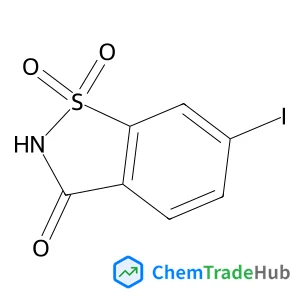
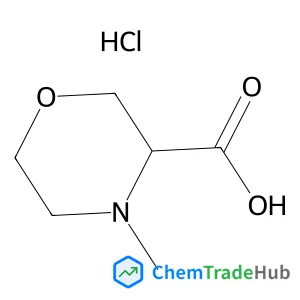
4-Methyl-3-morpholinecarboxylic acid hydrochloride (1:1)
CAS Number:
1240518-90-4
Molecular Formula:
C6H12ClNO3
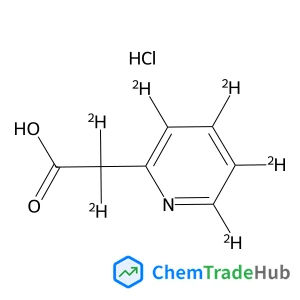
2,2-dideuterio-2-(3,4,5,6-tetradeuterio-2-pyridyl)acetic acid;hydrochloride
CAS Number:
1329799-67-8
Molecular Formula:
C7H2ClD6NO2
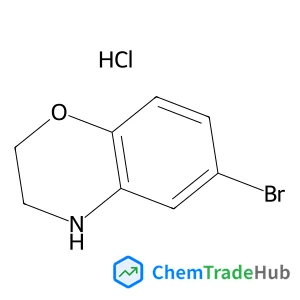
6-Bromo-3,4-dihydro-2H-1,4-benzoxazine hydrochloride (1:1)
CAS Number:
1260803-10-8
Molecular Formula:
C8H9BrClNO
Recommended Suppliers







Disclaimer
This page provides academic journal information for reference and research purposes only. We are not affiliated with any journal publishers and do not handle publication submissions. For publication-related inquiries, please contact the respective journal publishers directly.
If you notice any inaccuracies in the information displayed, please contact us at support@chemtradehub.com. We will promptly review and address your concerns.