












Well-defined triblock copolymers of polyethylene with polycaprolactone or polystyrene using a novel difunctional polyhomologation initiator
Literature Information
Publication Date
2017-08-04
DOI
10.1039/C7PY01079F
Impact Factor
5.582
Authors
Reem A. Alshumrani, Nikos Hadjichristidis
View Original
Abstract
α,ω-Dihydroxy polyethylene was synthesized by polyhomologation of dimethylsulfoxonium methylide with 9-thexyl-9-BBN (9-BNN: 9-borabicyclo[3.3.1]nonane), a novel difunctional initiator produced from 9-BBN and 2,3-dimethylbut-2-ene, with two active and one blocked sites, followed by hydrolysis/oxidation. The terminal hydroxy groups were either used directly as initiators, in the presence of 1-tert-butyl-2,2,4,4,4-pentakis(dimethylamino)-2λ5,4λ5-catenadi(phosphazene) (t-BuP2), for the ring opening polymerization of ε-caprolactone to afford polycaprolactone-b-polyethylene-b-polycaprolactone (PCL-b-PE-b-PCL) or after transformation to atom transfer radical polymerization initiating sites, for the polymerization of styrene to produce polystyrene-b-polyethylene-b-polystyrene (PSt-b-PE-b-PSt) triblock copolymers. Molecular characterization by 11B, 13C and 1H NMR as well as FTIR, and high temperature GPC (HT-GPC) confirmed the well-defined nature of the synthesized new difunctional initiator and triblock copolymers. Differential scanning calorimetry was used to determine the melting points of PE and PCL.
Related Literature
Phosphonated furan-functionalized poly(ethylene oxide)s using orthogonal click chemistries: synthesis and Diels–Alder reactivity
Thi Thanh Thuy N'Guyen, Guillaume Contrel, Véronique Montembault, Gilles Dujardin, Laurent Fontaine
2015-03-04
Paper
DOI: 10.1039/C5PY00188A
Electrochemical synthesis of polymer microgels
Suting Yan, Qingshi Wu, Aiping Chang, Fan Lu, Hai-Chao Xu, Weitai Wu
2015-04-14
Paper
DOI: 10.1039/C5PY00365B
Synthesis of an acid-labile polymeric prodrug DOX-acetal-PEG-acetal-DOX with high drug loading content for pH-triggered intracellular drug release
Hairong Wang, Jinlin He, Dongling Cao, Mingzu Zhang, Fei Li, Kam Chiu Tam, Peihong Ni
2015-05-27
Paper
DOI: 10.1039/C5PY00569H
Poly(thiolactone) homo- and copolymers from maleimide thiolactone: synthesis and functionalization
Pieter Espeel, Filip E. Du Prez
2015-04-30
Paper
DOI: 10.1039/C5PY00329F
Piperazine-modified ammonium polyphosphate as monocomponent flame-retardant hardener for epoxy resin: flame retardance, curing behavior and mechanical property
Yi Tan, Zhu-Bao Shao, Lei-Xiao Yu, Jia-Wei Long, Min Qi, Li Chen, Yu-Zhong Wang
2016-04-13
Paper
DOI: 10.1039/C6PY00434B
Interpenetrating poly(urethane-urea)–polydimethylsiloxane networks designed as active elements in electromechanical transducers
C. Tugui, S. Vlad, M. Iacob, C. D. Varganici, L. Pricop, M. Cazacu
2016-03-16
Paper
DOI: 10.1039/C6PY00157B
Highly thermally stable hydrogels derived from monolayered two-dimensional supramolecular polymers
Tian-You Zhou, Qiao-Yan Qi, Qiao-Ling Zhao, Jie Fu, Yi Liu, Zhi Ma, Xin Zhao
2015-02-19
Paper
DOI: 10.1039/C5PY00072F
A novel porphyrin-containing polyimide for memory devices
Ming-Chi Tsai, Chin-Li Wang, Ching-Yao Lin, Chia-Liang Tsai, Hung-Ju Yen, Huei-Chi You, Guey-Sheng Liou
2016-03-31
Communication
DOI: 10.1039/C6PY00158K
You might also like
Compound Q&A
What are the main uses of 4-Nitrophenyl phosphate disodium salt hexahydrate (CAS: 333338-18-4)?
4-Nitrophenyl phosphate disodium salt hexahydrate is primarily used as a substra...
333338-18-44-Nitrophenyl phosph...
Compound Q&A
What are the main uses of 2-(Trifluoromethyl)-1,3-oxazole-4-carboxylic Acid (CAS: 1060816-01-4)?
2-(Trifluoromethyl)-1,3-oxazole-4-carboxylic Acid (CAS: 1060816-01-4) is widely ...
1060816-01-42-(Trifluoromethyl)-...
Compound Q&A
How should 2-Fluoro-4-biphenylcarboxylic acid (CAS: 137045-30-8) be stored?
2-Fluoro-4-biphenylcarboxylic acid should be stored in a cool, dry place at room...
137045-30-82-Fluoro-4-biphenylc...
Compound Q&A
What industries use Prednisolone-21-Carboxylic Acid (CAS: 61549-70-0)?
Prednisolone-21-Carboxylic Acid is primarily used in the pharmaceutical industry...
61549-70-0Prednisolone-21-Carb...
Compound Q&A
How should 4-(Hydrazinomethyl)-1,2,3-benzenetriol (CAS: 3614-72-0) be stored?
4-(Hydrazinomethyl)-1,2,3-benzenetriol (CAS: 3614-72-0) should be stored in a co...
3614-72-04-(Hydrazinomethyl)-...
Compound Q&A
What industries use 4-Amino-1-methyl-1H-pyrazole-5-carboxylic acid hydrochloride (CAS: 92534-70-8)?
4-Amino-1-methyl-1H-pyrazole-5-carboxylic acid hydrochloride (CAS: 92534-70-8) i...
92534-70-84-Amino-1-methyl-1H-...
Compound Q&A
What regulatory guidelines apply to dehydropachymic acid (CAS: 77012-31-8)?
Dehydropachymic acid (CAS: 77012-31-8) is regulated by various agencies. It fall...
77012-31-8Dehydropachymic acid
Compound Q&A
What is the market or research trend for 6-[(2,2-Dimethylpropanoyl)amino]nicotinic acid (CAS: 898561-66-5)?
The market and research trends for 6-[(2,2-Dimethylpropanoyl)amino]nicotinic aci...
898561-66-56-[(2,2-Dimethylprop...
Compound Q&A
How should 1,10-Phenanthroline-2,9-dicarbaldehyde (CAS: 57709-62-3) be stored?
1,10-Phenanthroline-2,9-dicarbaldehyde should be stored in a cool, dry place awa...
57709-62-31,10-Phenanthroline-...
Compound Q&A
How is 5-Carbamoyl-11-oxo-10,11-dihydro-5H-dibenzo[b,f]azepin-10-yl acetate (CAS: 113952-21-9) typically synthesized?
5-Carbamoyl-11-oxo-10,11-dihydro-5H-dibenzo[b,f]azepin-10-yl acetate can be synt...
113952-21-95-Carbamoyl-11-oxo-1...
Source Journal
Polymer Chemistry

CiteScore:
8.6
Self-citation Rate:
7.3%
Articles per Year:
457
Polymer Chemistry welcomes submissions in all areas of polymer science that have a strong focus on macromolecular chemistry. Manuscripts may cover a broad range of fields, yet no direct application focus is required.
Recommended Compounds
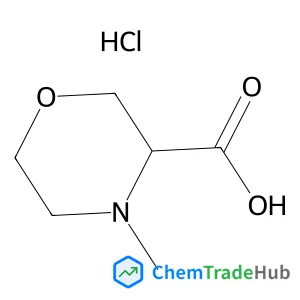
4-Methyl-3-morpholinecarboxylic acid hydrochloride (1:1)
CAS Number:
1240518-90-4
Molecular Formula:
C6H12ClNO3
Recommended Suppliers






Disclaimer
This page provides academic journal information for reference and research purposes only. We are not affiliated with any journal publishers and do not handle publication submissions. For publication-related inquiries, please contact the respective journal publishers directly.
If you notice any inaccuracies in the information displayed, please contact us at support@chemtradehub.com. We will promptly review and address your concerns.