phosphoryl}methyl 4-methylbenzenesulfonate structure](https://static.chemtradehub.com/structs/864/864068-45-1-ba7c.webp "{[3-(Hexadecyloxy)propoxy](hydroxy)phosphoryl}methyl 4-methylbenzenesulfonate structure")
{[3-(Hexadecyloxy)propoxy](hydroxy)phosphoryl}methyl 4-methylbenzenesulfonate
CAS Number:
864068-45-1
Molecular Formula:
C27H49O7PS
Pieter Espeel, Filip E. Du Prez
We describe the synthesis of a thiolactone-functionalized maleimide (MITla), and its (co)polymerization into poly(thiolactone) homo- and copolymers via controlled or free radical polymerization (CRP or FRP) techniques. Homopolymers were synthesized using FRP whereas MITla was copolymerized with styrene and N-iso-propylacrylamide (NIPAAm) via RAFT. In that way, we were able to combine the properties of a maleimide with the possibility to use the thiolactone side chain functionality in subsequent double modification reactions. Thiolactones are susceptible to nucleophilic ring-opening in the presence of primary amines, releasing a thiol moiety that can be used for conjugate addition (nucleophilic thiol–ene) reactions afterwards. We synthesized and characterized copolymers of different compositions, followed by site-specific double modification reactions with a combination of n-butylamine and methyl acrylate.

Advanced Engineering Materials

Faraday Discussions

Photochemical & Photobiological Sciences

Physical Chemistry Chemical Physics

Coloration Technology

Current Pharmaceutical Biotechnology

European Journal of Organic Chemistry

Molecular Diversity

Journal of Medical Biochemistry

Journal of Enzyme inhibition and Medicinal Chemistry
Bruce Grieve
DOI: 10.1039/C2AN35898K
Xuan Zhang, Wenjuan Zhou, Zhiqin Yuan, Chao Lu
DOI: 10.1039/C5AN01665G
Kevin C. Hewitt, Hanna C. McGregor, Erin Brouwers, Michael A. Short, Samia B. Fashir, Haishan Zeng, Ian P. Alwayn
DOI: 10.1039/C5AN01080B
Michael C. D. Tayler, S. (Bas) G. J. van Meerten, Arno P. M. Kentgens, P. Jan M. van Bentum
DOI: 10.1039/C5AN00772K
Bailu Xu, Chuanqi Zhao, Weili Wei, Jinsong Ren, Daisuke Miyoshi, Naoki Sugimoto, Xiaogang Qu
DOI: 10.1039/C2AN36174D
Jeroen Pollet, Ulrich Strych
DOI: 10.1039/C2AN36201E
G. Ojeda-Torres, L. Williams
DOI: 10.1039/C5AN00805K
DOI: 10.1039/C5AN00606F
4-Nitrophenyl phosphate disodium salt hexahydrate is primarily used as a substra...
2-(Trifluoromethyl)-1,3-oxazole-4-carboxylic Acid (CAS: 1060816-01-4) is widely ...
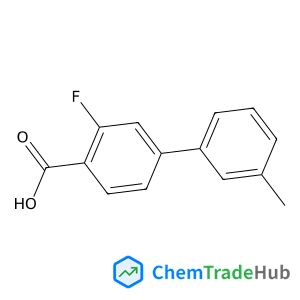
2-Fluoro-4-biphenylcarboxylic acid should be stored in a cool, dry place at room...
Prednisolone-21-Carboxylic Acid is primarily used in the pharmaceutical industry...
4-(Hydrazinomethyl)-1,2,3-benzenetriol (CAS: 3614-72-0) should be stored in a co...
4-Amino-1-methyl-1H-pyrazole-5-carboxylic acid hydrochloride (CAS: 92534-70-8) i...
Dehydropachymic acid (CAS: 77012-31-8) is regulated by various agencies. It fall...
The market and research trends for 6-[(2,2-Dimethylpropanoyl)amino]nicotinic aci...
1,10-Phenanthroline-2,9-dicarbaldehyde should be stored in a cool, dry place awa...
5-Carbamoyl-11-oxo-10,11-dihydro-5H-dibenzo[b,f]azepin-10-yl acetate can be synt...

Polymer Chemistry welcomes submissions in all areas of polymer science that have a strong focus on macromolecular chemistry. Manuscripts may cover a broad range of fields, yet no direct application focus is required.