












Synthesis of clay-armored poly(vinylidene chloride-co-methyl acrylate) latexes by Pickering emulsion polymerization and their film-forming properties
Literature Information
Publication Date
2017-08-14
DOI
10.1039/C7PY00902J
Impact Factor
5.582
Authors
Laura Delafresnaye, Pierre-Yves Dugas, Pierre-Emmanuel Dufils, Isabelle Chaduc, Jérôme Vinas, Muriel Lansalot, Elodie Bourgeat-Lami
View Original
Abstract
We report the surfactant-free emulsion copolymerization of styrene (Sty)/methyl acrylate (MA) and vinylidene chloride (VDC)/MA by using clay platelets (LAPONITE® or a mixture of LAPONITE® and Montmorillonite) as Pickering stabilizers. Several parameters such as the presence of MA, the clay percentage and the monomer composition were shown to play a crucial role in the formation and stability of the resulting clay-armored particles. Optimal batch conditions led to stable latexes with a shelf life of at least one year. The film-forming process of the clay/P(VDC-co-MA) hybrid latexes was then studied. Transmission electron microscopy analysis of ultrathin cross-sections of the nanocomposite films revealed that latexes with high VDC contents (≥90 wt%) were not film-forming, whereas those of the same polymer composition but without clay led to a continuous film, suggesting that the clay platelets hindered polymer chain interdiffusion. Decreasing the VDC content to 87 wt% enhanced chain mobility, resulting in a uniform film with a honeycomb structure arising from the original clay-armored particle morphology.
Related Literature
(±)-Pinnatifidaones A–D, four pairs of highly modified neolignan enantiomers with a rare spirocyclohexenone skeleton from Crataegus pinnatifida
Rui Guo, Peng Zhao, Xiaoqi Yu, Guodong Yao, Bin Lin, Xiaoxiao Huang, Shaojiang Song
2021-01-06
Research Article
DOI: 10.1039/D0QO01475C
Tunable synthesis of benzothiophene fused pyranone and thiochromen fused furan derivatives via a domino process
Qingsong Deng, Aimin Yu, Shunguang Zhang, Xiangtai Meng
2020-12-21
Research Article
DOI: 10.1039/D0QO01269F
Phthalimide-based-SSCF3 reagent for enantioselective dithiotrifluoromethylation
Jianrong Liu
2021-01-22
Research Article
DOI: 10.1039/D1QO00001B
Sequence-controlled supramolecular copolymer constructed by self-sorting assembly of multiple noncovalent interactions
Hui Li, Ying Yang, Fenfen Xu, Zhaozhao Duan, Riqiang Li, Herui Wen, Wei Tian
2021-01-28
Research Article
DOI: 10.1039/D0QO01540G
Fluorescence visualization of cucurbit[8]uril-triggered dynamic host–guest assemblies
Xiaodong Zhang, Tao Sun, Xin-Long Ni
2020-06-09
Research Article
DOI: 10.1039/D0QO00649A
Direct determination of rate constants for coupling between aromatic radical anions and alkyl and benzyl radicals by laser-flash photolysis
Torben Lund, Peter Christensen, Robert Wilbrandt
2003-02-20
Paper
DOI: 10.1039/B209594G
Recent advances in hydride transfer-involved C(sp3)–H activation reactions
Xiao-De An
2021-01-07
Review Article
DOI: 10.1039/D0QO01502D
You might also like
Compound Q&A
What is Ethyl 3-cyclohexylpropanoate (CAS: 10094-36-7)?
Ethyl 3-cyclohexylpropanoate is a clear, colorless to light yellow liquid with a...
10094-36-7Ethyl 3-cyclohexylpr...
Compound Q&A
How should waste containing 2-(Hydroxymethyl)-5-(methoxycarbonyl)-6-methyl-4-(2-nitrophenyl)nicotinic acid (CAS: 34783-31-8) be handled?
Waste containing 2-(Hydroxymethyl)-5-(methoxycarbonyl)-6-methyl-4-(2-nitrophenyl...
34783-31-82-(Hydroxymethyl)-5-...
Compound Q&A
How should waste containing 2,4,6-Tris(pentafluoroethyl)-1,3,5-triazine (CAS: 858-46-8) be handled?
Waste containing 2,4,6-Tris(pentafluoroethyl)-1,3,5-triazine (CAS: 858-46-8) sho...
858-46-82,4,6-Tris(pentafluo...
Compound Q&A
What precautions should be taken when handling Chloroac-nle-oh (CAS: 56787-36-1)?
When handling Chloroac-nle-oh (CAS: 56787-36-1), it is essential to wear appropr...
56787-36-1Chloroac-nle-oh
Compound Q&A
What industries use Ethyl 6-phenylimidazo[2,1-b][1,3]thiazole-3-carboxylate (CAS: 752244-05-6)?
Ethyl 6-phenylimidazo[2,1-b][1,3]thiazole-3-carboxylate is primarily used in the...
752244-05-6Ethyl 6-phenylimidaz...
Compound Q&A
Are there alternatives to alpha-(2-Bromophenyl)benzylamine (CAS: 55095-15-3) in synthesis?
Alternatives to alpha-(2-Bromophenyl)benzylamine (CAS: 55095-15-3) in synthesis ...
55095-15-3alpha-(2-Bromophenyl...
Compound Q&A
How should waste containing 2-Chloro-5-methoxypyridine (CAS: 139585-48-1) be handled?
Waste containing 2-Chloro-5-methoxypyridine (CAS: 139585-48-1) should be managed...
139585-48-12-Chloro-5-methoxypy...
Compound Q&A
What industries use 1-(4-Methoxyphenyl)-2,5-dimethyl-1H-pyrrole (CAS: 5044-27-9)?
1-(4-Methoxyphenyl)-2,5-dimethyl-1H-pyrrole (CAS: 5044-27-9) is used in various ...
5044-27-91-(4-Methoxyphenyl)-...
Compound Q&A
Are there alternatives to 3-Bromo-5-(N-Boc)aminomethylisoxazole (CAS: 903131-45-3) in synthesis?
There are alternative reagents and compounds that can be used in the synthesis o...
903131-45-33-Bromo-5-(N-Boc)ami...
Compound Q&A
What is Tungsten(IV) oxide (CAS: 12036-22-5)?
Tungsten(IV) oxide, also known as tungsten dioxide, is a chemical compound with ...
12036-22-5Tungsten(IV) oxide
Source Journal
Polymer Chemistry

CiteScore:
8.6
Self-citation Rate:
7.3%
Articles per Year:
457
Polymer Chemistry welcomes submissions in all areas of polymer science that have a strong focus on macromolecular chemistry. Manuscripts may cover a broad range of fields, yet no direct application focus is required.
Recommended Compounds
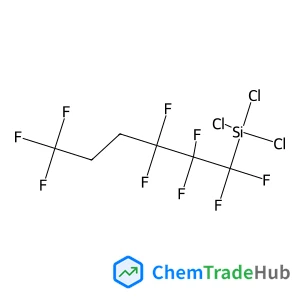
Trichloro(3,3,4,4,5,5,6,6,6-nonafluorohexyl)silane
CAS Number:
78560-47-1
Molecular Formula:
C6H4Cl3F9Si
![Sodium 4-{2-[(E)-2-{(3E)-3-{(2E)-2-[3,3-dimethyl-1-(4-sulfonatobutyl)-1,3-dihydro-2H-indol-2-ylidene]ethylidene}-2-[(4-isothiocyanatophenyl)sulfanyl]-1-cyclohexen-1-yl}vinyl]-3,3-dimethyl-3H-indolium-
1-yl}-1-butanesulfonate structure](https://static.chemtradehub.com/structs/152/152111-91-6-e5df.webp "Sodium 4-{2-[(E)-2-{(3E)-3-{(2E)-2-[3,3-dimethyl-1-(4-sulfonatobutyl)-1,3-dihydro-2H-indol-2-ylidene]ethylidene}-2-[(4-isothiocyanatophenyl)sulfanyl]-1-cyclohexen-1-yl}vinyl]-3,3-dimethyl-3H-indolium-
1-yl}-1-butanesulfonate structure")

Recommended Suppliers







Disclaimer
This page provides academic journal information for reference and research purposes only. We are not affiliated with any journal publishers and do not handle publication submissions. For publication-related inquiries, please contact the respective journal publishers directly.
If you notice any inaccuracies in the information displayed, please contact us at support@chemtradehub.com. We will promptly review and address your concerns.