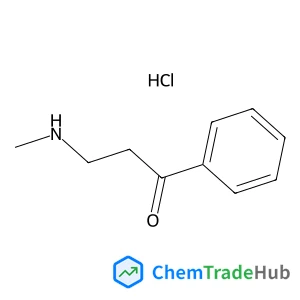
3-(Methylamino)-1-phenyl-1-propanone hydrochloride (1:1)
CAS Number:
2538-50-3
Molecular Formula:
C10H14ClNO
Ryan L. Jezorek, Mojtaba Enayati, Rauan B. Smail, Jānis Lejnieks, Silvia Grama, Michael J. Monteiro, Virgil Percec
The influence of the stirring rate on the SET-LRP of methyl acrylate and n-butyl acrylate catalyzed with a Cu(0) wire in methanol and with Cu(0) generated by the reduction of Cu(II)Br2 with NaBH4 by two different methodologies in biphasic acetonitrile–water mixtures was investigated. In all cases tris(2-dimethylaminoethyl)amine (Me6-TREN) was used as a ligand and the polymerizations were carried out at 25 °C. No effect of the stirring rate on the rate of SET-LRP was observed in methanol when the Cu(0) wire was used as a catalyst and the reaction mixture exhibited a single homogeneous phase. However, a dramatic acceleration of the already ultrafast interfacial SET-LRP was observed in biphasic acetonitrile–water mixtures for both methodologies employed for the generation of Cu(0) directly in the reaction mixture. No increase in the dispersity of the resulting polymers was observed when the rate of the reaction was increased by stirring. This is contrary to the rate of polymerization increased by catalyst concentration. Mechanistic hypothesis for this increase in the rate of SET-LRP in biphasic acetonitrile–water systems was advanced. This catalytic-like effect of the stirring rate is expected to be of interest for both laboratory and technological applications.
Udo Bakowsky, Willi Rettig, Gerd Bendas, Jan Vogel, Heike Bakowsky, Catalin Harnagea, Ulrich Rothe
DOI: 10.1039/B003727N
Gerardo Palazzo, Antonia Mallardi, Mauro Giustini, Mario Della Monica, Giovanni Venturoli
DOI: 10.1039/B003905P
Fernando Coloma, Francisco Marquez, Colin H. Rochester, James A. Anderson
DOI: 10.1039/B005331G
Luciano Lepori, Enrico Matteoli, Luca Bernazzani, Norberto Ceccanti, Giovanni Conti, Paolo Gianni, Vincenzo Mollica, Maria R. Tinè
DOI: 10.1039/B005160H
DOI: 10.1039/B003695L
DOI: 10.1039/A903331I
DOI: 10.1039/A902886B
Kazumi Toriyama, Anders Lund, Masaharu Okazaki
DOI: 10.1039/B005413P
When handling 4-(2-Furylmethyl)thiomorpholine 1,1-dioxide (CAS: 79206-94-3), it ...
When handling 4-Chloro-N-[2-(4-morpholinyl)ethyl]benzamide (CAS: 71320-77-9), it...
Waste containing this compound (CAS: 62921-74-8) should be handled according to ...
Waste containing (S)-Methyl 2-amino-3-cyclohexylpropanoate should be collected i...
This compound can be synthesized using a multi-step process involving the conjug...
There are several alternatives to (2E)-3-(3,4-Dichlorophenyl)acrylic acid in syn...
Ethyl 6-(2-nitrophenyl)imidazo[2,1-b][1,3]thiazole-3-carboxylate (CAS: 925437-84...
Waste containing 2-(1,3-Thiazol-2-yl)ethanamine (CAS: 18453-07-1) should be coll...
Methyl 5-iodo-2-methylbenzoate can be synthesized through the iodination of meth...
5-Chloro[1,2,4]triazolo[1,5-a]pyridine is commonly synthesized via the condensat...

Polymer Chemistry welcomes submissions in all areas of polymer science that have a strong focus on macromolecular chemistry. Manuscripts may cover a broad range of fields, yet no direct application focus is required.
![[4-(Heptyloxy)phenyl]boronic acid structure](https://static.chemtradehub.com/structs/136/136370-19-9-ad33.webp "[4-(Heptyloxy)phenyl]boronic acid structure")