












![2-Bromodibenzo[b,d]furan structure](https://static.chemtradehub.com/structs/86-/86-76-0-1814.webp "2-Bromodibenzo[b,d]furan structure")
1,2,3-Triazolium-based linear ionic polyurethanes
Literature Information
Publication Date
2017-03-31
DOI
10.1039/C7PY00406K
Impact Factor
5.582
Authors
Antoine Jourdain, Iurii Antoniuk, Anatoli Serghei, Eliane Espuche, Eric Drockenmuller
View Original
Abstract
We report the synthesis of a series of ionic polyurethanes (PUs) issued from the polyaddition of a 1,2,3-triazolium-functionalized diol monomer having a bis(trifluoromethylsulfonyl)imide counter-anion with four aliphatic, cycloaliphatic or aromatic commercial diisocyanates. The obtained polymers were characterized using 1H, 13C and 19F NMR spectroscopy, size exclusion chromatography (SEC), solubility, differential scanning calorimetry, thermogravimetric analysis, broadband dielectric spectroscopy, as well as CO2 uptake and permeability measurements. These new ionic PUs exhibit glass transition temperatures ranging from −25 to 28 °C, temperatures at 10% weight loss ranging from 307 to 320 °C, ionic conductivities at 30 °C under anhydrous conditions up to 10−6 S cm−1 and CO2 uptake of ca. 2.6 mg g−1 at 2 bars.
Related Literature
Intersystem crossing driven by vibronic spin–orbit coupling: a case study on psoralen
Jörg Tatchen, Natalie Gilka, Christel M. Marian
2007-09-03
Paper
DOI: 10.1039/B706410A
Probing the evaporation of ternary ethanol–methanol–water droplets by cavity enhanced Raman scattering
Chris R. Howle, Chris J. Homer, Rebecca J. Hopkins, Jonathan P. Reid
2007-08-06
Paper
DOI: 10.1039/B706211G
Kinetic analysis of the ozone processing of an unsaturated organic monolayer as a model of an aerosol surface
Erick González-Labrada, Rolf Schmidt, Christine E. DeWolf
2007-09-20
Paper
DOI: 10.1039/B707890K
Single-wall carbon nanotubes and peapods investigated by EPR
B. Corzilius, K.-P. Dinse, K. Hata
2007-07-24
Perspective
DOI: 10.1039/B707936M
Fourth-order coherent Raman spectroscopy in a time domain: applications to buried interfaces
2007-07-05
Perspective
DOI: 10.1039/B704566M
Temperature dependence of the NO3 absorption cross-section above 298 K and determination of the equilibrium constant for NO3 + NO2 ↔ N2O5 at atmospherically relevant conditions‡
Michael J. Pilling, Steven S. Brown
2007-09-13
Paper
DOI: 10.1039/B709193A
Dependence of the nascent vibrational distribution of NO(v) on the photolysis wavelength of NO2 in the range λ = 266–327 nm measured by time-resolved Fourier transform infrared emission
C. Brooks, G. Hancock, M. Saunders
2007-08-03
Paper
DOI: 10.1039/B710594K
Energy level promotion in the correlation from the tunnelling-doubled harmonic oscillator to the bi-rotor: application to internal rotation in molecules
2007-09-20
Paper
DOI: 10.1039/B710691B
Influence of the d orbital occupation on the nature and strength of copper cation–π interactions: threshold collision-induced dissociation and theoretical studies
Chunhai Ruan, Zhibo Yang, M. T. Rodgers
2007-09-25
Paper
DOI: 10.1039/B709820K
Multiphoton dissociation dynamics of BrCl and the BrCl+cation
Olivier P. J. Vieuxmaire, N. Hendrik Nahler, Richard N. Dixon, Michael N. R. Ashfold
2007-08-30
Paper
DOI: 10.1039/B709222A
You might also like
Compound Q&A
What is Ethyl 3-cyclohexylpropanoate (CAS: 10094-36-7)?
Ethyl 3-cyclohexylpropanoate is a clear, colorless to light yellow liquid with a...
10094-36-7Ethyl 3-cyclohexylpr...
Compound Q&A
How should waste containing 2-(Hydroxymethyl)-5-(methoxycarbonyl)-6-methyl-4-(2-nitrophenyl)nicotinic acid (CAS: 34783-31-8) be handled?
Waste containing 2-(Hydroxymethyl)-5-(methoxycarbonyl)-6-methyl-4-(2-nitrophenyl...
34783-31-82-(Hydroxymethyl)-5-...
Compound Q&A
How should waste containing 2,4,6-Tris(pentafluoroethyl)-1,3,5-triazine (CAS: 858-46-8) be handled?
Waste containing 2,4,6-Tris(pentafluoroethyl)-1,3,5-triazine (CAS: 858-46-8) sho...
858-46-82,4,6-Tris(pentafluo...
Compound Q&A
What precautions should be taken when handling Chloroac-nle-oh (CAS: 56787-36-1)?
When handling Chloroac-nle-oh (CAS: 56787-36-1), it is essential to wear appropr...
56787-36-1Chloroac-nle-oh
Compound Q&A
What industries use Ethyl 6-phenylimidazo[2,1-b][1,3]thiazole-3-carboxylate (CAS: 752244-05-6)?
Ethyl 6-phenylimidazo[2,1-b][1,3]thiazole-3-carboxylate is primarily used in the...
752244-05-6Ethyl 6-phenylimidaz...
Compound Q&A
Are there alternatives to alpha-(2-Bromophenyl)benzylamine (CAS: 55095-15-3) in synthesis?
Alternatives to alpha-(2-Bromophenyl)benzylamine (CAS: 55095-15-3) in synthesis ...
55095-15-3alpha-(2-Bromophenyl...
Compound Q&A
How should waste containing 2-Chloro-5-methoxypyridine (CAS: 139585-48-1) be handled?
Waste containing 2-Chloro-5-methoxypyridine (CAS: 139585-48-1) should be managed...
139585-48-12-Chloro-5-methoxypy...
Compound Q&A
What industries use 1-(4-Methoxyphenyl)-2,5-dimethyl-1H-pyrrole (CAS: 5044-27-9)?
1-(4-Methoxyphenyl)-2,5-dimethyl-1H-pyrrole (CAS: 5044-27-9) is used in various ...
5044-27-91-(4-Methoxyphenyl)-...
Compound Q&A
Are there alternatives to 3-Bromo-5-(N-Boc)aminomethylisoxazole (CAS: 903131-45-3) in synthesis?
There are alternative reagents and compounds that can be used in the synthesis o...
903131-45-33-Bromo-5-(N-Boc)ami...
Compound Q&A
What is Tungsten(IV) oxide (CAS: 12036-22-5)?
Tungsten(IV) oxide, also known as tungsten dioxide, is a chemical compound with ...
12036-22-5Tungsten(IV) oxide
Source Journal
Polymer Chemistry

CiteScore:
8.6
Self-citation Rate:
7.3%
Articles per Year:
457
Polymer Chemistry welcomes submissions in all areas of polymer science that have a strong focus on macromolecular chemistry. Manuscripts may cover a broad range of fields, yet no direct application focus is required.
Recommended Compounds


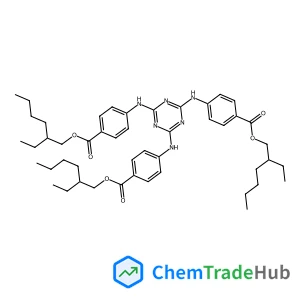
Tris(2-ethylhexyl) 4,4',4''-(1,3,5-triazine-2,4,6-triyltriimino)tribenzoate
CAS Number:
88122-99-0
Molecular Formula:
C48H66N6O6

Recommended Suppliers




Disclaimer
This page provides academic journal information for reference and research purposes only. We are not affiliated with any journal publishers and do not handle publication submissions. For publication-related inquiries, please contact the respective journal publishers directly.
If you notice any inaccuracies in the information displayed, please contact us at support@chemtradehub.com. We will promptly review and address your concerns.