












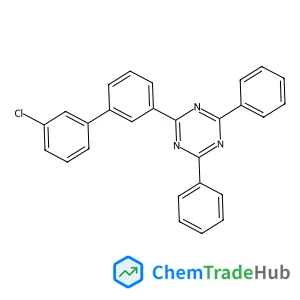
2-(3'-Chlorobiphenyl-3-yl)-4,6-diphenyl-1,3,5-triazine
CAS Number:
1443049-83-9
Molecular Formula:
C27H18ClN3
Beibei Liu, Shuo Wang, Karl Aston, Kevin J. Koeller, Shahrzad Fanny Hakami Kermani, Carlos H. Castañeda, M. José Scuderi, Rensheng Luo, James K. Bashkin, W. David Wilson
Minor-groove binding hairpin polyamides (PAs) bind specific DNA sequences. Synthetic modifications can improve PA–DNA binding affinity and include flexible modules, such as β-alanine (β) motifs to replace pyrroles (Py), and increasing compound charge using N-terminal cationic substituents. To better understand the variations in kinetics and affinities caused by these modifications on PA–DNA interactions, a comprehensive set of PAs with different numbers and positions of β and different types of N-cationic groups was systematically designed and synthesized to bind their cognate sequence, the λB motif. The λB motif is also a strong binding promoter site of the major groove targeting transcription factor PU.1. The PA binding affinities and kinetics were evaluated using a spectrum of powerful biophysical methods: thermal melting, biosensor surface plasmon resonance and circular dichroism. The results show that β inserts affect PA–DNA interactions in a number and position dependent manner. Specifically, a β replacement between two imidazole heterocycles (ImβIm) generally strengthens binding. In addition, N-terminal cationic groups can accelerate the association between PA and DNA, but the bulky size of TMG can cause steric hindrance and unfavourable repulsive electrostatic interactions in some PAs. The future design of stronger binding PA requires careful combination of βs and cationic substituents.
Tomoko Matsuda, Kazunori Watanabe, Tadao Harada, Kaoru Nakamura, Yoshitaka Arita, Yukihiro Misumi, Shinichiro Ichikawa, Takao Ikariya
DOI: 10.1039/B406882C
Kazuhisa Fujimoto, Natsuko Oimoto, Kahori Katsuno, Masahiko Inouye
DOI: 10.1039/B403615H
Thi X. T. Sayle, Stephen C. Parker, Dean C. Sayle
DOI: 10.1039/B408752F
Thea Welzel, Wolfgang Meyer-Zaika, Matthias Epple
DOI: 10.1039/B402521K
Daniel Maspoch, Daniel Ruiz-Molina, Klaus Wurst, Concepció Rovira, Jaume Veciana
DOI: 10.1039/B315147F
David Norton, Richard J. Whitby, Ed Griffen
DOI: 10.1039/B403337J
Kyuwon Kim, Haesik Yang, Se Ho Park, Dae-Sik Lee, Sung-Jin Kim, Yong Taik Lim, Youn Tae Kim
DOI: 10.1039/B402914C
Yasuo Iida, Kyuichi Yasui, Toru Tuziuti, Manickam Sivakumar, Yoshishige Endo
DOI: 10.1039/B410015H
Robert J. P. Corriu, Ahmad Mehdi, Catherine Reyé, Chloé Thieuleux
DOI: 10.1039/B314415A
J. Stephen Clark, Frédéric Elustondo, Marc C. Kimber
DOI: 10.1039/B409067E
When handling 2-Chloro-1,2-bis(4-methylphenyl)ethanone (CAS: 71193-32-3), it is ...
4-Ethoxy-3-(5-methyl-4-oxo-7-propyl-1,4-dihydroimidazo[5,1-f][1,2,4]triazin-2-yl...
Methyl 3-Oxo-4-Androsten-17-Carboxylate (CAS: 2681-55-2) should be stored in a c...
(R)-3-Amino-4-(3-hexylphenylamino)-4-oxobutylphosphonic acid is primarily used i...
2-Methyl-2-propanyl 3-amino-3-carbamoyl-1-azetidinecarboxylate (CAS: 1254120-14-...
There are alternative reagents that can be used in synthesis instead of (E)-4-(t...
[2-(3-Chlorophenyl)-1,3-thiazol-4-yl]methanol (CAS: 121202-20-8) is a crystallin...
The market and research trends for Methyl (2S)-[(4S)-2,2-dimethyl-1,3-dioxolan-4...
The market for 1-Bromo-2-isocyanatoethane (CAS: 42865-19-0) is driven by its use...
4-Nitro-D-phenylalanine hydrochloride (CAS: 147065-06-3) is primarily used in re...

Organic & Biomolecular Chemistry (OBC) publishes original and high impact research and reviews in organic chemistry. We welcome research that shows new or significantly improved protocols or methodologies in total synthesis, synthetic methodology or physical and theoretical organic chemistry as well as research that shows a significant advance in the organic chemistry or molecular design aspects of chemical biology, catalysis, supramolecular and macromolecular chemistry, theoretical chemistry, mechanism-oriented physical organic chemistry, medicinal chemistry or natural products. Articles published in the journal should report new work which makes a highly-significant impact in the field. Routine and incremental work is generally not suitable for publication in the journal. More details about key areas of our scope are below. In all cases authors should include in their article clear rationale for why their research has been carried out.
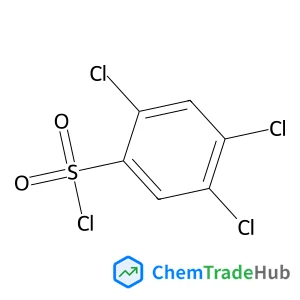
![4-[2-(Trichlorosilyl)ethyl]benzenesulfonyl chloride structure](https://static.chemtradehub.com/structs/797/79793-00-3-de16.webp "4-[2-(Trichlorosilyl)ethyl]benzenesulfonyl chloride structure")




