


![N-[(6-Bromo-3-pyridinyl)methyl]ethanamine structure](https://static.chemtradehub.com/structs/120/120740-05-8-ca55.webp "N-[(6-Bromo-3-pyridinyl)methyl]ethanamine structure")
Searching for avidity by chemical ligation of combinatorially self-assembled DNA-encoded ligand libraries
Literature Information
Publication Date
2017-12-07
DOI
10.1039/C7OB02119D
Impact Factor
3.876
Authors
Stefan Matysiak, Klaus Hellmuth, Arun Shivalingam, Yavuz Ariyurek, Marco de Jong, Martine J. Hollestelle, Ruud Out, Tom Brown
View Original
Abstract
DNA encoded ligands are self-assembled into bivalent complexes and chemically ligated to link their identities. To demonstrate their potential as a combinatorial screening platform for avidity interactions, the optimal bivalent aptamer design (examplar ligands) for human alpha-thrombin is determined in a single round of selection and the DNA scaffold replaced with minimal impact on the final design.
Recommended Journals

Current Opinion in Solid State & Materials Science

Crystallography Reports

Journal of Natural Medicines

Saudi Pharmaceutical Journal

Russian Journal of Applied Chemistry

Organic Process Research & Development

Russian Journal of General Chemistry

Russian Chemical Bulletin

Drug Discovery Today

Journal of Saudi Chemical Society
Related Literature
Interfacial electron transfer dynamics in dye-modified graphene oxide nanosheets studied by single-molecule fluorescence spectroscopy
Takashi Tachikawa, Shi-Cong Cui, Mamoru Fujitsuka, Tetsuro Majima
2012-02-02
Paper
DOI: 10.1039/C2CP23317G
On the modeling of aggregates of an optically active regioregular polythiophene
Juan Torras, Cristina Sanchez-Navas, Oscar Bertran
2011-12-06
Paper
DOI: 10.1039/C2CP23122K
Internal energy deposition and ion fragmentation in atmospheric-pressure mid-infrared laser ablation electrospray ionization
Peter Nemes, Hehua Huang, Akos Vertes
2011-12-22
Paper
DOI: 10.1039/C2CP23411D
Construction of biomimetic smart nanochannels with polymer membranes and application in energy conversion systems
2011-12-19
Perspective
DOI: 10.1039/C2CP23911F
A two-step ICT process for solvatochromic betaine pyridinium revealed by ultrafast spectroscopy, multivariate curve resolution, and TDDFT calculations
Stéphane Aloïse, Zuzanna Pawlowska, Cyril Ruckebusch, Michel Sliwa, Julien Dubois, Olivier Poizat, Guy Buntinx, Aurélie Perrier, François Maurel, Patrice Jacques, Jean-Pierre Malval, Lionel Poisson, Giovanni Piani, Jiro Abe
2012-01-09
Paper
DOI: 10.1039/C2CP22254J
Faraday rotation and its dispersion in the visible region for saturated organic liquids
Stefaan Vandendriessche, Ventsislav K. Valev, Thierry Verbiest
2011-12-06
Paper
DOI: 10.1039/C2CP23311H
The natural DNA bending angle in the lac repressor headpiece–O1 operator complex is determined by protein–DNA contacts and water release
Daniel Barr, Arjan van der Vaart
2011-12-09
Paper
DOI: 10.1039/C2CP23780F
Adsorption of water and carbon dioxide on hematite and consequences for possible hydrate formation
Bjørn Kvamme, Tatiana Kuznetsova, Pilvi-Helina Kivelæ
2012-01-09
Paper
DOI: 10.1039/C2CP23810A
You might also like
Compound Q&A
What are the main uses of (3.beta.)-3-Hydroxy-N,N-dimethyl-chol-5-en-24-amide (CAS: 79066-03-8)?
(3.beta.)-3-Hydroxy-N,N-dimethyl-chol-5-en-24-amide (CAS: 79066-03-8) is primari...
79066-03-8(3.beta.)-3-Hydroxy-...
Compound Q&A
What regulatory guidelines apply to 5-(aminomethyl)-2-methoxyphenol (CAS: 89702-89-6)?
5-(Aminomethyl)-2-methoxyphenol (CAS: 89702-89-6) is classified under GHS as a s...
89702-89-65-(aminomethyl)-2-me...
Compound Q&A
What is Thieno[2,3-c]pyridin-7(6H)-one (CAS: 28981-13-7)?
Thieno[2,3-c]pyridin-7(6H)-one (CAS: 28981-13-7) is a heterocyclic organic compo...
28981-13-7Thieno[2,3-c]pyridin...
Compound Q&A
Is 1-[(6-Methoxy-3-pyridinyl)methyl]-4-piperidinamine dihydrochloride (CAS: 1185311-28-7) safe?
1-[(6-Methoxy-3-pyridinyl)methyl]-4-piperidinamine dihydrochloride is generally ...
1185311-28-71-[(6-Methoxy-3-pyri...
Compound Q&A
What regulatory guidelines apply to [(2E)-3-Phenyl-2-propen-1-yl]phosphonic acid (CAS: 146404-58-2)?
[(2E)-3-Phenyl-2-propen-1-yl]phosphonic acid (CAS: 146404-58-2) is regulated und...
146404-58-2[(2E)-3-Phenyl-2-pro...
Compound Q&A
What regulatory guidelines apply to 6-Bromo-7-methoxyquinoline (CAS: 1620515-86-7)?
6-Bromo-7-methoxyquinoline (CAS: 1620515-86-7) falls under the scope of the Glob...
1620515-86-76-Bromo-7-methoxyqui...
Compound Q&A
What industries use (2R)-1-(1-Benzofuran-2-yl)-N-propyl-2-pentanamine (CAS: 260550-89-8)?
This compound is primarily used in the pharmaceutical industry for the developme...
260550-89-8(2R)-1-(1-Benzofuran...
Compound Q&A
What are the main uses of 1-Ethyl-7-[2-methyl-6-(4H-1,2,4-triazol-3-yl)-3-pyridinyl]-3,5-dihydropyrazino[2,3-b]pyrazin-2(1H)-one (CAS: 1228013-15-7)?
1-Ethyl-7-[2-methyl-6-(4H-1,2,4-triazol-3-yl)-3-pyridinyl]-3,5-dihydropyrazino[2...
1228013-15-71-Ethyl-7-[2-methyl-...
Compound Q&A
Are there alternatives to {5-(Acryloylamino)-2-[(dimethylamino)methyl]phenyl}boronic acid (CAS: 1217500-78-1) in synthesis?
Alternative reagents such as 2-[(dimethylamino)methyl]phenylboronic acid or rela...
1217500-78-1{5-(Acryloylamino)-2...
Compound Q&A
What is 3-(Piperidin-4-yloxy)pyridine (CAS: 310881-48-2)?
3-(Piperidin-4-yloxy)pyridine (CAS: 310881-48-2) is an organic compound with the...
310881-48-23-(Piperidin-4-yloxy...
Source Journal
Organic & Biomolecular Chemistry

CiteScore:
3.4
Self-citation Rate:
10.3%
Articles per Year:
1041
Organic & Biomolecular Chemistry (OBC) publishes original and high impact research and reviews in organic chemistry. We welcome research that shows new or significantly improved protocols or methodologies in total synthesis, synthetic methodology or physical and theoretical organic chemistry as well as research that shows a significant advance in the organic chemistry or molecular design aspects of chemical biology, catalysis, supramolecular and macromolecular chemistry, theoretical chemistry, mechanism-oriented physical organic chemistry, medicinal chemistry or natural products. Articles published in the journal should report new work which makes a highly-significant impact in the field. Routine and incremental work is generally not suitable for publication in the journal. More details about key areas of our scope are below. In all cases authors should include in their article clear rationale for why their research has been carried out.
Recommended Compounds
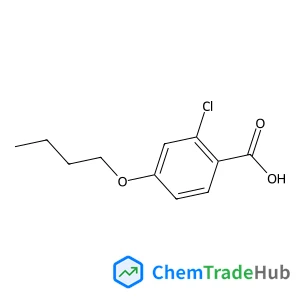
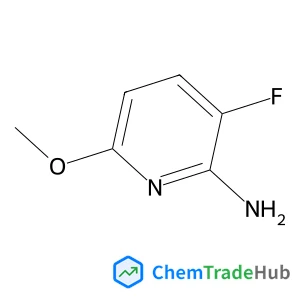
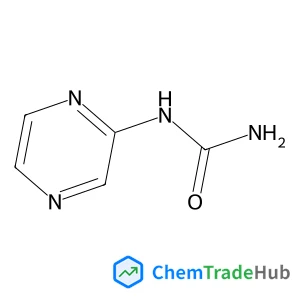
amine structure](https://static.chemtradehub.com/structs/629/62924-61-2-0728.webp "[(2-chlorophenyl)methyl](ethyl)amine structure")
Recommended Suppliers



Disclaimer
This page provides academic journal information for reference and research purposes only. We are not affiliated with any journal publishers and do not handle publication submissions. For publication-related inquiries, please contact the respective journal publishers directly.
If you notice any inaccuracies in the information displayed, please contact us at support@chemtradehub.com. We will promptly review and address your concerns.