












Construction of biomimetic smart nanochannels with polymer membranes and application in energy conversion systems
Literature Information
Publication Date
2011-12-19
DOI
10.1039/C2CP23911F
Impact Factor
3.676
Authors
View Original
Abstract
Learning from nature has inspired the creation of intelligent devices to meet the increasing needs of the advanced community and also to better understand how to imitate biology. As one of biomimetic nanodevices, nanochannels or nanopores aroused particular interest because of their potential applications in nanofluidic devices, biosensing, filtration, and energy conversions. In this review we have summarized some recent results mainly focused on the design, construction and application in energy conversion systems. Like biological nanochannels, the prepared smart artificial nanochannels fabricated by ion track-etched polymer membranes and smart molecules show a great potential in the field of bioengineering and biotechnology. And these applications can not only help people to know and understand the living processes in nature, but can also inspire scientists to study and develop novel nanodevices with better performance for the mankind.
Related Literature
Fabrication of color changeable CO2 sensitive nanofibers
Jiaojiao Shang, Shaojian Lin, Patrick Theato
2017-11-16
Communication
DOI: 10.1039/C7PY01628J
An ionic liquid crystal-based solid polymer electrolyte with desirable ion-conducting channels for superior performance ambient-temperature lithium batteries
Shi Wang, Xu Liu, Ailian Wang, Zhinan Wang, Jie Chen, Qinghui Zeng, Xuefei Wang, Liaoyun Zhang
2018-08-14
Paper
DOI: 10.1039/C8PY00951A
Thermoresponsive hybrid double-crosslinked networks using magnetic iron oxide nanoparticles as crossing points
Thomas Blin, Antoine Niederberger, Lazhar Benyahia, Jérôme Fresnais, Véronique Montembault, Laurent Fontaine
2018-08-14
Paper
DOI: 10.1039/C8PY01006D
Squalene/polyethylenimine based non-viral vectors: synthesis and use in systems for sustained gene release
Geta David, Lilia Clima, Manuela Calin, Cristina Ana Constantinescu, Mihaela Balan-Porcarasu
2018-01-25
Paper
DOI: 10.1039/C7PY01720K
Preparation of semifluorinated poly(meth)acrylates by improved photo-controlled radical polymerization without the use of a fluorinated RAFT agent: facilitating surface fabrication with fluorinated materials
Qinzhi Quan, Honghong Gong, Mao Chen
2018-07-11
Paper
DOI: 10.1039/C8PY00990B
Synthesis and characterization of poly(ethene–ketone–arylene–ketone)s containing pendant methylthio groups via metal-free catalyzed copolymerization of aryldiynes with DMSO
Weiqiang Fu, Lichao Dong, Jianbing Shi, Bin Tong, Zhengxu Cai, Junge Zhi, Yuping Dong
2018-07-31
Paper
DOI: 10.1039/C8PY00819A
Polyurethane with an ionic liquid crosslinker: a new class of super shape memory-like polymers
Prasanta Kumar Behera, Prantik Mondal, Nikhil K. Singha
2018-06-12
Paper
DOI: 10.1039/C8PY00549D
ROS-responsive poly(ε-caprolactone) with pendent thioether and selenide motifs
Li Yu, Mei Zhang, Fu-Sheng Du, Zi-Chen Li
2018-06-21
Paper
DOI: 10.1039/C8PY00620B
Synthesis and characterization of amphiphilic miktoarm star polymers based on sydnone-maleimide double cycloaddition
Jing Zhang, Qingzhong Zhang, Shuaifeng Zhou, Yuping Liu, Wei Huang
2017-11-28
Paper
DOI: 10.1039/C7PY01476G
You might also like
Compound Q&A
What are the main uses of (3.beta.)-3-Hydroxy-N,N-dimethyl-chol-5-en-24-amide (CAS: 79066-03-8)?
(3.beta.)-3-Hydroxy-N,N-dimethyl-chol-5-en-24-amide (CAS: 79066-03-8) is primari...
79066-03-8(3.beta.)-3-Hydroxy-...
Compound Q&A
What regulatory guidelines apply to 5-(aminomethyl)-2-methoxyphenol (CAS: 89702-89-6)?
5-(Aminomethyl)-2-methoxyphenol (CAS: 89702-89-6) is classified under GHS as a s...
89702-89-65-(aminomethyl)-2-me...
Compound Q&A
What is Thieno[2,3-c]pyridin-7(6H)-one (CAS: 28981-13-7)?
Thieno[2,3-c]pyridin-7(6H)-one (CAS: 28981-13-7) is a heterocyclic organic compo...
28981-13-7Thieno[2,3-c]pyridin...
Compound Q&A
Is 1-[(6-Methoxy-3-pyridinyl)methyl]-4-piperidinamine dihydrochloride (CAS: 1185311-28-7) safe?
1-[(6-Methoxy-3-pyridinyl)methyl]-4-piperidinamine dihydrochloride is generally ...
1185311-28-71-[(6-Methoxy-3-pyri...
Compound Q&A
What regulatory guidelines apply to [(2E)-3-Phenyl-2-propen-1-yl]phosphonic acid (CAS: 146404-58-2)?
[(2E)-3-Phenyl-2-propen-1-yl]phosphonic acid (CAS: 146404-58-2) is regulated und...
146404-58-2[(2E)-3-Phenyl-2-pro...
Compound Q&A
What regulatory guidelines apply to 6-Bromo-7-methoxyquinoline (CAS: 1620515-86-7)?
6-Bromo-7-methoxyquinoline (CAS: 1620515-86-7) falls under the scope of the Glob...
1620515-86-76-Bromo-7-methoxyqui...
Compound Q&A
What industries use (2R)-1-(1-Benzofuran-2-yl)-N-propyl-2-pentanamine (CAS: 260550-89-8)?
This compound is primarily used in the pharmaceutical industry for the developme...
260550-89-8(2R)-1-(1-Benzofuran...
Compound Q&A
What are the main uses of 1-Ethyl-7-[2-methyl-6-(4H-1,2,4-triazol-3-yl)-3-pyridinyl]-3,5-dihydropyrazino[2,3-b]pyrazin-2(1H)-one (CAS: 1228013-15-7)?
1-Ethyl-7-[2-methyl-6-(4H-1,2,4-triazol-3-yl)-3-pyridinyl]-3,5-dihydropyrazino[2...
1228013-15-71-Ethyl-7-[2-methyl-...
Compound Q&A
Are there alternatives to {5-(Acryloylamino)-2-[(dimethylamino)methyl]phenyl}boronic acid (CAS: 1217500-78-1) in synthesis?
Alternative reagents such as 2-[(dimethylamino)methyl]phenylboronic acid or rela...
1217500-78-1{5-(Acryloylamino)-2...
Compound Q&A
What is 3-(Piperidin-4-yloxy)pyridine (CAS: 310881-48-2)?
3-(Piperidin-4-yloxy)pyridine (CAS: 310881-48-2) is an organic compound with the...
310881-48-23-(Piperidin-4-yloxy...
Source Journal
Physical Chemistry Chemical Physics

CiteScore:
5.5
Self-citation Rate:
10.3%
Articles per Year:
3036
Physical Chemistry Chemical Physics (PCCP) is an international journal co-owned by 19 physical chemistry and physics societies from around the world. This journal publishes original, cutting-edge research in physical chemistry, chemical physics and biophysical chemistry. To be suitable for publication in PCCP, articles must include significant innovation and/or insight into physical chemistry; this is the most important criterion that reviewers and Editors will judge against when evaluating submissions. The journal has a broad scope and welcomes contributions spanning experiment, theory, computation and data science. Topical coverage includes spectroscopy, dynamics, kinetics, statistical mechanics, thermodynamics, electrochemistry, catalysis, surface science, quantum mechanics, quantum computing and machine learning. Interdisciplinary research areas such as polymers and soft matter, materials, nanoscience, energy, surfaces/interfaces, and biophysical chemistry are welcomed if they demonstrate significant innovation and/or insight into physical chemistry. Joined experimental/theoretical studies are particularly appreciated when complementary and based on up-to-date approaches.
Recommended Compounds
![N-[(6-Bromo-3-pyridinyl)methyl]ethanamine structure](https://static.chemtradehub.com/structs/120/120740-05-8-ca55.webp "N-[(6-Bromo-3-pyridinyl)methyl]ethanamine structure")
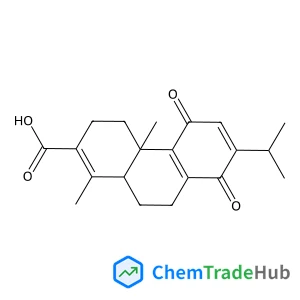
(4aS,10aS)-7-Isopropyl-1,4a-dimethyl-5,8-dioxo-3,4,4a,5,8,9,10,10a-octahydro-2-phenanthrenecarboxylic acid
CAS Number:
142950-86-5
Molecular Formula:
C20H24O4
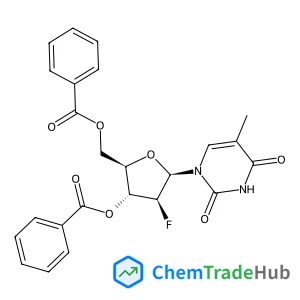
1-(3',5'-Di-O-benzoyl-2'-deoxy-2'-fluoro-b-D-arabinofuranosyl)thymine
CAS Number:
97614-47-6
Molecular Formula:
C24H21FN2O7
Recommended Suppliers




Disclaimer
This page provides academic journal information for reference and research purposes only. We are not affiliated with any journal publishers and do not handle publication submissions. For publication-related inquiries, please contact the respective journal publishers directly.
If you notice any inaccuracies in the information displayed, please contact us at support@chemtradehub.com. We will promptly review and address your concerns.