


All-numerical noise filtering of fluorescence signals for achieving ultra-low limit of detection in biomedical applications
Literature Information
Publication Date
2011-01-28
DOI
10.1039/C0AN00692K
Impact Factor
4.616
Authors
Chaitanya Dongre, Markus Pollnau, Hugo J. W. M. Hoekstra
View Original
Abstract
We present an all-numerical method for post-processing of the fluorescent signal as obtained from labeled molecules by capillary electrophoresis (CE) in an optofluidic chip, on the basis of data filtering in the Fourier domain. It is shown that the method outperforms the well-known lock-in amplification during experiments in the reduction of noise by a factor of . The method is illustrated using experimental data obtained during CE separation of molecules from a commercial DNA ladder with 17 fluorescently labeled molecules having different base-pair sizes. An improvement in signal-to-noise ratio by a factor of ∼10 is achieved, resulting in a record-low limit of detection of 210 fM.
Recommended Journals

New Journal of Chemistry

Russian Journal of General Chemistry

Journal of Saudi Chemical Society

Nature Medicine

Drug Discovery Today

Current Opinion in Solid State & Materials Science

Russian Journal of Bioorganic Chemistry

Saudi Pharmaceutical Journal

Organic Process Research & Development

Russian Journal of Applied Chemistry
Related Literature
Synthesis of meso-β doubly linked porphyrin tapes
Akihiko Tsuda, Yasuyuki Nakamura, Atsuhiro Osuka
2003-04-07
Communication
DOI: 10.1039/B302032K
Reduction of nitroaromatics to arylnitrenium ions by vinyl halide cations
Hao Chen, Xubin Zheng, Pengxiang Yang, R. Graham Cooks
2004-02-12
Communication
DOI: 10.1039/B314713D
Controlled assembly of luminescent racks based on heteroleptic dinuclear lanthanide complexes
M. Margarita Castaño-Briones, Andrew P. Bassett, Linette L. Meason, Peter R. Ashton, Zoe Pikramenou
2004-10-26
Communication
DOI: 10.1039/B412999G
Synthesis and characterization of multiferroic BiFeO3 nanotubes
Tae-Jin Park, Yuanbing Mao
2004-10-13
Communication
DOI: 10.1039/B409988E
Formation of dimers of inclusion cryptand/paraquat complexes driven by dipole–dipole and face-to-face π-stacking interactions
Feihe Huang, Liang Zhou, Jason W. Jones, Harry W. Gibson, Mehdi Ashraf-Khorassani
2004-10-14
Communication
DOI: 10.1039/B411234B
Water-soluble supramolecular bowls formed by intra-clipping of resorcin[4]arene-based ligands with Pd(ii) ions
Seong Jin Park, Dong Mok Shin, Shigeru Sakamoto, Kentaro Yamaguchi, Young Keun Chung, Myoung Soo Lah
2003-03-19
Communication
DOI: 10.1039/B212855A
Iron(iii) salen-type catalysts for the cross-coupling of aryl Grignards with alkyl halides bearing β-hydrogens
Robin B. Bedford, Duncan W. Bruce, Robert M. Frost, John W. Goodby, Michael Hird
2004-10-27
Communication
DOI: 10.1039/B413790F
Modified micro-space using self-organized nanoparticles for reduction of methylene blue
Xianying Li, Hongzhi Wang, Kouzou Inoue, Masato Uehara, Hiroyuki Nakamura, Masaya Miyazaki, Eiichi Abe, Hideaki Maeda
2003-03-18
Communication
DOI: 10.1039/B300765K
Flexible enzymatic and chemo-enzymatic approaches to a broad range of uridine-diphospho-sugars
James C. Errey, Balaram Mukhopadhyay, K. P. Ravindranathan Kartha, Robert A. Field
2004-10-13
Communication
DOI: 10.1039/B410184G
Cyclodehydrogenation of di- and tetra(benzimidazol-2-yl)benzenes to give model heteroaromatic discotic systems
Weicheng Wu, Andrew. C. Grimsdale, Klaus Müllen
2003-04-07
Communication
DOI: 10.1039/B301512M
You might also like
Compound Q&A
What industries use (1R,3S)-1,3-Cyclopentanediol (CAS: 16326-97-9)?
(1R,3S)-1,3-Cyclopentanediol finds applications in various industries. In the ph...
16326-97-9(1R,3S)-1,3-Cyclopen...
Compound Q&A
What precautions should be taken when handling N'-[4-(Dimethylamino)phenyl]-N,N-dimethyl-1,4-benzenediamine (CAS: 637-31-0)?
When handling N'-[4-(Dimethylamino)phenyl]-N,N-dimethyl-1,4-benzenediamine, it i...
637-31-0N'-[4-(Dimethylamino...
Compound Q&A
Are there alternatives to 5-(2,4-Difluorophenyl)-2-methoxypyrimidine (CAS: 1352318-16-1) in synthesis?
There are several alternatives to 5-(2,4-Difluorophenyl)-2-methoxypyrimidine in ...
1352318-16-15-(2,4-Difluoropheny...
Compound Q&A
What regulatory guidelines apply to 1-(3-Methoxyphenoxy)propan-2-ol (CAS: 382141-68-6)?
1-(3-Methoxyphenoxy)propan-2-ol (CAS: 382141-68-6) must comply with the Globally...
382141-68-61-(3-Methoxyphenoxy)...
Compound Q&A
Is Tetrodotoxin Citrate (CAS: 18660-81-6) safe?
Tetrodotoxin Citrate is extremely dangerous and should be handled with extreme c...
18660-81-6Tetrodotoxin Citrate
Compound Q&A
What are the main uses of 2-Methyl-2-propanyl [(1R,3S)-3-hydroxycyclopentyl]carbamate (CAS: 225641-84-9)?
2-Methyl-2-propanyl [(1R,3S)-3-hydroxycyclopentyl]carbamate (CAS: 225641-84-9) i...
225641-84-92-Methyl-2-propanyl ...
Compound Q&A
How should waste containing 4-(2-Hydroxyhexafluoroisopropyl)Benzoic Acid (CAS: 16261-80-6) be handled?
Waste containing 4-(2-Hydroxyhexafluoroisopropyl)Benzoic Acid (CAS: 16261-80-6) ...
16261-80-64-(2-Hydroxyhexafluo...
Compound Q&A
How is 2-Methyl-2-proanyl {(2S)-1-[(benzyloxy)amino]-3-hydroxy-3-methyl-1-oxo-2-butanyl}carbamate (CAS: 102507-19-7) typically synthesized?
2-Methyl-2-proanyl {(2S)-1-[(benzyloxy)amino]-3-hydroxy-3-methyl-1-oxo-2-butanyl...
102507-19-72-Methyl-2-propanyl ...
Compound Q&A
What is Benzeneethanamine, α-ethyl-, hydrochloride (1:1) (CAS: 20735-15-3)?
Benzeneethanamine, α-ethyl-, hydrochloride (1:1) is an organic compound with the...
20735-15-3Benzeneethanamine, α...
Compound Q&A
Are there alternatives to 3-{(E)-[4-(Dimethylamino)phenyl]diazenyl}benzoic acid (CAS: 20691-84-3) in synthesis?
In the synthesis of compounds similar to 3-{(E)-[4-(Dimethylamino)phenyl]diazeny...
20691-84-33-{(E)-[4-(Dimethyla...
Source Journal
Analyst

CiteScore:
7.8
Self-citation Rate:
5.6%
Articles per Year:
653
Analyst publishes analytical and bioanalytical research that reports premier fundamental discoveries and inventions, and the applications of those discoveries, unconfined by traditional discipline barriers.
Recommended Compounds
![Ethyl 3-((6-(4,5-dihydro-1H-benzo[d]azepin-3(2H)-yl)-2-(pyridin-2-yl)pyrimidin-4-yl)amino)propanoate structure](https://static.chemtradehub.com/structs/137/1373423-53-0-496a.webp "Ethyl 3-((6-(4,5-dihydro-1H-benzo[d]azepin-3(2H)-yl)-2-(pyridin-2-yl)pyrimidin-4-yl)amino)propanoate structure")
Ethyl 3-((6-(4,5-dihydro-1H-benzo[d]azepin-3(2H)-yl)-2-(pyridin-2-yl)pyrimidin-4-yl)amino)propanoate
CAS Number:
1373423-53-0
Molecular Formula:
C24H27N5O2
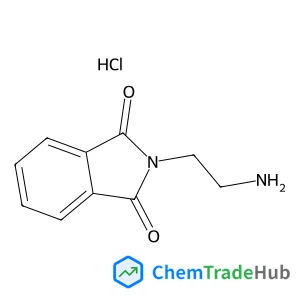
2-(2-Aminoethyl)-1H-isoindole-1,3(2H)-dione hydrochloride (1:1)
CAS Number:
30250-67-0
Molecular Formula:
C10H11ClN2O2
Recommended Suppliers




Disclaimer
This page provides academic journal information for reference and research purposes only. We are not affiliated with any journal publishers and do not handle publication submissions. For publication-related inquiries, please contact the respective journal publishers directly.
If you notice any inaccuracies in the information displayed, please contact us at support@chemtradehub.com. We will promptly review and address your concerns.