


Nanoparticle-infused-biodegradable-microneedles as drug-delivery systems: preparation and characterisation
Literature Information
Publication Date
2021-07-08
DOI
10.1039/D1MA00135C
Impact Factor
0
Authors
Rachel E. Sully, Hemda Garelick, Eriketi Z. Loizidou, Adrian G. Podoleanu, Vladimir Gubala
View Original
Abstract
For almost two decades, scientists have been exploring the use of nanoparticles as drug vesicles capable of protecting their cargo and deliver it to the target site while evading detection by the body. However, their translation to clinical use has been slower than expected. To a large degree, this is due to the difficulty to formulate the nanomaterial into a usable form, in which they retain their unique, size-dependent properties without aggregating into a bulk material. In this work, we describe a simple methodology for synthesising novel biodegradable microneedle systems infused with silica nanoparticles (SiNP). SiNP were doped with small library of model anti-cancer drugs or drug surrogates before being characterised and encapsulated into biodegradable microneedles. Detailed preparation and characterisation methods for both the nanoparticles and the microneedles-infused with nanoparticles are presented here. We demonstrated the distribution of the nanoparticles within the microneedle matrix in a uniform, un-aggregated form, which enabled the release of the nanoparticles in a sustained manner. Formulating nanomaterial into biodegradable, hydrogel-like microneedles was shown to be effective in preserving their colloidal properties, whilst simultaneously enabling the transdermal delivery of the nanomaterial into the body. Although the concepts of nanoparticles and biodegradable microneedles have been researched individually, the combination of the two, to the best of our knowledge, offers a new pathway to nanomedicine-related applications.
Recommended Journals

Planta Medica

Journal of Heterocyclic Chemistry

Proceedings of the National Academy of Sciences of the United States of America

Fibre Chemistry

Kinetics and Catalysis

Molecular Pharmacology

Israel Journal of Chemistry

Journal of Organometallic Chemistry

Russian Chemical Reviews

European Journal of Wood and Wood Products
Related Literature
Fast molecular fingerprinting with a coherent, rapidly tunable dual-comb spectrometer near 3 μm
Pei-Ling Luo, Er-Chien Horng
2019-08-06
Paper
DOI: 10.1039/C9CP03090E
Multiscale landscape of molecular mechanism of SIRT1 activation by STACs
Fei Liu, Na Yang
2019-12-09
Paper
DOI: 10.1039/C9CP04931B
Prototypical cyclohexane dimers: spectroscopic evidence for σ stacking at low temperatures
N. Ramanathan, Shubhra Sarkar, K. Sundararajan
2019-12-02
Paper
DOI: 10.1039/C9CP05237B
Enhanced wettability of long narrow carbon nanotubes in a double-walled hetero-structure: unraveling the effects of a boron nitride nanotube as the exterior
Masumeh Foroutan, Vahid Fadaei Naeini, Mina Ebrahimi
2019-11-23
Paper
DOI: 10.1039/C9CP04977K
Fast prediction of oxygen reduction reaction activity on carbon nanotubes with a localized geometric descriptor
Kunran Yang, Jeremie Zaffran, Bo Yang
2019-11-22
Paper
DOI: 10.1039/C9CP04885E
A new strategy to generate super and hyper acids with simple organic molecules exploiting σ-hole interaction
Anusuya Saha
2019-07-19
Paper
DOI: 10.1039/C9CP03881G
Light emission colour modulation study of oxyluciferin synthetic analogues via QM and QM/MM approaches
Madjid Zemmouche, Isabelle Navizet
2019-11-18
Paper
DOI: 10.1039/C9CP04687A
Comment on “Penicillin’s catalytic mechanism revealed by inelastic neutrons and quantum chemical theory” by Z. Mucsi, G. A. Chass, P. Ábrányi-Balogh, B. Jójárt, D.-C. Fang, A. J. Ramirez-Cuesta, B. Viskolczc and I. G. Csizmadia, Phys. Chem. Chem. Phys., 2013, 15, 20447
2019-07-31
Comment
DOI: 10.1039/C8CP02413H
The dual-defective SnS2 monolayers: promising 2D photocatalysts for overall water splitting
2019-11-08
Paper
DOI: 10.1039/C9CP04649F
You might also like
Compound Q&A
What precautions should be taken when handling 4-Methyl-6-(trifluoromethyl)quinoline (CAS: 40716-16-3)?
When handling 4-Methyl-6-(trifluoromethyl)quinoline (CAS: 40716-16-3), safety go...
40716-16-34-Methyl-6-(trifluor...
Compound Q&A
What is 4-(3,5-Difluorophenyl)aniline (CAS: 405058-00-6)?
4-(3,5-Difluorophenyl)aniline is an aromatic organic compound with the CAS numbe...
405058-00-64-(3,5-Difluoropheny...
Compound Q&A
How is 5-{[4-(Trifluoromethyl)phenyl]sulfanyl}-1,2,3-thiadiazole-4-carboxylic acid (CAS: 338982-07-3) typically synthesized?
5-{[4-(Trifluoromethyl)phenyl]sulfanyl}-1,2,3-thiadiazole-4-carboxylic acid can ...
338982-07-35-{[4-(Trifluorometh...
Compound Q&A
What is the market or research trend for 4-Benzylaniline hydrochloride (CAS: 6317-57-3)?
The market for 4-Benzylaniline hydrochloride (CAS: 6317-57-3) is steadily growin...
6317-57-34-Benzylaniline hydr...
Compound Q&A
Is [3-(Diethylsulfamoyl)phenyl]boronic acid (CAS: 871329-58-7) safe?
[3-(Diethylsulfamoyl)phenyl]boronic acid is generally considered safe when handl...
871329-58-7[3-(Diethylsulfamoyl...
Compound Q&A
What are the main uses of 3-Bromo-2,5-dimethoxyaniline (CAS: 115929-62-9)?
3-Bromo-2,5-dimethoxyaniline is mainly used in the pharmaceutical and chemical i...
115929-62-93-Bromo-2,5-dimethox...
Compound Q&A
What regulatory guidelines apply to N-Methyl-1-(5-methyl-1H-indol-3-yl)methanamine (CAS: 915922-67-7)?
N-Methyl-1-(5-methyl-1H-indol-3-yl)methanamine (CAS: 915922-67-7) is subject to ...
915922-67-7N-Methyl-1-(5-methyl...
Compound Q&A
What industries use Carbamic acid, N-[(5S)-5,6-diamino-6-oxohexyl]-, 1,1-dimethylethyl ester (CAS: 24828-96-4)?
This compound is primarily used in the pharmaceutical industry for the synthesis...
24828-96-4Carbamic acid, N-[(5...
Compound Q&A
How should 2-Methyl-2-propanyl [(1S,3R)-3-aminocyclohexyl]carbamate (CAS: 1298101-47-9) be stored?
2-Methyl-2-propanyl [(1S,3R)-3-aminocyclohexyl]carbamate (CAS: 1298101-47-9) sho...
1298101-47-92-Methyl-2-propanyl ...
Compound Q&A
What industries use Ethyl 2-bromo-4,4,4-trifluorobutanoate (CAS: 367-33-9)?
Ethyl 2-bromo-4,4,4-trifluorobutanoate (CAS: 367-33-9) is utilized in the pharma...
367-33-9Ethyl 2-bromo-4,4,4-...
Source Journal
Recommended Compounds
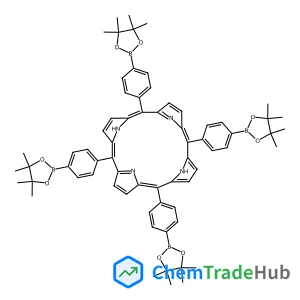
5,10,15,20-tetrakis(4-boronic acid pinacol ester phenyl) porphyrin
CAS Number:
1332748-00-1
Molecular Formula:
C68H74B4N4O8
![(4aR,5S,6R,8aS)-5-[2-(3-Furyl)ethyl]-8a-(hydroxymethyl)-5,6-dimethyl-3,4,4a,5,6,7,8,8a-octahydro-1-naphthalenecarboxylic acid structure](https://static.chemtradehub.com/structs/184/18411-75-1-d4cd.webp "(4aR,5S,6R,8aS)-5-[2-(3-Furyl)ethyl]-8a-(hydroxymethyl)-5,6-dimethyl-3,4,4a,5,6,7,8,8a-octahydro-1-naphthalenecarboxylic acid structure")
(4aR,5S,6R,8aS)-5-[2-(3-Furyl)ethyl]-8a-(hydroxymethyl)-5,6-dimethyl-3,4,4a,5,6,7,8,8a-octahydro-1-naphthalenecarboxylic acid
CAS Number:
18411-75-1
Molecular Formula:
C20H28O4
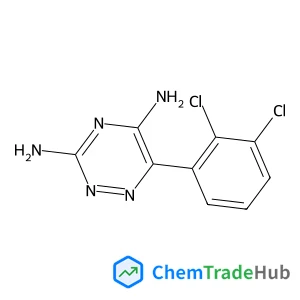
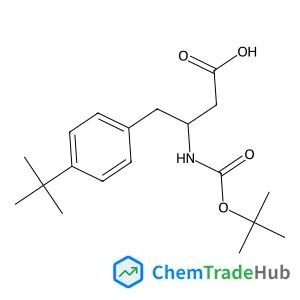
(S)-3-((tert-Butoxycarbonyl)amino)-4-(4-(tert-butyl)phenyl)butanoic acid
CAS Number:
403661-85-8
Molecular Formula:
C19H29NO4
Recommended Suppliers






Disclaimer
This page provides academic journal information for reference and research purposes only. We are not affiliated with any journal publishers and do not handle publication submissions. For publication-related inquiries, please contact the respective journal publishers directly.
If you notice any inaccuracies in the information displayed, please contact us at support@chemtradehub.com. We will promptly review and address your concerns.