













High-pressure dissociation of selenium and tellurium
Literature Information
Publication Date
2018-01-26
DOI
10.1039/C7CP08002F
Impact Factor
3.676
Authors
Xin Li, Xiaoli Huang, Xin Wang, Mingkun Liu, Gang Wu, Yanping Huang, Xin He, Fangfei Li, Qiang Zhou, Bingbing Liu, Tian Cui
View Original
Abstract
Pressure-induced molecular dissociation provides significant insights into chemical bonding, governing the physical properties of molecular solids. Here the typical molecular solids, selenium and tellurium, have been explored experimentally to unearth the process of pressure-induced molecular dissociation. Before molecular dissociation, both commensurately and incommensurately modulated structures have been observed in these two elements. Upon compression, the successive commensurate–incommensurate phase transitions are proved by the soft amplitude (AMP) mode. The fitted critical pressure suggests that the molecular dissociation of Te is inferred to occur at 26.1 GPa in agreement with our XRD and Raman data. The current precise structural studies before pressure-induced molecular dissociation demonstrated in the elements selenium and tellurium will help in clarifying the mechanisms of molecular dissociation in related molecular solids.
Related Literature
Switching electrical conductivity in an AOT–isooctane–water microemulsion through photodimerization of solubilized N-methyl-2-quinolone
Markus Bufe, Thomas Wolff
2006-08-07
Paper
DOI: 10.1039/B606888J
Intra- vs. intermolecular hydrogen bonding: dimers of alpha-hydroxyesters with methanol‡
Nicole Borho, Martin A. Suhm, Katia Le Barbu-Debus, Anne Zehnacker
2006-08-24
Paper
DOI: 10.1039/B609725A
Electronic spectra of uranyl chloride complexes in acetone: a CASSCF/CASPT2 investigation
Els van Besien, Kristine Pierloot, Christiane Görller-Walrand
2006-08-23
Paper
DOI: 10.1039/B607026D
Optical detection of singlet oxygen from single cells
John W. Snyder, Esben Skovsen, John D. C. Lambert, Lars Poulsen, Peter R. Ogilby
2006-08-08
Invited Article
DOI: 10.1039/B609070M
An ab initio investigation of the O(3P)–H2(1Σ +g) van der Waals well
Sule Atahan, Jacek Kłos, Piotr S. Żuchowski
2006-08-29
Paper
DOI: 10.1039/B608871F
Ammonium ions in alkali metal halide crystals: Tunnelling and spin relaxation
J. Tomkinson, M. T. F. Telling
2006-08-31
Paper
DOI: 10.1039/B608590C
Detection of hydrogen bonding in solution: A 2H nuclear magnetic resonance method based on rotational motion of a donor/acceptor complex
Nathaniel K. Szymczak, Alan B. Oelkers, David R. Tyler
2006-08-04
Paper
DOI: 10.1039/B608147A
First steps towards dissolution of NaSO4− by water
Barbara Jagoda-Cwiklik, Pavel Jungwirth
2006-08-07
Communication
DOI: 10.1039/B609941F
You might also like
Compound Q&A
How is Ethyl 4-chlorothieno[2,3-b]pyridine-5-carboxylate (CAS: 59713-58-5) typically synthesized?
Ethyl 4-chlorothieno[2,3-b]pyridine-5-carboxylate (CAS: 59713-58-5) can be synth...
59713-58-5Ethyl 4-chlorothieno...
Compound Q&A
What regulatory guidelines apply to 5-Methyl-1H-indole-3-carbaldehyde (CAS: 52562-50-2)?
5-Methyl-1H-indole-3-carbaldehyde (CAS: 52562-50-2) is subject to various regula...
52562-50-25-Methyl-1H-indole-3...
Compound Q&A
What are the physical and chemical properties of (1,3-Dimethyl-2,4-dioxo-1,2,3,4-tetrahydro-5-pyrimidinyl)boronic acid (CAS: 223418-73-3)?
(1,3-Dimethyl-2,4-dioxo-1,2,3,4-tetrahydro-5-pyrimidinyl)boronic acid is a white...
223418-73-3(1,3-Dimethyl-2,4-di...
Compound Q&A
How should waste containing Sulfocostunolide A (CAS: 1016983-51-9) be handled?
Waste containing Sulfocostunolide A (CAS: 1016983-51-9) should be handled with c...
1016983-51-9Sulfocostunolide A
Compound Q&A
What precautions should be taken when handling Murraxocin (CAS: 88478-44-8)?
When handling Murraxocin (CAS: 88478-44-8), ensure proper personal protective eq...
88478-44-8Murraxocin
Compound Q&A
What are the physical and chemical properties of Formvar (CAS: 63148-64-1)?
Formvar (CAS: 63148-64-1) is an alkyd resin characterized by a high molecular we...
63148-64-1Formvar(R)
Compound Q&A
Is (S)-4-benzyl-2-((benzyloxy)methyl)morpholine (CAS: 205242-66-6) safe?
(S)-4-benzyl-2-((benzyloxy)methyl)morpholine is generally safe when handled with...
205242-66-6(S)-4-benzyl-2-((ben...
Compound Q&A
What industries use Methyl 1-(5-bromo-2-pyrimidinyl)cyclopropanecarboxylate (CAS: 1447607-69-3)?
Methyl 1-(5-bromo-2-pyrimidinyl)cyclopropanecarboxylate (CAS: 1447607-69-3) is p...
1447607-69-3Methyl 1-(5-bromo-2-...
Compound Q&A
Is 2-Methyl-1-phenyl-1-propanamine hydrochloride (CAS: 24290-47-9) safe?
2-Methyl-1-phenyl-1-propanamine hydrochloride (CAS: 24290-47-9) is generally con...
24290-47-92-Methyl-1-phenyl-1-...
Compound Q&A
How is 3-(4-Bromophenyl)-2-methylpropanoic acid (CAS: 66735-01-1) typically synthesized?
3-(4-Bromophenyl)-2-methylpropanoic acid is synthesized through a multi-step pro...
66735-01-13-(4-Bromophenyl)-2-...
Source Journal
Physical Chemistry Chemical Physics

CiteScore:
5.5
Self-citation Rate:
10.3%
Articles per Year:
3036
Physical Chemistry Chemical Physics (PCCP) is an international journal co-owned by 19 physical chemistry and physics societies from around the world. This journal publishes original, cutting-edge research in physical chemistry, chemical physics and biophysical chemistry. To be suitable for publication in PCCP, articles must include significant innovation and/or insight into physical chemistry; this is the most important criterion that reviewers and Editors will judge against when evaluating submissions. The journal has a broad scope and welcomes contributions spanning experiment, theory, computation and data science. Topical coverage includes spectroscopy, dynamics, kinetics, statistical mechanics, thermodynamics, electrochemistry, catalysis, surface science, quantum mechanics, quantum computing and machine learning. Interdisciplinary research areas such as polymers and soft matter, materials, nanoscience, energy, surfaces/interfaces, and biophysical chemistry are welcomed if they demonstrate significant innovation and/or insight into physical chemistry. Joined experimental/theoretical studies are particularly appreciated when complementary and based on up-to-date approaches.
Recommended Compounds
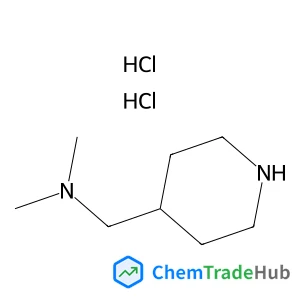
N,N-dimethyl(piperidin-4-yl)methanamine hydrochloride
CAS Number:
172281-72-0
Molecular Formula:
C8H20Cl2N2

Recommended Suppliers





Disclaimer
This page provides academic journal information for reference and research purposes only. We are not affiliated with any journal publishers and do not handle publication submissions. For publication-related inquiries, please contact the respective journal publishers directly.
If you notice any inaccuracies in the information displayed, please contact us at support@chemtradehub.com. We will promptly review and address your concerns.