













Hydrogen bonding and dominant conformations of hydrated sugar analogue complexes using tetrahydrofurfuryl alcohol as the model sugar molecule
Literature Information
Publication Date
2018-02-13
DOI
10.1039/C7CP07935D
Impact Factor
3.676
Authors
Shan Jin, Yongjun Hu, Pengchao Wang, Huaqi Zhan, Qiao Lu, Fuyi Liu, Liusi Sheng
View Original
Abstract
Water molecules, which serve as both hydrogen bond donors and acceptors, have been found to influence the conformational landscape of gas-phase phenyl-β-D-glucopyranoside. Herein, tetrahydrofurfuryl alcohol (THFA), a sugar-like molecule without chromophores (e.g. phenyl-substitution), was used as the model sugar molecule for exploring the behaviour of water molecules on the conformational landscape of a pentose sugar such as deoxyribose. We used mass selected infrared-vacuum ultraviolet (IR-VUV) (118 nm) spectroscopy to investigate the hydrated neutral THFA and its complex cation in a supersonic jet. High level density functional theory (DFT) calculations were performed to ascertain the experimental results. The results revealed that the water molecule tends to insert into the twisted conformer at a position where two stronger intermolecular hydrogen bonds were formed by breaking the weak intramolecular interactions. We found that the twisted conformer of the hydrated neutral THFA complex is more stable than the envelope conformation, while the latter is more stable for the THFA molecule. However, the conformational landscape of the hydrated THFA complex cation did not significantly change on microsolvation with water molecules. These results indicated that the dominant structural landscape of the hydrated cationic complex is the twisted configuration with a trans-hydroxymethyl group. This finding provides valuable insight into the microsolvation of gas-phase sugar molecules.
Recommended Journals
Related Literature
The reaction products of the 193 nm photolysis of vinyl bromide and vinyl chloride studied by time-resolved Fourier transform infrared emission spectroscopy
Antonio Carvalho, Gus Hancock, Mark Saunders
2006-08-23
Paper
DOI: 10.1039/B607882F
Switching electrical conductivity in an AOT–isooctane–water microemulsion through photodimerization of solubilized N-methyl-2-quinolone
Markus Bufe, Thomas Wolff
2006-08-07
Paper
DOI: 10.1039/B606888J
Quantitative measurement and interpretation of optical second harmonic generation from molecular interfaces
Wen-kai Zhang, Hong-fei Wang, De-sheng Zheng
2006-08-10
Invited Article
DOI: 10.1039/B608005G
Plasma electrochemistry: potential measured at boron doped diamond and platinum in gaseous electrolyte
E. Hadzifejzovic, J. A. Sanchez Galiani, D. J. Caruana
2006-05-31
Invited Article
DOI: 10.1039/B600115G
Mass-analyzed threshold ionization spectroscopy of pyridine. Structural distortion in the first excited state
M. Riese, Z. Altug, J. Grotemeyer
2006-08-29
Paper
DOI: 10.1039/B607402B
Chemisorption of HCl to the MgO(001) surface: A DFT study
Andreas Markmann, Jacob L. Gavartin, Alexander L. Shluger
2006-08-22
Paper
DOI: 10.1039/B608719A
Doppler-free/Doppler-sliced ion imaging
Cunshun Huang, Sridhar A. Lahankar, Myung Hwa Kim, Bailin Zhang, Arthur G. Suits
2006-09-25
Communication
DOI: 10.1039/B612324D
You might also like
Compound Q&A
How is Ethyl 4-chlorothieno[2,3-b]pyridine-5-carboxylate (CAS: 59713-58-5) typically synthesized?
Ethyl 4-chlorothieno[2,3-b]pyridine-5-carboxylate (CAS: 59713-58-5) can be synth...
59713-58-5Ethyl 4-chlorothieno...
Compound Q&A
What regulatory guidelines apply to 5-Methyl-1H-indole-3-carbaldehyde (CAS: 52562-50-2)?
5-Methyl-1H-indole-3-carbaldehyde (CAS: 52562-50-2) is subject to various regula...
52562-50-25-Methyl-1H-indole-3...
Compound Q&A
What are the physical and chemical properties of (1,3-Dimethyl-2,4-dioxo-1,2,3,4-tetrahydro-5-pyrimidinyl)boronic acid (CAS: 223418-73-3)?
(1,3-Dimethyl-2,4-dioxo-1,2,3,4-tetrahydro-5-pyrimidinyl)boronic acid is a white...
223418-73-3(1,3-Dimethyl-2,4-di...
Compound Q&A
How should waste containing Sulfocostunolide A (CAS: 1016983-51-9) be handled?
Waste containing Sulfocostunolide A (CAS: 1016983-51-9) should be handled with c...
1016983-51-9Sulfocostunolide A
Compound Q&A
What precautions should be taken when handling Murraxocin (CAS: 88478-44-8)?
When handling Murraxocin (CAS: 88478-44-8), ensure proper personal protective eq...
88478-44-8Murraxocin
Compound Q&A
What are the physical and chemical properties of Formvar (CAS: 63148-64-1)?
Formvar (CAS: 63148-64-1) is an alkyd resin characterized by a high molecular we...
63148-64-1Formvar(R)
Compound Q&A
Is (S)-4-benzyl-2-((benzyloxy)methyl)morpholine (CAS: 205242-66-6) safe?
(S)-4-benzyl-2-((benzyloxy)methyl)morpholine is generally safe when handled with...
205242-66-6(S)-4-benzyl-2-((ben...
Compound Q&A
What industries use Methyl 1-(5-bromo-2-pyrimidinyl)cyclopropanecarboxylate (CAS: 1447607-69-3)?
Methyl 1-(5-bromo-2-pyrimidinyl)cyclopropanecarboxylate (CAS: 1447607-69-3) is p...
1447607-69-3Methyl 1-(5-bromo-2-...
Compound Q&A
Is 2-Methyl-1-phenyl-1-propanamine hydrochloride (CAS: 24290-47-9) safe?
2-Methyl-1-phenyl-1-propanamine hydrochloride (CAS: 24290-47-9) is generally con...
24290-47-92-Methyl-1-phenyl-1-...
Compound Q&A
How is 3-(4-Bromophenyl)-2-methylpropanoic acid (CAS: 66735-01-1) typically synthesized?
3-(4-Bromophenyl)-2-methylpropanoic acid is synthesized through a multi-step pro...
66735-01-13-(4-Bromophenyl)-2-...
Source Journal
Physical Chemistry Chemical Physics

CiteScore:
5.5
Self-citation Rate:
10.3%
Articles per Year:
3036
Physical Chemistry Chemical Physics (PCCP) is an international journal co-owned by 19 physical chemistry and physics societies from around the world. This journal publishes original, cutting-edge research in physical chemistry, chemical physics and biophysical chemistry. To be suitable for publication in PCCP, articles must include significant innovation and/or insight into physical chemistry; this is the most important criterion that reviewers and Editors will judge against when evaluating submissions. The journal has a broad scope and welcomes contributions spanning experiment, theory, computation and data science. Topical coverage includes spectroscopy, dynamics, kinetics, statistical mechanics, thermodynamics, electrochemistry, catalysis, surface science, quantum mechanics, quantum computing and machine learning. Interdisciplinary research areas such as polymers and soft matter, materials, nanoscience, energy, surfaces/interfaces, and biophysical chemistry are welcomed if they demonstrate significant innovation and/or insight into physical chemistry. Joined experimental/theoretical studies are particularly appreciated when complementary and based on up-to-date approaches.
Recommended Compounds
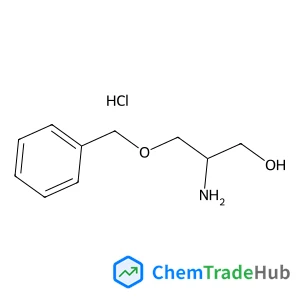
(R)-2-amino-3-(benzyloxy)propan-1-ol hydrochloride
CAS Number:
58577-95-0
Molecular Formula:
C10H16ClNO2
Recommended Suppliers





Disclaimer
This page provides academic journal information for reference and research purposes only. We are not affiliated with any journal publishers and do not handle publication submissions. For publication-related inquiries, please contact the respective journal publishers directly.
If you notice any inaccuracies in the information displayed, please contact us at support@chemtradehub.com. We will promptly review and address your concerns.