


Cluster assemblies as superatomic solids: a first principles study of bonding & electronic structure
Literature Information
Publication Date
2018-02-12
DOI
10.1039/C7CP06755K
Impact Factor
3.676
Authors
Nicola Gaston
View Original
Abstract
The synthesis of cluster based materials poses an exciting challenge for experimental chemistry. The main advantage of these materials compared to conventional bulk compounds is the simple tunability of the chemical and physical characteristics of individual clusters. As a consequence, cluster assemblies can theoretically be used for the creation of designer materials exhibiting specifically desired properties. Since superatoms reveal a large intrinsic thermodynamic stability and often very interesting tunable electronic characteristics, they seem to be an excellent choice as building blocks for the bulk. Here, we present a detailed first principles analysis of carefully chosen superatomic cluster binary and bulk assemblies, in order to determine which forces control the attractive interaction in superatomic solids, and how the individual cluster properties affect these assemblies. This study uses the highly tunable and stable Au13(RS(AuSR)2)6 cluster with a variety of dopants as a model system, while the principles are likely transferable to other ligand protected systems with a straightforward superatomic electron count, such as aluminum or sodium clusters. Three different superatomic materials based on doped gold clusters, boranes and C60s are constructed and evaluated. Beyond the verification that superatoms can be used to create materials that reveal emergent atom-based solid like properties, various factors influencing superatomic materials, such as the EA, IP and relative sizes of the clusters, have been identified and critically evaluated.
Recommended Journals

Bioorganic & Medicinal Chemistry Letters

Critical Reviews in Solid State and Materials Sciences

Chinese Journal of Chemistry

Journal of Chemical Sciences

Polycyclic Aromatic Compounds

Journal of Asian Natural Products Research

Heteroatom Chemistry

Atomization and Sprays

Bioorganic & Medicinal Chemistry

NDT & E International
Related Literature
Physico-chemical processes in imidazolium ionic liquids
Jairton Dupont, Paulo A. Z. Suarez
2006-04-06
Invited Article
DOI: 10.1039/B602046A
Impedance spectroscopy of reduced monoclinic zirconia
Reinhard Kramer
2006-08-24
Paper
DOI: 10.1039/B604396H
Enhanced photolysis in aerosols: evidence for important surface effects
Paul Nissenson, Christopher J. H. Knox, Barbara J. Finlayson-Pitts, Leon F. Phillips, Donald Dabdub
2006-09-14
Paper
DOI: 10.1039/B609219E
Planar tripods of platinum: formation and self-assembly
Sean Maksimuk, Xiaowei Teng, Hong Yang
2006-09-21
Communication
DOI: 10.1039/B611186F
Doppler-free/Doppler-sliced ion imaging
Cunshun Huang, Sridhar A. Lahankar, Myung Hwa Kim, Bailin Zhang, Arthur G. Suits
2006-09-25
Communication
DOI: 10.1039/B612324D
Dynamics of charge transport and recombination in ZnO nanorod array dye-sensitized solar cells
Alex B. F. Martinson, James E. McGarrah, Mohammed O. K. Parpia, Joseph T. Hupp
2006-09-13
Communication
DOI: 10.1039/B610566A
Molecular dynamics simulations of the aqueous interface with the [BMI][PF6] ionic liquid: comparison of different solvent models‡
G. Chevrot, R. Schurhammer, G. Wipff
2006-08-03
Paper
DOI: 10.1039/B608218A
You might also like
Compound Q&A
How is Ethyl 4-chlorothieno[2,3-b]pyridine-5-carboxylate (CAS: 59713-58-5) typically synthesized?
Ethyl 4-chlorothieno[2,3-b]pyridine-5-carboxylate (CAS: 59713-58-5) can be synth...
59713-58-5Ethyl 4-chlorothieno...
Compound Q&A
What regulatory guidelines apply to 5-Methyl-1H-indole-3-carbaldehyde (CAS: 52562-50-2)?
5-Methyl-1H-indole-3-carbaldehyde (CAS: 52562-50-2) is subject to various regula...
52562-50-25-Methyl-1H-indole-3...
Compound Q&A
What are the physical and chemical properties of (1,3-Dimethyl-2,4-dioxo-1,2,3,4-tetrahydro-5-pyrimidinyl)boronic acid (CAS: 223418-73-3)?
(1,3-Dimethyl-2,4-dioxo-1,2,3,4-tetrahydro-5-pyrimidinyl)boronic acid is a white...
223418-73-3(1,3-Dimethyl-2,4-di...
Compound Q&A
How should waste containing Sulfocostunolide A (CAS: 1016983-51-9) be handled?
Waste containing Sulfocostunolide A (CAS: 1016983-51-9) should be handled with c...
1016983-51-9Sulfocostunolide A
Compound Q&A
What precautions should be taken when handling Murraxocin (CAS: 88478-44-8)?
When handling Murraxocin (CAS: 88478-44-8), ensure proper personal protective eq...
88478-44-8Murraxocin
Compound Q&A
What are the physical and chemical properties of Formvar (CAS: 63148-64-1)?
Formvar (CAS: 63148-64-1) is an alkyd resin characterized by a high molecular we...
63148-64-1Formvar(R)
Compound Q&A
Is (S)-4-benzyl-2-((benzyloxy)methyl)morpholine (CAS: 205242-66-6) safe?
(S)-4-benzyl-2-((benzyloxy)methyl)morpholine is generally safe when handled with...
205242-66-6(S)-4-benzyl-2-((ben...
Compound Q&A
What industries use Methyl 1-(5-bromo-2-pyrimidinyl)cyclopropanecarboxylate (CAS: 1447607-69-3)?
Methyl 1-(5-bromo-2-pyrimidinyl)cyclopropanecarboxylate (CAS: 1447607-69-3) is p...
1447607-69-3Methyl 1-(5-bromo-2-...
Compound Q&A
Is 2-Methyl-1-phenyl-1-propanamine hydrochloride (CAS: 24290-47-9) safe?
2-Methyl-1-phenyl-1-propanamine hydrochloride (CAS: 24290-47-9) is generally con...
24290-47-92-Methyl-1-phenyl-1-...
Compound Q&A
How is 3-(4-Bromophenyl)-2-methylpropanoic acid (CAS: 66735-01-1) typically synthesized?
3-(4-Bromophenyl)-2-methylpropanoic acid is synthesized through a multi-step pro...
66735-01-13-(4-Bromophenyl)-2-...
Source Journal
Physical Chemistry Chemical Physics

CiteScore:
5.5
Self-citation Rate:
10.3%
Articles per Year:
3036
Physical Chemistry Chemical Physics (PCCP) is an international journal co-owned by 19 physical chemistry and physics societies from around the world. This journal publishes original, cutting-edge research in physical chemistry, chemical physics and biophysical chemistry. To be suitable for publication in PCCP, articles must include significant innovation and/or insight into physical chemistry; this is the most important criterion that reviewers and Editors will judge against when evaluating submissions. The journal has a broad scope and welcomes contributions spanning experiment, theory, computation and data science. Topical coverage includes spectroscopy, dynamics, kinetics, statistical mechanics, thermodynamics, electrochemistry, catalysis, surface science, quantum mechanics, quantum computing and machine learning. Interdisciplinary research areas such as polymers and soft matter, materials, nanoscience, energy, surfaces/interfaces, and biophysical chemistry are welcomed if they demonstrate significant innovation and/or insight into physical chemistry. Joined experimental/theoretical studies are particularly appreciated when complementary and based on up-to-date approaches.
Recommended Compounds
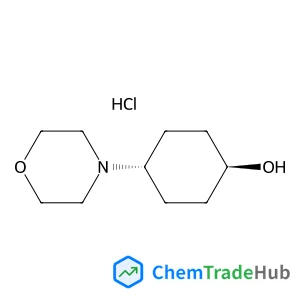
trans-4-(4-Morpholinyl)cyclohexanol hydrochloride (1:1)
CAS Number:
1588441-09-1
Molecular Formula:
C10H20ClNO2
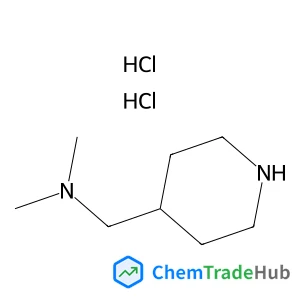
N,N-dimethyl(piperidin-4-yl)methanamine hydrochloride
CAS Number:
172281-72-0
Molecular Formula:
C8H20Cl2N2
Recommended Suppliers




Disclaimer
This page provides academic journal information for reference and research purposes only. We are not affiliated with any journal publishers and do not handle publication submissions. For publication-related inquiries, please contact the respective journal publishers directly.
If you notice any inaccuracies in the information displayed, please contact us at support@chemtradehub.com. We will promptly review and address your concerns.