












Environment-assisted quantum transport through single-molecule junctions
Literature Information
Publication Date
2017-10-20
DOI
10.1039/C7CP06237K
Impact Factor
3.676
Authors
Jakub K. Sowa, Jan A. Mol, G. Andrew D. Briggs, Erik M. Gauger
View Original
Abstract
Single-molecule electronics has been envisioned as the ultimate goal in the miniaturisation of electronic circuits. While the aim of incorporating single-molecule junctions into modern technology still proves elusive, recent developments in this field have begun to enable experimental investigation of fundamental concepts within the area of chemical physics. One such phenomenon is the concept of environment-assisted quantum transport which has emerged from the investigation of exciton transport in photosynthetic complexes. Here, we study charge transport through a two-site molecular junction coupled to a vibrational environment. We demonstrate that vibrational interactions can significantly enhance the current through specific molecular orbitals. Our study offers a clear pathway towards finding and identifying environment-assisted transport phenomena in charge transport settings.
Related Literature
Effect of transition-metal-ion dopants on the oxygen evolution reaction on NiOOH(0001)
Alexander J. Tkalych, John Mark P. Martirez, Emily A. Carter
2018-07-03
Paper
DOI: 10.1039/C8CP02849D
Electrochemical behavior of Bi4B2O9 towards lithium-reversible conversion reactions without nanosizing
Goran Dražić
2017-12-15
Paper
DOI: 10.1039/C7CP07693B
On the aqueous solvation of AsO(OH)3vs. As(OH)3. Born–Oppenheimer molecular dynamics density functional theory cluster studies
A. Ramírez-Solís, J. I. Amaro-Estrada, C. I. León-Pimentel, J. Hernández-Cobos, S. E. Garrido-Hoyos, H. Saint-Martin
2018-05-29
Paper
DOI: 10.1039/C8CP01673A
Evolution of the topological properties of two-dimensional group IVA materials and device design‡
2018-01-05
Paper
DOI: 10.1039/C7CP07420D
Giant spontaneous exchange bias obtained by tuning magnetic compensation in samarium ferrite single crystals
Xiao-xiong Wang, Shang Gao, Xu Yan, Qiang Li, Jun-cheng Zhang, Yun-ze Long, Ke-qing Ruan, Xiao-guang Li
2018-01-02
Paper
DOI: 10.1039/C7CP07030F
Graphene-wrapped CoNi-layered double hydroxide microspheres as a new anode material for lithium-ion batteries
Liluo Shi, Yaxin Chen, Renyue He, Xiaohong Chen, Huaihe Song
2018-05-23
Paper
DOI: 10.1039/C8CP01681J
Ethanol synthesis from syngas over Cu(Pd)-doped Fe(100): a systematic theoretical investigation
Wei Wang, Ye Wang
2017-11-13
Paper
DOI: 10.1039/C7CP06693G
A low temperature investigation of the gas-phase N(2D) + NO reaction. Towards a viable source of N(2D) atoms for kinetic studies in astrochemistry
2018-06-12
Paper
DOI: 10.1039/C8CP02851F
Towards understanding the behavior of polyelectrolyte–surfactant mixtures at the water/vapor interface closer to technologically-relevant conditions
Sara Llamas, Laura Fernández-Peña, Víctor Ortega, Aurelio G. Csaky, Richard A. Campbell
2017-12-18
Paper
DOI: 10.1039/C7CP05528E
Effect of PCL end-groups on the self-assembly process of Pluronic in aqueous media
Natalie Gjerde, Kaizheng Zhu, Bo Nyström, Kenneth D. Knudsen
2018-01-04
Paper
DOI: 10.1039/C7CP07240F
You might also like
Compound Q&A
What industries use (1R,3S)-1,3-Cyclopentanediol (CAS: 16326-97-9)?
(1R,3S)-1,3-Cyclopentanediol finds applications in various industries. In the ph...
16326-97-9(1R,3S)-1,3-Cyclopen...
Compound Q&A
What precautions should be taken when handling N'-[4-(Dimethylamino)phenyl]-N,N-dimethyl-1,4-benzenediamine (CAS: 637-31-0)?
When handling N'-[4-(Dimethylamino)phenyl]-N,N-dimethyl-1,4-benzenediamine, it i...
637-31-0N'-[4-(Dimethylamino...
Compound Q&A
Are there alternatives to 5-(2,4-Difluorophenyl)-2-methoxypyrimidine (CAS: 1352318-16-1) in synthesis?
There are several alternatives to 5-(2,4-Difluorophenyl)-2-methoxypyrimidine in ...
1352318-16-15-(2,4-Difluoropheny...
Compound Q&A
What regulatory guidelines apply to 1-(3-Methoxyphenoxy)propan-2-ol (CAS: 382141-68-6)?
1-(3-Methoxyphenoxy)propan-2-ol (CAS: 382141-68-6) must comply with the Globally...
382141-68-61-(3-Methoxyphenoxy)...
Compound Q&A
Is Tetrodotoxin Citrate (CAS: 18660-81-6) safe?
Tetrodotoxin Citrate is extremely dangerous and should be handled with extreme c...
18660-81-6Tetrodotoxin Citrate
Compound Q&A
What are the main uses of 2-Methyl-2-propanyl [(1R,3S)-3-hydroxycyclopentyl]carbamate (CAS: 225641-84-9)?
2-Methyl-2-propanyl [(1R,3S)-3-hydroxycyclopentyl]carbamate (CAS: 225641-84-9) i...
225641-84-92-Methyl-2-propanyl ...
Compound Q&A
How should waste containing 4-(2-Hydroxyhexafluoroisopropyl)Benzoic Acid (CAS: 16261-80-6) be handled?
Waste containing 4-(2-Hydroxyhexafluoroisopropyl)Benzoic Acid (CAS: 16261-80-6) ...
16261-80-64-(2-Hydroxyhexafluo...
Compound Q&A
How is 2-Methyl-2-proanyl {(2S)-1-[(benzyloxy)amino]-3-hydroxy-3-methyl-1-oxo-2-butanyl}carbamate (CAS: 102507-19-7) typically synthesized?
2-Methyl-2-proanyl {(2S)-1-[(benzyloxy)amino]-3-hydroxy-3-methyl-1-oxo-2-butanyl...
102507-19-72-Methyl-2-propanyl ...
Compound Q&A
What is Benzeneethanamine, α-ethyl-, hydrochloride (1:1) (CAS: 20735-15-3)?
Benzeneethanamine, α-ethyl-, hydrochloride (1:1) is an organic compound with the...
20735-15-3Benzeneethanamine, α...
Compound Q&A
Are there alternatives to 3-{(E)-[4-(Dimethylamino)phenyl]diazenyl}benzoic acid (CAS: 20691-84-3) in synthesis?
In the synthesis of compounds similar to 3-{(E)-[4-(Dimethylamino)phenyl]diazeny...
20691-84-33-{(E)-[4-(Dimethyla...
Source Journal
Physical Chemistry Chemical Physics

CiteScore:
5.5
Self-citation Rate:
10.3%
Articles per Year:
3036
Physical Chemistry Chemical Physics (PCCP) is an international journal co-owned by 19 physical chemistry and physics societies from around the world. This journal publishes original, cutting-edge research in physical chemistry, chemical physics and biophysical chemistry. To be suitable for publication in PCCP, articles must include significant innovation and/or insight into physical chemistry; this is the most important criterion that reviewers and Editors will judge against when evaluating submissions. The journal has a broad scope and welcomes contributions spanning experiment, theory, computation and data science. Topical coverage includes spectroscopy, dynamics, kinetics, statistical mechanics, thermodynamics, electrochemistry, catalysis, surface science, quantum mechanics, quantum computing and machine learning. Interdisciplinary research areas such as polymers and soft matter, materials, nanoscience, energy, surfaces/interfaces, and biophysical chemistry are welcomed if they demonstrate significant innovation and/or insight into physical chemistry. Joined experimental/theoretical studies are particularly appreciated when complementary and based on up-to-date approaches.
Recommended Compounds
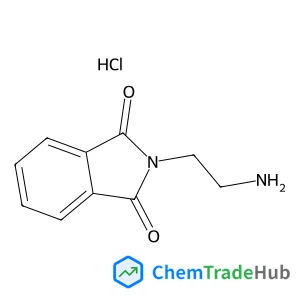
2-(2-Aminoethyl)-1H-isoindole-1,3(2H)-dione hydrochloride (1:1)
CAS Number:
30250-67-0
Molecular Formula:
C10H11ClN2O2



Recommended Suppliers





Disclaimer
This page provides academic journal information for reference and research purposes only. We are not affiliated with any journal publishers and do not handle publication submissions. For publication-related inquiries, please contact the respective journal publishers directly.
If you notice any inaccuracies in the information displayed, please contact us at support@chemtradehub.com. We will promptly review and address your concerns.