


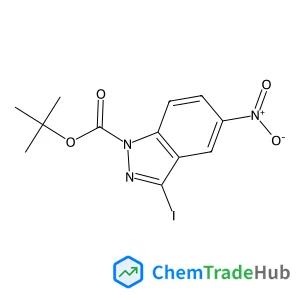
Tert-butyl 3-iodo-5-nitro-1H-indazole-1-carboxylate
CAS Number:
459133-69-8
Molecular Formula:
C12H12IN3O4
Andrey Yu. Sosorev, Dmitry Yu. Godovsky
The modeling of organic solar cells (OSCs) can provide a roadmap for their further improvement. Many OSC models have been proposed in recent years; however, the impact of the key intermediates from photons to electricity—hot charge-transfer (CT) states—on the OSC efficiency is highly ambiguous. In this study, we suggest an analytical kinetic model for OSC that considers a two-step charge generation via hot CT states. This hot kinetic model allowed us to evaluate the impact of different material parameters on the OSC performance: the driving force for charge separation, optical bandgap, charge mobility, geminate recombination rate, thermalization rate, average electron–hole separation distance in the CT state, dielectric permittivity, reorganization energy and charge delocalization. In contrast to a widespread trend of lowering the material bandgap, the model predicts that this approach is only efficient along with improvement of the other material properties. The most promising ways to increase the OSC performance are decreasing the reorganization energy, i.e., an energy change accompanying CT from the donor molecule to the acceptor, increasing the dielectric permittivity and charge delocalization. The model suggests that there are no fundamental limitations that can prevent achieving the OSC efficiency above 20%.

Russian Chemical Bulletin

Drug Discovery Today

Russian Journal of Applied Chemistry

Organic Process Research & Development

Russian Journal of General Chemistry

Current Opinion in Colloid & Interface Science

Saudi Pharmaceutical Journal

Current Opinion in Solid State & Materials Science

Journal of Saudi Chemical Society

Acta Materialia
Jun-ichi Ito, Satoshi Ujiie, Hisao Nishiyama
DOI: 10.1039/B800387D
Suresh R. Chawrai, Neil R. Williamson, George P. C. Salmond, Finian J. Leeper
DOI: 10.1039/B719353J
Patrick Eisenberger, Iris Kieltsch, Nicolas Armanino, Antonio Togni
DOI: 10.1039/B801424H
Junwon Kim, Hye-Young Park, Jaeseung Kim, Jiyoung Ryu, Do Yoon Kwon, Regis Grailhe, Rita Song
DOI: 10.1039/B719434J
Marites A. Guino-o, Charles F. Campana, Karin Ruhlandt-Senge
DOI: 10.1039/B715701K
Fabien Miomandre, Rachel Meallet-Renault, Jean-Jacques Vachon, Robert Bernard Pansu, Pierre Audebert
DOI: 10.1039/B718899D
Jian Zhang, Xianhui Bu
DOI: 10.1039/B719368H
Preston A. Chase, Titel Jurca, Douglas W. Stephan
DOI: 10.1039/B718598G
When handling 4-Methyl-6-(trifluoromethyl)quinoline (CAS: 40716-16-3), safety go...
4-(3,5-Difluorophenyl)aniline is an aromatic organic compound with the CAS numbe...
5-{[4-(Trifluoromethyl)phenyl]sulfanyl}-1,2,3-thiadiazole-4-carboxylic acid can ...
The market for 4-Benzylaniline hydrochloride (CAS: 6317-57-3) is steadily growin...
[3-(Diethylsulfamoyl)phenyl]boronic acid is generally considered safe when handl...
3-Bromo-2,5-dimethoxyaniline is mainly used in the pharmaceutical and chemical i...
N-Methyl-1-(5-methyl-1H-indol-3-yl)methanamine (CAS: 915922-67-7) is subject to ...
This compound is primarily used in the pharmaceutical industry for the synthesis...
2-Methyl-2-propanyl [(1S,3R)-3-aminocyclohexyl]carbamate (CAS: 1298101-47-9) sho...
Ethyl 2-bromo-4,4,4-trifluorobutanoate (CAS: 367-33-9) is utilized in the pharma...

Physical Chemistry Chemical Physics (PCCP) is an international journal co-owned by 19 physical chemistry and physics societies from around the world. This journal publishes original, cutting-edge research in physical chemistry, chemical physics and biophysical chemistry. To be suitable for publication in PCCP, articles must include significant innovation and/or insight into physical chemistry; this is the most important criterion that reviewers and Editors will judge against when evaluating submissions. The journal has a broad scope and welcomes contributions spanning experiment, theory, computation and data science. Topical coverage includes spectroscopy, dynamics, kinetics, statistical mechanics, thermodynamics, electrochemistry, catalysis, surface science, quantum mechanics, quantum computing and machine learning. Interdisciplinary research areas such as polymers and soft matter, materials, nanoscience, energy, surfaces/interfaces, and biophysical chemistry are welcomed if they demonstrate significant innovation and/or insight into physical chemistry. Joined experimental/theoretical studies are particularly appreciated when complementary and based on up-to-date approaches.

![6,7-Dihydro-5H-pyrrolo[1,2-a]imidazole-6-carboxylic acid structure](https://static.chemtradehub.com/structs/136/1369160-12-2-6524.webp "6,7-Dihydro-5H-pyrrolo[1,2-a]imidazole-6-carboxylic acid structure")
![[3-(2,6-Dichlorophenyl)-5-isopropyl-1,2-oxazol-4-yl]methanol structure](https://static.chemtradehub.com/structs/278/278597-30-1-5c79.webp "[3-(2,6-Dichlorophenyl)-5-isopropyl-1,2-oxazol-4-yl]methanol structure")



