


Characterization of the binding interactions between EvaGreen dye and dsDNA
Literature Information
Publication Date
2018-01-25
DOI
10.1039/C7CP06058K
Impact Factor
3.676
Authors
L. C. T. Shoute, G. R. Loppnow
View Original
Abstract
Understanding the dsDNA·EG binding interaction is important because the EvaGreen (EG) dye is increasingly used in real-time quantitative polymerase chain reaction, high resolution melting analysis, and routine quantification of DNA. In this work, a binding isotherm for the interactions of EG with duplex DNA (poly-dA17·poly-dT17) has been determined from the absorption and fluorescence spectra of the EG and dsDNA·EG complex. The isotherm has a sigmoidal shape and can be modeled with the Hill equation, indicating positive cooperativity for the binding interaction. A Scatchard plot of the binding data yields a concave-down curve in agreement with the Hill analysis of the binding isotherm for a positive cooperative binding interaction. Analysis of the Scatchard plot with the modified McGhee and von Hippel model for a finite one-dimensional homogeneous lattice and nonspecific binding of ligands to duplex DNA yields the intrinsic binding constant, the number of lattice sites occluded by a bound ligand, and the cooperativity parameter of 3.6 × 10⁵ M−1, 4.0, and 8.1, respectively. The occluded site size of 4 indicates that moieties of the EG intercalate into the adjacent base pairs of the duplex DNA with a gap of 1 intercalation site between EG binding sites, as expected for a bifunctional molecule. Interestingly, at high [EG]/[base pair], the intercalation is disrupted. A model is proposed based on the fluorescence spectrum where the formation of anti-parallel stacked chains of EGs bound externally to the duplex DNA occur at these high ratios.
Recommended Journals

Journal of Medicinal Chemistry

Organic Preparations and Procedures International

Proceedings of the National Academy of Sciences of the United States of America

Nature

Planta Medica

Journal of Heterocyclic Chemistry

Israel Journal of Chemistry

Journal of Catalysis

Pharmacological Reviews

Journal of Organometallic Chemistry
Related Literature
Hierarchical micro/nano structures of carbon composites as anodes for microbial fuel cells
Yong Zhao
2011-07-25
Paper
DOI: 10.1039/C1CP21813A
A statistical approach to inelastic electron tunneling spectroscopy on fullerene-terminated molecules
Jakob Kryger Sørensen, Emanuel Lörtscher, Tom Vosch, Heike Riel, Kristine Kilså, Thomas Bjørnholm, Herre van der Zant
2011-06-23
Paper
DOI: 10.1039/C1CP20861F
Electron-beam evaporated silicon as a top contact for molecular electronic device fabrication
Rajesh Kumar, Haijun Yan, Adam Johan Bergren
2011-06-23
Paper
DOI: 10.1039/C1CP20755E
Hydroxideoxidation and peroxide formation at embedded binuclear transition metal sites; TM = Cr, Mn, Fe, Co
M. Busch, E. Ahlberg, I. Panas
2011-07-20
Paper
DOI: 10.1039/C1CP20487D
A layered structure at the surface of P3HT/PCBM blends
Natalya Schmerl, Gunther Andersson
2011-07-18
Paper
DOI: 10.1039/C1CP20734B
Confined crystallization of binary n-alkane mixtures: stabilization of a new rotator phase by enhanced surface freezing and weakened intermolecular interactions
Dongsheng Fu, Yufeng Liu, Guoming Liu, Yunlan Su, Dujin Wang
2011-07-26
Paper
DOI: 10.1039/C1CP21281H
Modeling van der Waals interactions between proteins and inorganic surfaces from time-dependent density functional theory calculations
Micael J. T. Oliveira, Miguel A. L. Marques
2011-07-25
Paper
DOI: 10.1039/C1CP20719A
Theoretical study of the electronically excited radical cations of naphthalene and anthracene as archetypal models for astrophysical observations. Part II. Dynamics consequences‡
S. Ghanta, V. Sivaranjana Reddy, S. Mahapatra
2011-07-12
Paper
DOI: 10.1039/C1CP21084J
Structures, spectroscopic properties and redox potentials of quaterpyridyl Ru(ii) photosensitizer and its derivatives for solar energy cell: a density functional study
Qing-Jiang Pan, Yuan-Ru Guo, Li Li, Samuel O. Odoh, Hong-Gang Fu, Hong-Xing Zhang
2011-07-07
Paper
DOI: 10.1039/C1CP00030F
Stabilization of organic field-effect transistors by tert-butyl groups in dibenzotetrathiafulvalene derivatives
Junki Nagakubo, Minoru Ashizawa, Tadashi Kawamoto, Akihiko Tanioka
2011-06-15
Paper
DOI: 10.1039/C1CP21507H
You might also like
Compound Q&A
What are the main uses of 1-(3-Aminophenyl)-3-[(3R)-1-(3,3-dimethyl-2-oxobutyl)-2-oxo-5-(2-pyridinyl)-2,3-dihydro-1H-1,4-benzodiazepin-3-yl]urea (CAS: 155412-88-7)?
This compound is mainly used as an intermediate in the synthesis of antipsychoti...
155412-88-71-(3-Aminophenyl)-3-...
Compound Q&A
How should waste containing 1-(D-Ribofuranosyl)-1,4-dihydro-3-pyridinecarboxamide (CAS: 19132-12-8) be handled?
Waste containing 1-(D-Ribofuranosyl)-1,4-dihydro-3-pyridinecarboxamide (CAS: 191...
19132-12-81-(D-Ribofuranosyl)-...
Compound Q&A
What regulatory guidelines apply to 2-Methyl-2-propanyl 3-bromo-3-(hydroxymethyl)-1-azetidinecarboxylate (CAS: 2007919-81-3)?
2-Methyl-2-propanyl 3-bromo-3-(hydroxymethyl)-1-azetidinecarboxylate (CAS: 20079...
2007919-81-32-Methyl-2-propanyl ...
Compound Q&A
What is N-(4-Chloro-2-pyridinyl)acetamide (CAS: 245056-66-0)?
N-(4-Chloro-2-pyridinyl)acetamide (CAS: 245056-66-0) is a chemical compound with...
245056-66-0N-(4-Chloro-2-pyridi...
Compound Q&A
What is 5-Chloro-2-hydroxybenzoic acid (CAS: 321-14-2)?
5-Chloro-2-hydroxybenzoic acid, also known as 5-chlorosalicylic acid, is an arom...
321-14-25-Chloro-2-hydroxybe...
Compound Q&A
What precautions should be taken when handling 1,1-Dichloro-1-fluoroethane (CAS: 1717-00-6)?
When handling 1,1-Dichloro-1-fluoroethane (CAS: 1717-00-6), it is important to u...
1717-00-61,1-Dichloro-1-fluor...
Compound Q&A
What are the physical and chemical properties of Fmoc-(2S,3R)-3-phenylpyrrolidine-2-carboxylic acid (CAS: 281655-32-1)?
Fmoc-(2S,3R)-3-phenylpyrrolidine-2-carboxylic acid is a white crystalline solid ...
281655-32-1Fmoc-(2S,3R)-3-pheny...
Compound Q&A
What are the main uses of 4-Amino-5-bromo-2-pyridinecarboxylic acid (CAS: 1363381-01-4)?
4-Amino-5-bromo-2-pyridinecarboxylic acid is primarily used as a precursor in th...
1363381-01-44-Amino-5-bromo-2-py...
Compound Q&A
What precautions should be taken when handling (S)-tert-butyl 2-((2-(4-bromophenyl)-2-oxoethyl)carbamoyl)pyrrolidine-1-carboxylate (CAS: 1007881-98-2)?
Handling this compound should be done with personal protective equipment (PPE) i...
1007881-98-2(S)-tert-butyl 2-((2...
Compound Q&A
What precautions should be taken when handling 8-bromo-2,2-dimethyl-3,4-dihydro-2H-1,4-benzoxazin-3-one (CAS: 688363-73-7)?
When handling 8-bromo-2,2-dimethyl-3,4-dihydro-2H-1,4-benzoxazin-3-one, use prop...
688363-73-78-bromo-2,2-dimethyl...
Source Journal
Physical Chemistry Chemical Physics

CiteScore:
5.5
Self-citation Rate:
10.3%
Articles per Year:
3036
Physical Chemistry Chemical Physics (PCCP) is an international journal co-owned by 19 physical chemistry and physics societies from around the world. This journal publishes original, cutting-edge research in physical chemistry, chemical physics and biophysical chemistry. To be suitable for publication in PCCP, articles must include significant innovation and/or insight into physical chemistry; this is the most important criterion that reviewers and Editors will judge against when evaluating submissions. The journal has a broad scope and welcomes contributions spanning experiment, theory, computation and data science. Topical coverage includes spectroscopy, dynamics, kinetics, statistical mechanics, thermodynamics, electrochemistry, catalysis, surface science, quantum mechanics, quantum computing and machine learning. Interdisciplinary research areas such as polymers and soft matter, materials, nanoscience, energy, surfaces/interfaces, and biophysical chemistry are welcomed if they demonstrate significant innovation and/or insight into physical chemistry. Joined experimental/theoretical studies are particularly appreciated when complementary and based on up-to-date approaches.
Recommended Compounds
![4-Chloro-3-(trifluoromethyl)-1H-pyrrolo[2,3-b]pyridine structure](https://static.chemtradehub.com/structs/869/869335-75-1-a9d0.webp "4-Chloro-3-(trifluoromethyl)-1H-pyrrolo[2,3-b]pyridine structure")
4-Chloro-3-(trifluoromethyl)-1H-pyrrolo[2,3-b]pyridine
CAS Number:
869335-75-1
Molecular Formula:
C8H4ClF3N2
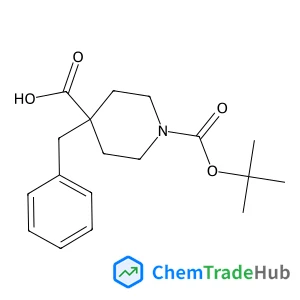
4-Benzyl-1-(tert-butoxycarbonyl)piperidine-4-carboxylic acid
CAS Number:
170838-87-6
Molecular Formula:
C18H25NO4
![tert-Butyl N-[(2-chloropyridin-4-yl)methyl]carbamate structure](https://static.chemtradehub.com/structs/916/916210-27-0-9f95.webp "tert-Butyl N-[(2-chloropyridin-4-yl)methyl]carbamate structure")
tert-Butyl N-[(2-chloropyridin-4-yl)methyl]carbamate
CAS Number:
916210-27-0
Molecular Formula:
C11H15ClN2O2
Recommended Suppliers







Disclaimer
This page provides academic journal information for reference and research purposes only. We are not affiliated with any journal publishers and do not handle publication submissions. For publication-related inquiries, please contact the respective journal publishers directly.
If you notice any inaccuracies in the information displayed, please contact us at support@chemtradehub.com. We will promptly review and address your concerns.