


Laboratory spectroscopy of methoxymethanol in the millimeter-wave range
Literature Information
Publication Date
2017-10-24
DOI
10.1039/C7CP05932A
Impact Factor
3.676
Authors
Roman A. Motiyenko, Laurent Margulès, Didier Despois, Jean-Claude Guillemin
View Original
Abstract
Methoxymethanol, CH3OCH2OH is a very interesting candidate for detection in the interstellar medium since it can be formed in the recombination reaction between two radicals considered as intermediates in methanol formation: CH3O (already detected in the ISM) and CH2OH. It could also be formed by the addition of CH3O to formaldehyde (another abundant compound in the ISM) followed by abstraction of a hydrogen radical. In this study, we present the first spectroscopic characterization of methoxymethanol in the millimeter-wave range augmented by high level quantum chemical calculations. The analysis revealed three stable conformations all exhibiting different large amplitude motions (LAMs). For the analysis of the most stable conformation (I) we applied a model that accounts for hindered internal rotation of the methyl top. The analysis of conformation III was performed taking the interaction between the overall rotation and OH torsional motion into account. Conformation II was only tentatively assigned, as it exhibits several LAMs that significantly complicate the theoretical description. Accurate spectroscopic parameters obtained in this study provide a reliable basis for the detection of methoxymethanol in the ISM.
Recommended Journals

Cement and Concrete Research

Journal of the Chinese Chemical Society

Chemical Reviews

Chemistry of Heterocyclic Compounds

Anti-Corrosion Methods and Materials

Ferroelectrics

Journal of the American Chemical Society

Canadian Metallurgical Quarterly

Chemistry of Natural Compounds

Bulletin of the Chemical Society of Japan
Related Literature
Molecular structure matters: PEG-b-PLA nanoparticles with hydrophilicity and deformability demonstrate their advantages for high-performance delivery of anti-cancer drugs
Qinzheng Yang, Hua Yue, Bin Wang, Zhiguo Su, Wei Wei, Guanghui Ma
2013-04-30
Paper
DOI: 10.1039/C3TB20406E
Excellent kinetics of single-phase Gd-doped ceria fuel electrodes in solid oxide cells
Andreas Nenning, Manuel Holzmann, Jürgen Fleig, Alexander K. Opitz
2021-07-09
Paper
DOI: 10.1039/D1MA00202C
Bioactive flake–shell capsules: soft silica nanoparticles for efficient enzyme immobilization
Tatyana G. Terentyeva, Wim Van Rossom, Qingmin Ji
2013-05-10
Paper
DOI: 10.1039/C3TB20461H
Nanoparticle-infused-biodegradable-microneedles as drug-delivery systems: preparation and characterisation
Rachel E. Sully, Hemda Garelick, Eriketi Z. Loizidou, Adrian G. Podoleanu, Vladimir Gubala
2021-07-08
Paper
DOI: 10.1039/D1MA00135C
Optimization of LC-DRC-ICP-MS for the speciation of selenotrisulfides with simultaneous detection of sulfur and selenium as oxides combined with determination of elemental and isotope ratios
Stefan Stürup, Lars Bendahl, Bente Gammelgaard
2005-12-16
Technical Note
DOI: 10.1039/B514633J
The development of poly(ethylene oxide) reinforced with a nanocellulose-based nanocomposite polymer electrolyte in dye-sensitized solar cells
Mohd Saiful Asmal Rani, Nur Athirah Abdullah, Muhammad Hanif Sainorudin, Masita Mohammad, Salmiah Ibrahim
2021-07-27
Paper
DOI: 10.1039/D1MA00206F
Nontoxic photoluminescent tin oxide nanoparticles for cell imaging: deep eutectic solvent mediated synthesis, tuning and mechanism
Linmariya Devassy Koonathan, Suman Neogy, Anil K. Debnath, Soumyakanti Adhikari
2021-05-10
Paper
DOI: 10.1039/D1MA00042J
Switching and tuning organic solid-state luminescence via a supramolecular approach
Savarimuthu Philip Anthony, Sunil Varughese, Sylvia M. Draper
2009-11-04
Communication
DOI: 10.1039/B914027A
Transfer hydrogenation of levulinic acid under hydrothermal conditions catalyzed by sulfate as a temperature-switchable base
Daniel Kopetzki, Markus Antonietti
2010-02-16
Paper
DOI: 10.1039/B924648G
You might also like
Compound Q&A
What precautions should be taken when handling 4-Methyl-6-(trifluoromethyl)quinoline (CAS: 40716-16-3)?
When handling 4-Methyl-6-(trifluoromethyl)quinoline (CAS: 40716-16-3), safety go...
40716-16-34-Methyl-6-(trifluor...
Compound Q&A
What is 4-(3,5-Difluorophenyl)aniline (CAS: 405058-00-6)?
4-(3,5-Difluorophenyl)aniline is an aromatic organic compound with the CAS numbe...
405058-00-64-(3,5-Difluoropheny...
Compound Q&A
How is 5-{[4-(Trifluoromethyl)phenyl]sulfanyl}-1,2,3-thiadiazole-4-carboxylic acid (CAS: 338982-07-3) typically synthesized?
5-{[4-(Trifluoromethyl)phenyl]sulfanyl}-1,2,3-thiadiazole-4-carboxylic acid can ...
338982-07-35-{[4-(Trifluorometh...
Compound Q&A
What is the market or research trend for 4-Benzylaniline hydrochloride (CAS: 6317-57-3)?
The market for 4-Benzylaniline hydrochloride (CAS: 6317-57-3) is steadily growin...
6317-57-34-Benzylaniline hydr...
Compound Q&A
Is [3-(Diethylsulfamoyl)phenyl]boronic acid (CAS: 871329-58-7) safe?
[3-(Diethylsulfamoyl)phenyl]boronic acid is generally considered safe when handl...
871329-58-7[3-(Diethylsulfamoyl...
Compound Q&A
What are the main uses of 3-Bromo-2,5-dimethoxyaniline (CAS: 115929-62-9)?
3-Bromo-2,5-dimethoxyaniline is mainly used in the pharmaceutical and chemical i...
115929-62-93-Bromo-2,5-dimethox...
Compound Q&A
What regulatory guidelines apply to N-Methyl-1-(5-methyl-1H-indol-3-yl)methanamine (CAS: 915922-67-7)?
N-Methyl-1-(5-methyl-1H-indol-3-yl)methanamine (CAS: 915922-67-7) is subject to ...
915922-67-7N-Methyl-1-(5-methyl...
Compound Q&A
What industries use Carbamic acid, N-[(5S)-5,6-diamino-6-oxohexyl]-, 1,1-dimethylethyl ester (CAS: 24828-96-4)?
This compound is primarily used in the pharmaceutical industry for the synthesis...
24828-96-4Carbamic acid, N-[(5...
Compound Q&A
How should 2-Methyl-2-propanyl [(1S,3R)-3-aminocyclohexyl]carbamate (CAS: 1298101-47-9) be stored?
2-Methyl-2-propanyl [(1S,3R)-3-aminocyclohexyl]carbamate (CAS: 1298101-47-9) sho...
1298101-47-92-Methyl-2-propanyl ...
Compound Q&A
What industries use Ethyl 2-bromo-4,4,4-trifluorobutanoate (CAS: 367-33-9)?
Ethyl 2-bromo-4,4,4-trifluorobutanoate (CAS: 367-33-9) is utilized in the pharma...
367-33-9Ethyl 2-bromo-4,4,4-...
Source Journal
Physical Chemistry Chemical Physics

CiteScore:
5.5
Self-citation Rate:
10.3%
Articles per Year:
3036
Physical Chemistry Chemical Physics (PCCP) is an international journal co-owned by 19 physical chemistry and physics societies from around the world. This journal publishes original, cutting-edge research in physical chemistry, chemical physics and biophysical chemistry. To be suitable for publication in PCCP, articles must include significant innovation and/or insight into physical chemistry; this is the most important criterion that reviewers and Editors will judge against when evaluating submissions. The journal has a broad scope and welcomes contributions spanning experiment, theory, computation and data science. Topical coverage includes spectroscopy, dynamics, kinetics, statistical mechanics, thermodynamics, electrochemistry, catalysis, surface science, quantum mechanics, quantum computing and machine learning. Interdisciplinary research areas such as polymers and soft matter, materials, nanoscience, energy, surfaces/interfaces, and biophysical chemistry are welcomed if they demonstrate significant innovation and/or insight into physical chemistry. Joined experimental/theoretical studies are particularly appreciated when complementary and based on up-to-date approaches.
Recommended Compounds
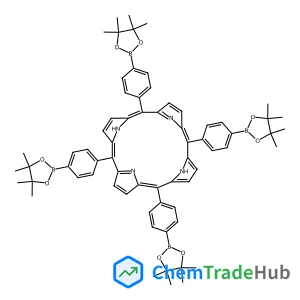
5,10,15,20-tetrakis(4-boronic acid pinacol ester phenyl) porphyrin
CAS Number:
1332748-00-1
Molecular Formula:
C68H74B4N4O8
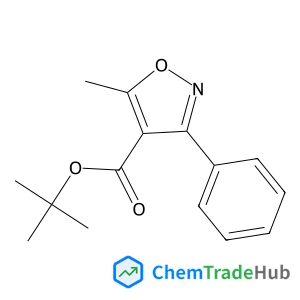
2-Methyl-2-propanyl 5-methyl-3-phenyl-1,2-oxazole-4-carboxylate
CAS Number:
211429-79-7
Molecular Formula:
C15H17NO3
Recommended Suppliers





Disclaimer
This page provides academic journal information for reference and research purposes only. We are not affiliated with any journal publishers and do not handle publication submissions. For publication-related inquiries, please contact the respective journal publishers directly.
If you notice any inaccuracies in the information displayed, please contact us at support@chemtradehub.com. We will promptly review and address your concerns.